
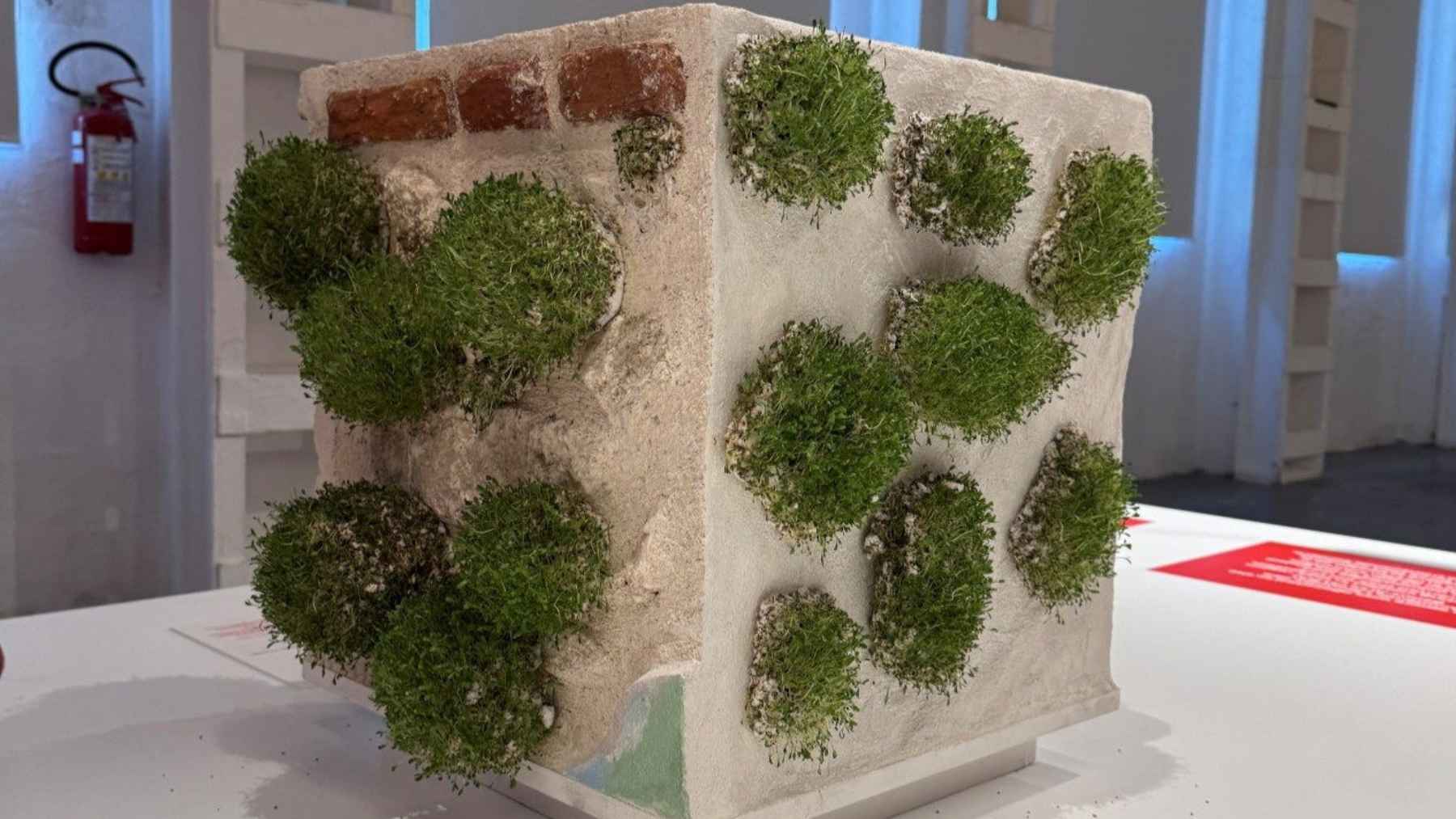
A cracked wall often signals the need for repair or neglect, yet a Turkish design initiative proposes an alternative perspective. Instead of viewing these imperfections solely as flaws, why not transform them into thriving green spaces? This innovative concept highlights the potential for urban environments to integrate nature directly into their fabric.
Introducing Green Anarchy
Green Anarchy, developed by Yasemin Keyif at Bahçeşehir University in Istanbul, brings a fresh approach to urban decay. This design project is not a finalized public works initiative; rather, it is an academic proposition aimed at reimagining the relationship between nature and the built environment. By utilizing biodegradable stickers filled with seeds, the project transforms shattered facades into vertical habitats, inviting lush greenery into neglected urban settings.
At the heart of this project lies a unique adhesive patch, which acts more like a living ecosystem than a standard sticker. Made from biodegradable materials, including paper pulp and coco peat, it is specifically designed to decompose naturally. When these patches are applied to cracks in walls, they become a nurturing environment for seeds, promoting vegetation growth in otherwise barren spaces.
How the Sticker Functions
The application is straightforward yet hands-on. Users activate the patch by wetting it, shaping it as needed, and pressing it into a crack or hollow area of the wall. Once moisture seeps to the seeds, germination occurs, allowing roots to penetrate the coarse surface. This hands-on approach encourages urban dwellers to engage with their environment actively, fostering a sense of community stewardship.
Cracks and crevices are often deemed undesirable, but in this context, they act as vital pockets where organic materials can thrive. The distinction is important; minor surface cracks may offer seedling support without compromising structural integrity. Green Anarchy serves as a reminder that imperfections in the urban landscape can evolve into opportunities rather than liabilities.
The Unique Vision of a Green Wall
While green walls are not a novel idea, they typically involve complex structures, irrigation, and maintenance. In contrast, Green Anarchy embraces simplicity and spontaneity. The objective is not to cover entire buildings with meticulously arranged foliage but rather to infuse overlooked urban areas with life, where concrete and noise often dominate. This initiative responds to the pressing need for urban greenery, which can help mitigate heat islands and enhance overall biodiversity.
Research indicates that vegetation can significantly cool cities. A study by Utrecht University emphasizes the ecological benefits of plant-covered facades, which can lower surrounding temperatures while supporting various species. While the small patches proposed by Green Anarchy may not replicate the full impact of larger green walls, they represent an important step towards rethinking urban ecology.
Future Implications and Considerations
Presented during Milan Design Week, Green Anarchy embodies the tension between urban maintenance and the urgency for more green spaces. However, the project does not overlook potential challenges. It’s crucial to differentiate between superficial cracks that can support life and hazardous structural issues. Some damaged walls may need repairs before introducing new vegetation, ensuring safety remains a top priority.
Moreover, practical considerations like climate suitability, local plant species, and ongoing maintenance need thorough exploration. For instance, who will take responsibility for watering these patches during dry spells? As cities continue to grow, innovative solutions like Green Anarchy could redefine how we perceive urban damage; rather than symbols of neglect, cracks can serve as starting points for rejuvenation and ecological connection.
In summary, Green Anarchy encourages a compassionate view of urban imperfection. Rather than merely covering mistakes, it seeks to cultivate a new narrative that emphasizes the potential for growth even in the most unexpected places.