
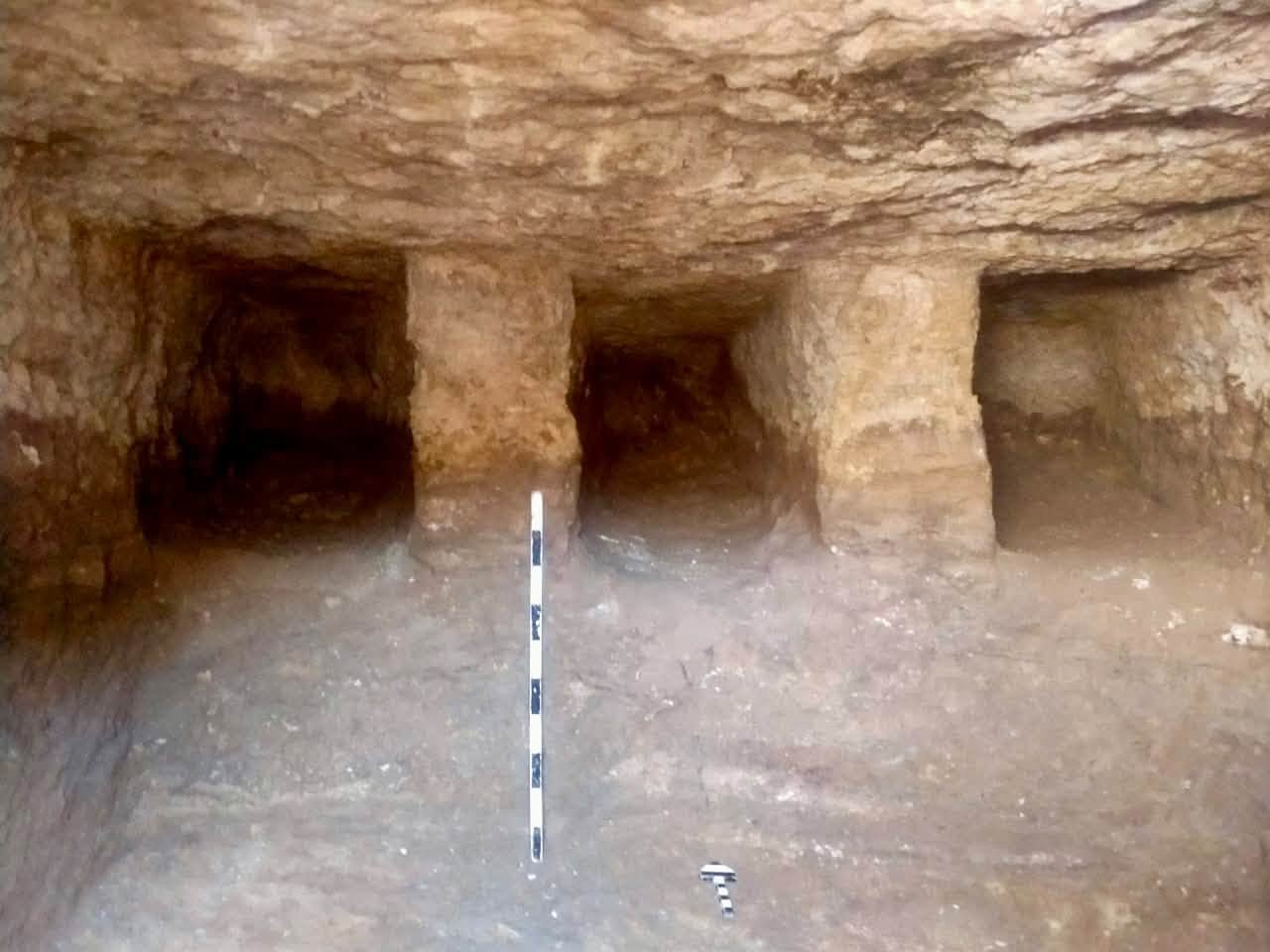
In a remarkable discovery, an Egyptian archaeological team has revealed multiple rock-cut tombs alongside ancient artifacts and remnants of a Roman camp at Tell el-Yahudiya in the Qalyubia Governorate, located in the Nile Delta, north of Cairo. These findings highlight the site’s historical significance and offer a glimpse into ancient burial practices.
Architectural Features of Newly Discovered Tombs
The rock-cut tombs recently uncovered exhibit two distinct architectural designs, as detailed by Ayman Ashmawy, an advisor to Egypt’s Supreme Council of Antiquities. One design includes a staircase descending into a hall adorned with niches utilized for burials. The other features a rectangular shaft leading to two individual burial chambers. Such structural diversity sheds light on the various burial traditions practiced in ancient Egypt.
During the excavation, archaeologists also uncovered a wealth of artifacts associated with these tombs. These items provided valuable insights, allowing researchers to identify the periods during which the burials took place and discern different phases of activity at the site. Notably, the ongoing excavation of the upper layers of the site continues to yield remnants of the Roman camp, helping to paint a broader picture of the area’s historical significance.
Tombs of the Late New Kingdom Era
Findings from the excavations suggest that these tombs date back to the late New Kingdom and were actively used through the Late Period of Egyptian history. Hisham El-Leithy, the secretary-general of the Supreme Council of Antiquities, emphasized that these discoveries illustrate the sustained burial practices at Tell el-Yahudiya across various historical periods. The site contributes significantly to the growing record of ancient Egyptian funerary practices. Recent excavations have also revealed 3,000-year-old rock-cut tombs in Saqqara, which similarly date back to the New Kingdom era.
The rock-cut tombs at Tell el-Yahudiya are particularly important due to their rarity within the Nile Delta, where the prevalence of clay-rich soil makes such burial structures uncommon. This discovery aligns with recent findings at Tell El-Deir, where human-shaped tombstones and funerary artifacts spanning multiple historical periods were unearthed.
Significance of Unique Tomb Designs
Ashmawy stated that these newly found tomb designs are particularly significant for the Qalyubia area and the broader eastern Delta. While rock-cut tombs have been documented elsewhere—such as in Alexandria and along the northern coast of Egypt—the distinct characteristics of the Tell el-Yahudiya tombs offer unique insights into regional burial traditions. Recent excavations near Alexandria, where 18 ancient tombs were found, including 11 rock-cut types, further accentuate the diversity and significance of burial practices in different locations.
The implications of the Tell el-Yahudiya findings are extensive, potentially helping researchers understand how burial customs evolved in Egypt’s eastern Delta over time.
Continuous Importance of the Site
According to Anwar Abdel-Samad, the director-general of Qalyubia Antiquities, Tell el-Yahudiya is deeply connected to the Hyksos period, where a substantial camp was located. Archaeological evidence indicates that human activity at the site persisted during subsequent Greek and Roman periods. This historical continuity is echoed in other Nile Delta discoveries, such as those made at Tell Quesna that also demonstrate ongoing burial practices into the Late and Greco-Roman periods.
The recent discovery of a Roman camp directly above the rock-cut tombs adds yet another layer to the rich history of Tell el-Yahudiya. Collectively, these findings confirm that the site remained a focal point of activity across various eras in Egypt’s extensive past.