
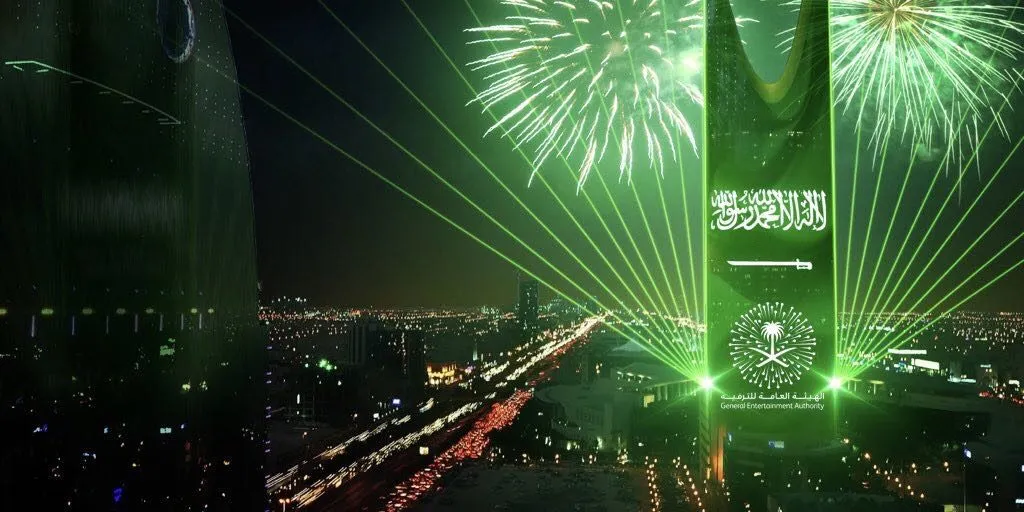
Saudi Arabia’s National Day, celebrated on September 23 each year, marks a significant historical event — the unification of the Kingdom in 1932. On this day, King Abdulaziz ibn Saud proclaimed the establishment of Saudi Arabia by bringing together the disparate regions of Najd and Hijaz under one banner. This holiday is one of the most vital in the Saudi calendar, with city streets adorned in green — the national color — and festive activities ranging from concerts and cultural events to air shows, creating a vibrant atmosphere for families.
Significance of September 23
Saudi National Day, or Al Yawm Al Watani, falls on September 23 and retains its importance year after year as it is tied to the foundational moment in the nation’s history. The date invites Saudi citizens to reflect on their journey, unity, and shared heritage. As the official 96th celebration approaches in 2026, government offices, schools, and many businesses will close, allowing residents to partake in the festivities without the usual interruptions of daily life.
The Roots of Modern Saudi Arabia
The formation of Saudi Arabia predates 1932, with King Abdulaziz ibn Saud playing a crucial role in consolidating power and territory in the Arabian Peninsula. His capture of Riyadh in 1902 marked the beginning of a series of expansions that ultimately led to the unification of the regions the kingdom comprises today. The historical significance of Najd — located at the heart of the Arabian Peninsula — and the Hejaz — home to the holy cities of Mecca and Medina — underscores the importance of the unified state that the Kingdom of Saudi Arabia has become today.
The Evolution of National Day
Despite its historical significance, the formal recognition of September 23 as an official holiday did not occur until 2005 when King Abdullah instituted it as a day off for all workers and students. Celebrations have since grown in prominence, featuring events that honor both the historical importance of the date and the progress that the nation continues to make. Today, towns and cities transform into vibrant centers of celebration filled with music, culture, and displays of national pride.
Celebration Traditions and Activities
The celebrations of National Day encompass a mix of traditions and contemporary entertainment, including military air shows, cultural performances, and fireworks that light up the night sky across various cities. Streets are often decorated in green to symbolize Saudi pride, with family-oriented activities such as arts and crafts workshops for children being a focal point. The inclusion of Saudi Ardah, a traditional dance, along with folk music and poetry recitals, emphasizes the nation’s commitment to preserving its rich heritage.
In 2026, with the theme “Our Pride Is in Our Nature,” celebrations will not only highlight the history of unification but also the intrinsic characteristics and values that shape Saudi society. From engagements in sports to public festivities, Saudi National Day serves as a reminder of the unity and heritage that define the nation, making it an essential occasion in Saudi Arabia’s cultural landscape.