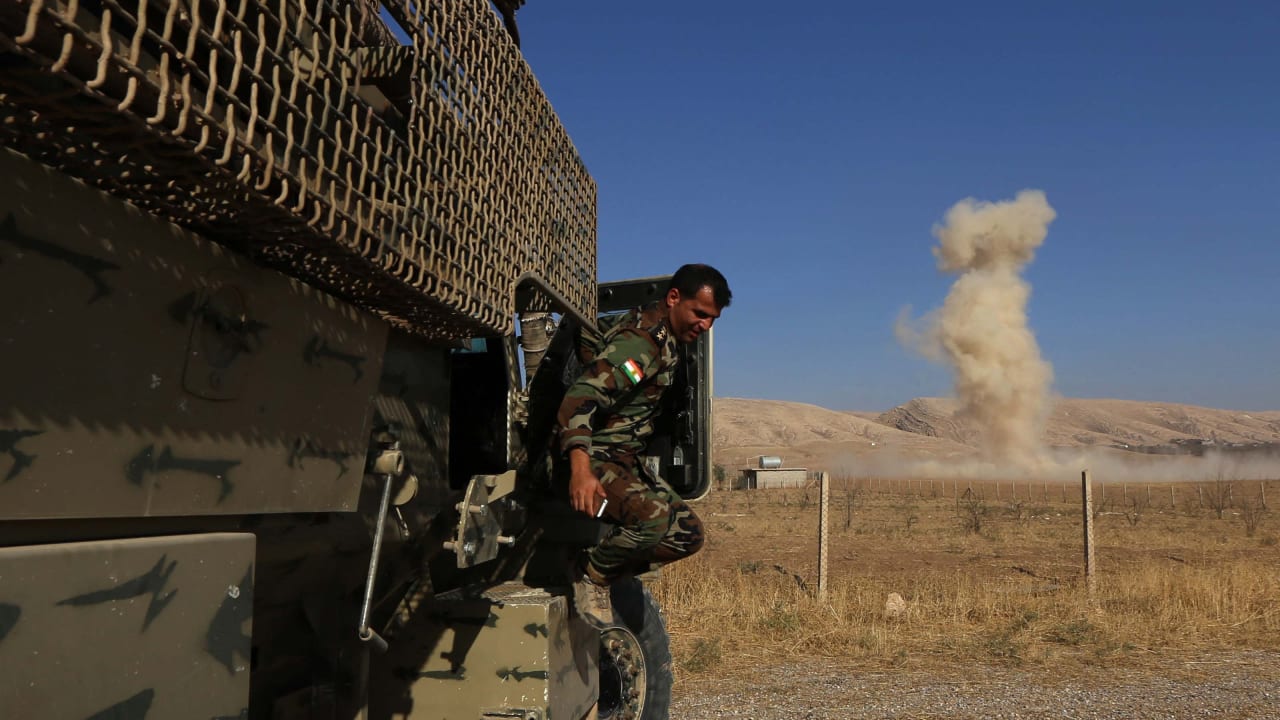
Iraq and Turkey have recently established a framework for transferring control of a significant military base in Iraq. On September 23, Iraq’s Prime Minister’s Office announced that Turkish forces would gradually return the Baashiqa-Zeliqan camp to the Iraqi Federal Government by June 2027. This development signals a crucial step amidst ongoing transformations within Iraq, where the government is also working to curb the influence of Iranian-backed militias and consolidate control over various regions.
### Iraq’s Security Landscape
This agreement is indicative of Iraq’s efforts to regain sovereignty and restore order following years of conflict. Notably, the Iraqi government aims to disarm armed groups such as the Yazidi YBS, and the Kurdish Peshmerga have recently unified their forces. These moves aim to reinforce federal authority in multiple areas, which ultimately reshape Iraq’s political and security landscape.
The current military situation is deeply intertwined with the aftermath of the ISIS conflict, which left the Iraqi state weakened and fragmented. During the ISIS invasion, many regions, particularly Sunni areas and places like the Nineveh Plains and Sinjar, experienced significant turmoil. As a response to the violence, Iranian-backed militias gained strength while the Kurdish Peshmerga played a vital role in countering ISIS. Turkey’s involvement in Iraq has also been significant as it sought to protect its interests against the PKK.
### The Role of Turkish Forces
Turkey’s presence in the region was framed as a measure to combat the PKK’s activities. However, the Baashiqa camp served a broader purpose, providing support to Kurdish forces and monitoring developments in Sinjar. Turkey’s strategic interests include countering the potential empowerment of PKK-linked factions that might emerge in the power vacuum left by the fight against ISIS.
Recent negotiations between Iraqi Prime Minister Ali Falih Al-Zaidi and Turkish President Recep Tayyip Erdoğan in New York further solidified the bilateral commitment to enhancing security cooperation. The talks included discussions aimed at reasserting Iraqi autority in areas such as Sinjar and eradicating undesirable foreign military presence.
### Implications of the Handover
The forthcoming transition of the Baashiqa camp comes at a time when the U.S. military presence in Iraq is decreasing. As these changes unfold, Iraq is keen on demonstrating its renewed ability to assert authority over its territories. The disarmament agreement with the YBS aligns with Turkey’s broader goal of eliminating PKK-affiliated groups as part of a peace initiative, further enhancing regional stability.
The Baashiqa camp itself has historically played a strategic role, situated between Erbil and Dohuk, thus serving as a vantage point for Turkish forces. Despite its controversial status—particularly among Iranian-backed militias—the camp has been well-maintained and provided critical support against ISIS forces in past confrontations.
As these political dynamics evolve, Iraq’s government continues to strive for a cohesive national security strategy, facilitating the return of authority to Iraqi institutions. Overall, the decision to hand over the Baashiqa-Zeliqan camp represents a significant step towards reshaping Iraq’s governance and security framework, with potential implications for broader regional stability.