
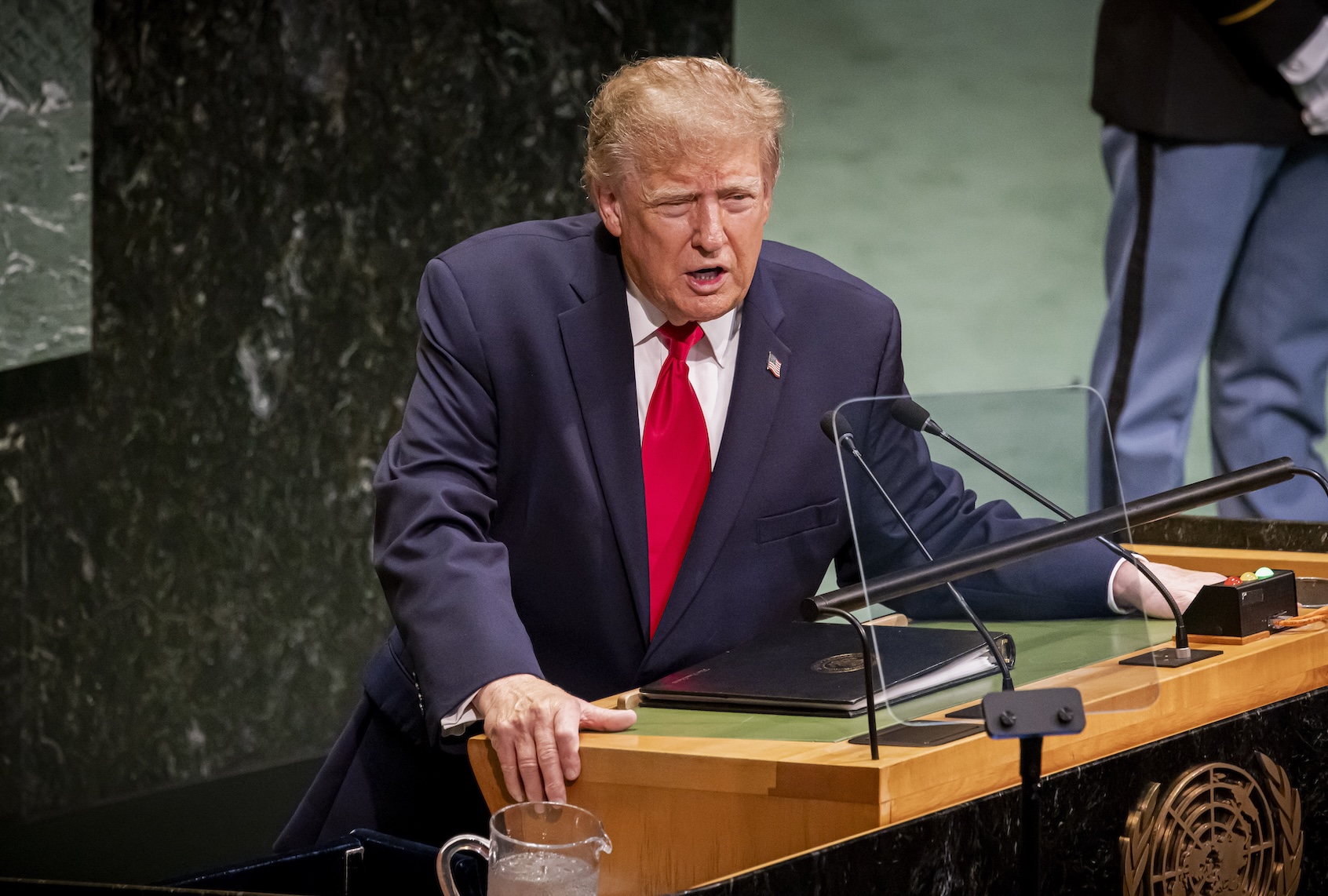
This week, the United Nations General Assembly convened in New York, focusing on pressing global conflicts, particularly the ongoing war between Ukraine and Russia, as well as the tensions in the Middle East involving the U.S. and Israel’s actions against Iran. A significant moment occurred when Iran’s President Masoud Pezeshkian addressed the assembly, declaring Iran a “victim of terrorism” at the hands of the United States. He emphasized resilience in the face of adversity, asserting, “we did not bend the knee,” while showcasing images of children who lost their lives due to U.S. missile strikes during the war. A recent U.N. fact-finding mission described these actions as potentially warranting war crime charges.
Diplomacy and Dialogue Amidst Conflict
During his speech, Pezeshkian urged that Iran is open to diplomacy and dialogue without succumbing to threats of military might. This marked a remarkable occurrence of a foreign leader speaking to a global body while engaged in a conflict with the host nation, as noted by various media outlets. In an act of protest, a U.S. representative left the hall during Pezeshkian’s address, signaling the deepening divide between nations.
Responding to Pezeshkian’s remarks, U.S. Secretary of State Marco Rubio dismissed Iran’s claims regarding human rights, stating that the nation has little authority to comment on international norms given its record of violations. Rubio condemned Iran for undermining the sovereignty of its neighbors and for the oppression of its own people, reinforcing the narrative of the U.S. stance on the Iranian regime.
Escalating Tensions and Casualties
In parallel discussions, former President Donald Trump voiced concerns about escalating the conflict with Iran, with the war already causing significant civilian casualties and spikes in global energy prices. Reports reveal discrepancies in the official count of U.S. military fatalities in the ongoing conflict, raising questions about transparency as the Pentagon provides differing figures.
Trump articulated a crucial decision ahead as he weighed the possibility of fostering a prosperous future for Iran against the option of swift military action to dismantle the regime. His remarks highlighted the delicate balance between potential diplomatic solutions and the aggressive stance associated with military might.
Ukraine’s Call for Economic Pressure on Russia
Meanwhile, Ukrainian President Volodymyr Zelenskyy urged the international community to sustain economic restrictions on Russia, emphasizing that any financial support to Russia extends the conflict in Ukraine. He argued that trade facilitates funding for continued hostilities, framing the engagement of nations in trade with Russia as detrimental. Zelenskyy characterized Russian President Vladimir Putin as a significant barrier to peace, dubbing him “Patient Zero” in the war’s ongoing spread.
In a separate address, Japanese Prime Minister Sanae Takaichi called upon the U.N. to reconsider the historical classification of former Axis powers as “enemy states,” reflecting Japan’s commitment to U.N. ideals. This appeal underscores the continued evolution and challenges within international relations as nations strive to redefine their roles in a changing geopolitical landscape.
Throughout the assembly, discussions on these multifaceted conflicts illustrate the complexities of contemporary diplomacy, with nations navigating historical grievances and immediate crises, seeking paths to peace amidst the tumult.