
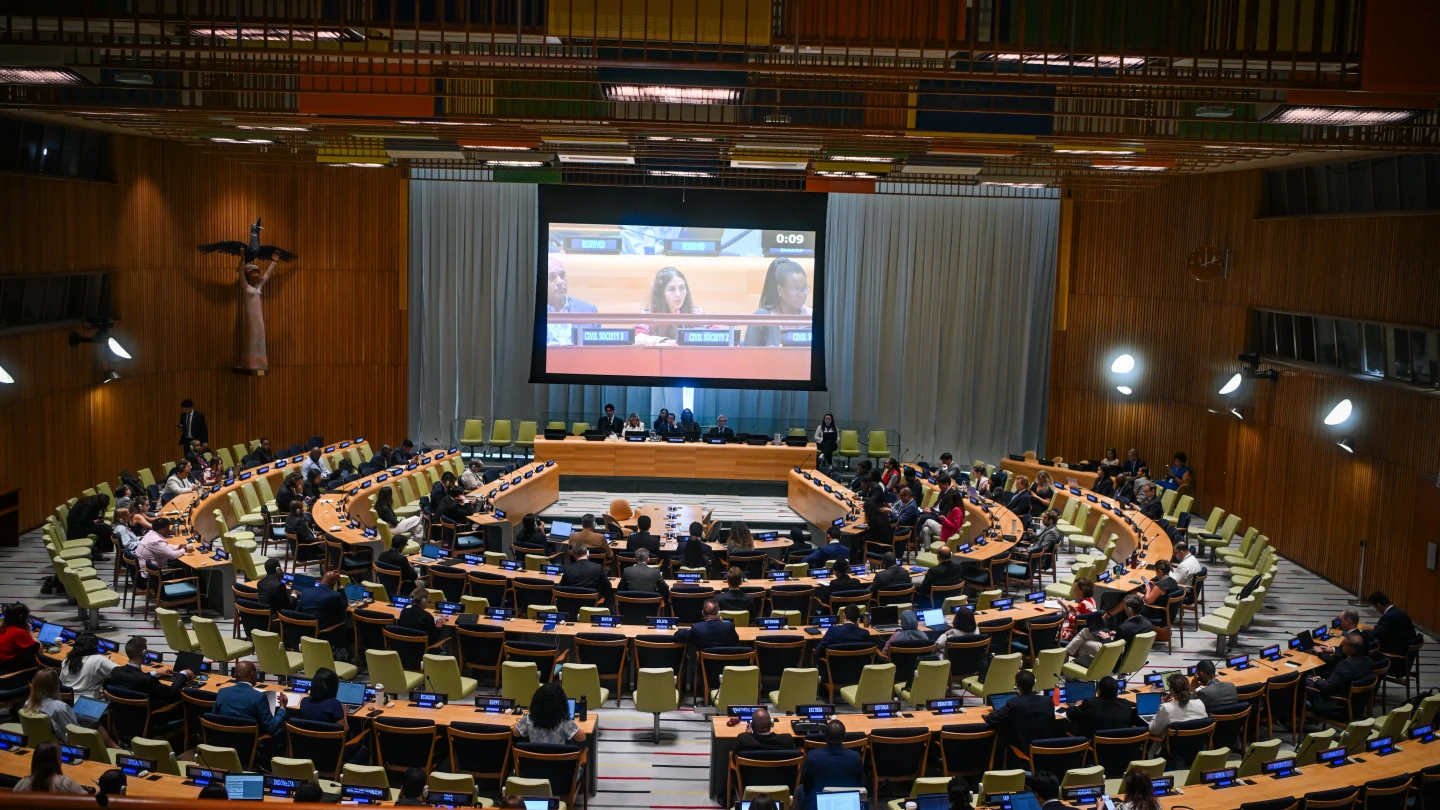
The discourse surrounding Israel at the United Nations General Assembly consistently intensifies, particularly as we anticipate Israeli Prime Minister Benjamin Netanyahu’s speech this Thursday. The rhetoric seems to reach new heights each year, with public figures voicing accusations and criticisms that often lack nuance and context.
Political Misuse of Israel’s Situation
New York Mayor Zohran Mamdani has recently labeled Netanyahu as a war criminal, a statement that adds to the growing number of criticisms voiced against Israel. It’s noteworthy that U.S. President Trump, present at the same event, chose not to engage with such a provocative comment. The narratives surrounding Israel have often resulted in leaders seizing the opportunity to divert attention from their domestic issues. For instance, Macron, Erdogan, and other prominent figures have leveled accusations of genocide and ethnic cleansing against Israel, using extreme language to condemn its actions in the region. This rhetoric serves as a political tool, allowing these leaders to consolidate their support while shifting blame away from pressing issues within their own countries.
Moreover, the language surrounding these accusations often evolves, but the underlying goal remains the same: to undermine Israel’s legitimacy and existence. This manufactured discourse misrepresents the realities faced by Israelis, especially in conflict-stricken areas like Judea and Samaria. As the Israeli populace reels from violence, world leaders produce narratives that overlook the ongoing threats Israel confronts daily.
The Human Cost of Conflict
Amidst the political posturing and international scrutiny, the human impact of the violence is all too real. Recent headlines reveal a tragic incident involving Neria Leiter, son of the Israeli ambassador to the U.S., who was critically injured in a terrorist attack at a checkpoint. This attack underscores the grim reality for many Israelis and highlights the human stories that often get lost in the political arena. Neria’s story is particularly heartbreaking, with the added context that his older brother was killed in action not long ago, illustrating the personal toll of ongoing conflict.
In a chilling reminder of the everyday threats Israelis face, another tragic incident occurred just prior when Netanel Shukrun was murdered in a car-ramming attack. Reports indicate that he left behind six children. Such violence exemplifies the continual cycle of hostility in the area and raises urgent questions about regional stability and security.
The Reality of Judea and Samaria
The dramatic speeches and fiery accusations made at the UN often omit the complexities of life in Judea and Samaria. Israel’s security concerns are not just abstract concepts; they are grounded in the realities of ongoing attacks from Palestinian territories. Experts argue that neglecting these complexities not only simplifies a multifaceted issue but emboldens extremist groups that threaten peace and stability.
Furthermore, historical context is crucial in understanding these dynamics. The Golan Heights, for example, are significant for Israel’s security. Before their capture in the 1967 Six-Day War, Syrian forces utilized these heights for attacks on Israeli communities. Yet, leaders like al-Sharaa feign ignorance over their strategic importance, thereby undermining the nuances of the Israeli-Palestinian conflict and perpetuating misinformation.
A Call for Global Understanding
As Netanyahu prepares to address the United Nations, he’ll confront an audience deeply entrenched in a narrative that often overlooks Israel’s legitimate security concerns. The challenge is monumental: to make the world recognize that Israel’s struggle is not merely a national issue but one that intersects with broader global questions about security and democracy. The future of the Middle East hinges not only on regional players but also on the understanding and engagement of the international community.
Ultimately, as political tides shift and nations wrestle with their own challenges, Israel’s fight for survival resonates beyond its borders. It is imperative that global citizens grasp that Israel’s battle against terrorism and for peace is a shared struggle that impacts the tenets of free societies worldwide.