
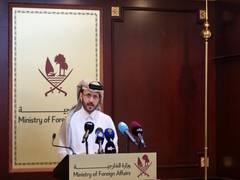
On September 25, Qatar firmly countered Israeli Prime Minister Benjamin Netanyahu’s assertions made during his speech at the 81st United Nations General Assembly (UNGA). Qatar’s Foreign Ministry spokesperson, Majed Al-Ansari, stated that these accusations were merely an attempt to deflect attention from Israel’s actions in the occupied Palestinian territories.
Qatar Responds to Allegations
In a statement shared on social media platform X, Al-Ansari rejected Netanyahu’s claims that Qatar is orchestrating a campaign to manipulate public opinion against Israel. He emphasized that this rhetoric is a diversion from the severe humanitarian consequences of the Israeli government’s actions. Al-Ansari’s response highlights that attributing shifts in public perception to external influences diminishes the awareness and judgment of the global audience, particularly younger generations who perceive events as they unfold.
He articulated that “reducing the growing shift in global public opinion, particularly among young people, to allegations of ‘influence campaigns’ is an insult to their awareness and judgment.” Al-Ansari suggested that for Israel to reshape its external image, there needs to be a genuine change in governmental policies and adherence to international law. He stated, “Attempts to hold Qatar, or anyone else, responsible for a global shift in public opinion shaped by what people themselves are witnessing are no longer persuasive.”
Netanyahu’s Accusations
Netanyahu’s allegations included claims that several countries, including Qatar and Turkey, have invested massively to disseminate what he termed “lies” about Israel. In his UNGA address, he asserted that Qatar was the first nation to engage in this endeavor, accusing it of trying to indoctrinate young people to harbor animosity toward Israel and the West. He further intensified his critique by labeling Turkey as a “super spreader of anti-Semitic lies” and directed sharp criticism toward Turkish President Recep Tayyip Erdogan.
This exchange between Qatar and Israel comes at a critical time, as international sentiment regarding the Israeli-Palestinian conflict is increasingly polarizing. The rhetoric from both sides underscores the complex geopolitical landscape and the various narratives vying for influence.
The Broader Implications
The statements from both leaders reflect the ongoing tensions and the importance of perception in international relations. Qatar’s remarks can be seen as a defense against being scapegoated for a changing narrative on Israel’s policies and practices. As global opinions continue to evolve, particularly among younger audiences who are more engaged through social media and other platforms, the implications of such disputes become increasingly significant.
The fallout from this argument underscores the necessity for transparent dialogue and the need for nations to confront their own actions rather than blame others for changing public sentiment. As international relations evolve, the ability for nations to navigate these conversations while maintaining integrity and accountability will be vital.
In conclusion, the exchange between Qatar and Israel exemplifies the current climate of global discourse surrounding the Israeli-Palestinian conflict. As both sides continue to articulate their positions, the impact on diplomatic relations and public perception will likely be profound and long-lasting.