
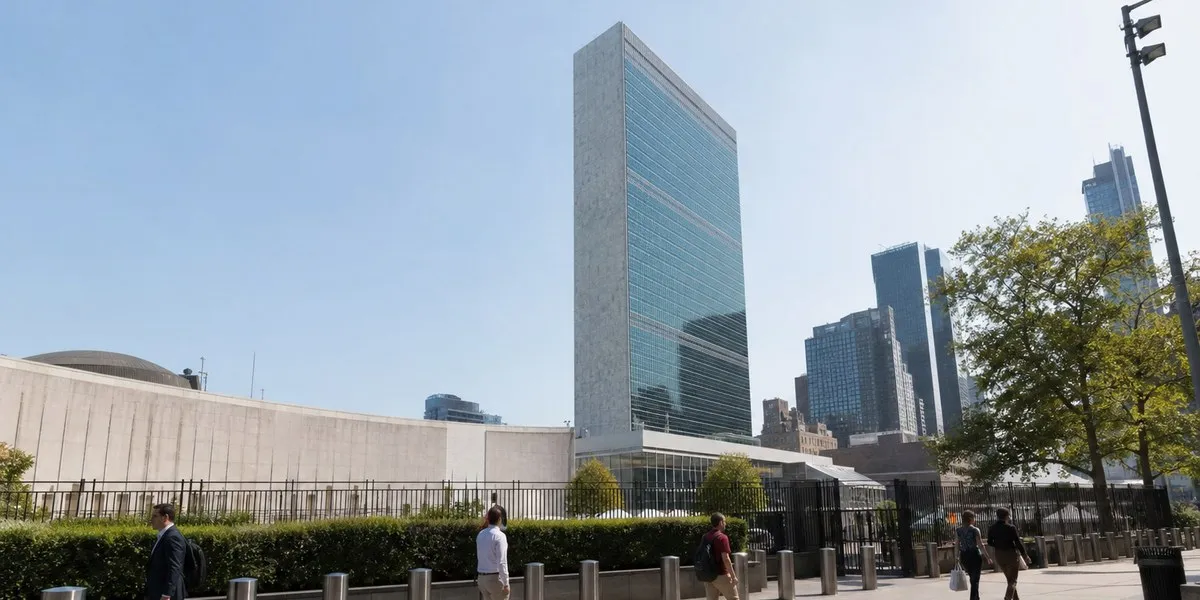
In the context of the ongoing UN General Assembly in New York, representatives from Qatar have taken center stage to advocate for social rights and democratic renewal. At the same time, the Emir of Qatar has sharply criticized Israel’s claims regarding its democratic status, asserting that it does not fit the criteria of a democracy in a hostile environment.
Discussion on Social Rights
A significant event titled “Realizing Social Rights and Renewing Democracy: From Doha and Chisinau to a New Democratic Compact for Europe” was held recently. Qatar was represented by Hanouf bint Abdulrahman Al Thani, who serves as the Director of the International Organizations Department in the Ministry of Foreign Affairs and is a member of the ruling family. During the event, she emphasized Qatar’s commitment to social development, recognizing that the nation is dedicated to revitalizing international efforts focused on putting people at the forefront of developmental processes and fostering social justice.
Critique of Israel
In a speech delivered at the UN General Assembly, Qatar’s Emir stressed that Israel’s portrayal as a democratic state in a hostile region is misleading. He contended that, contrary to the claims of Israeli leaders, it is Israel itself that fosters a hostile environment. This assertion aligns with Qatar’s ongoing critique of Israel’s political landscape, particularly relating to its treatment of Arab politicians and communities.
The issue of exclusion was notably highlighted by the recent decision to block Balad party candidate Sami Abu Shehadeh from participating in the Knesset elections. This move triggered accusations of incitement to terrorism and raised concerns about the marginalization of Arab citizens within Israel. The coverage of this issue by Qatari media outlets, including Al Jazeera and Al Araby, revealed the broader implications of such political actions and their perceived impact on the Arab community’s ability to engage in political discourse.
Reactions from International Analysts
Analysts have commented on Qatar’s use of these domestic events in Israel to project a negative image of the country. Dr. Ariel Admoni, an expert from Ariel University and the Jerusalem Institute for Strategy and Security, posits that Qatar’s selective coverage and interpretative lens serve to undermine Israel’s claims of being a democracy in the Middle East. Additionally, British researcher Andreas Krieg, who has previously advised the Qatari Armed Forces, echoed similar sentiments, arguing that the current political climate in Israel contradicts its self-proclaimed democratic status.
The conversation around social rights and democratic representation is gaining increasing importance in today’s global discourse. Qatar’s strong stance on these issues, combined with its critiques of Israel, reflects its ambition to play a more influential role on the international stage, advocating for human rights and democratic principles. As such discussions unfold, the attention towards both Middle Eastern dynamics and broader themes of governance and justice remain crucial for understanding the region’s complex political landscape.