
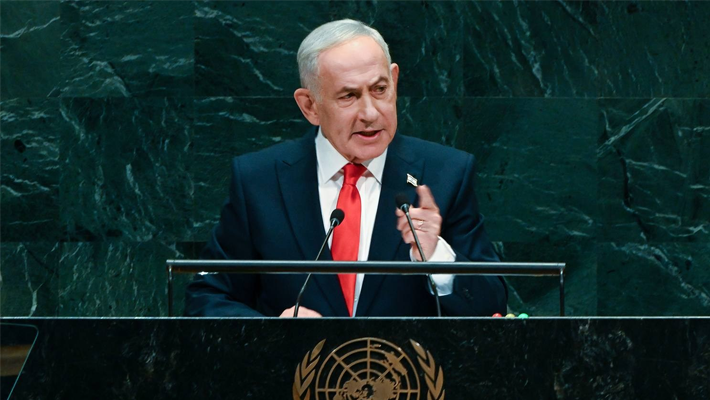
Qatar, Turkey, and Iran have voiced strong disapproval of Israel’s actions in Gaza amid the escalating humanitarian crisis and military operations. This situation continues to draw global attention, particularly during the recent 81st session of the United Nations General Assembly held at the UN headquarters in New York.
Netanyahu’s Accusations Against Qatar, Turkey, and Iran
During the assembly, Israeli Prime Minister Benjamin Netanyahu countered the criticisms leveled against Israel by accusing the three nations of disseminating misinformation and providing support to Hamas. He specifically targeted Qatar for its extensive financial contributions to American universities and the Al Jazeera network, alleging these investments are aimed at instilling anti-Israel sentiments in young people. Netanyahu articulated his defense of Israel’s military actions, arguing that such measures are necessary for national security.
Furthermore, he launched sharp criticisms at Turkish President Recep Tayyip Erdogan. In a pointed statement, Netanyahu made references to Erdogan’s controversial policies, including his treatment of Kurdish populations, his assertions of sovereignty over Jerusalem, and his government’s crackdown on press freedom. Netanyahu firmly declared, “He calls for Israel’s destruction every day. He says he will be the ruler of Jerusalem. No, sir, you won’t. It is our city,” emphasizing his stance on the contested status of Jerusalem.
Reactions from Qatar, Turkey, and Iran
In stark contrast to Netanyahu’s assertions, representatives from Qatar, Turkey, and Iran have dismissed his claims as baseless and accused him of perpetrating genocide in Gaza. Ahmet Yıldız, the Turkish mission representative at the UN, condemned Netanyahu as a morally bankrupt leader facing accusations of war crimes. He insisted that Turkey would maintain its solidarity with the Palestinian people until a sovereign Palestinian state is established.
Moreover, Abdulaziz al Sulaiti from Qatar’s Permanent Mission to the UN characterized Netanyahu’s comments as unfounded, suggesting that they were attempts to distract from Israel’s violations in occupied Palestinian territories. He criticized the use of incendiary language against Qatar and others, arguing that it is designed to sway global public perception, especially among younger demographics.
Naser Asadi, representing Iran’s UN mission, similarly condemned Netanyahu and criticized the UN for giving him a platform. He remarked, “The UN was not founded as a platform for war criminals,” highlighting the hypocrisy of Netanyahu’s claims of victimhood against the backdrop of an ongoing military offensive in Gaza. He warned that any threats to Iran’s sovereignty would trigger a formidable response.
Global Reactions and Ongoing Humanitarian Crisis
The exchange of accusations comes at a time when Israel’s military operations in Gaza have led to severe humanitarian repercussions, prompting various international bodies and world leaders to label Israel’s actions as tantamount to genocide. As the situation evolves, it appears the crisis has only deepened the divides between the key players in the region, while further complicating international diplomatic efforts aimed at resolving the ongoing conflict.
The ongoing humanitarian crisis in Gaza not only highlights the complexities of Middle Eastern geopolitics but also raises pressing questions about the responsibilities of global leaders in mitigating human suffering. As tensions remain high and diplomatic relations strain, the focus will increasingly be on how the international community responds to the human toll of this ongoing conflict.