
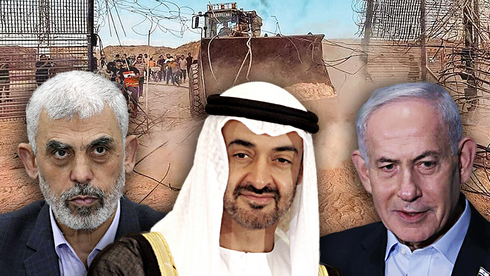
In recent developments surrounding the Israeli-Palestinian conflict, significant details have emerged regarding Prime Minister Benjamin Netanyahu’s handling of a warning from the Emirati President about a potential Hamas attack. This report highlights crucial lapses within the security establishment and raises questions about the flow of intelligence.
UAE’s Warning to Israel
Reports reveal that Sheikh Mohammed bin Zayed Al Nahyan of the UAE reached out to Netanyahu in late September 2023. The Emirati president conveyed vital intelligence indicating that Hamas was contemplating a major assault. However, it appears that this warning did not reach key players in Israel’s security hierarchy. Minutes from an Oct. 1 meeting, examined by the New York Times, show that Netanyahu held discussions about Gaza security but failed to mention the Emirati warning to his senior officials.
This revelation is supported by five former senior Israeli officials who confirmed to the Times that the warning never reached the relevant parties within Israel’s security apparatus. Previous accounts had already suggested that necessary information regarding the warning was not disseminated effectively among senior security officials, leading to critical oversights.
Contentious Strategic Decisions
During the Oct. 1 meeting, Netanyahu instructed his team to pursue a strategy that would maintain calm in Gaza. When discussions around potential military action against prominent Hamas figures arose, he cautioned that escalating tensions in Gaza could jeopardize normalization efforts with Saudi Arabia. This perspective seemingly prioritized diplomatic relations over immediate security threats, raising questions about the prioritization of national security.
Additional sources reported that Ronen Bar, the then-head of Shin Bet, advocated for proactive measures against Hamas leaders as a counter-response. Notably, Netanyahu did not approve these recommendations, thereby abstaining from taking action that could have preempted the impending violence.
Failure of Intelligence Communication
The most perplexing aspect of the situation is that Netanyahu notably omitted any mention of the Emirati warning during the aforementioned security briefing. This omission is critical, particularly as reports indicated that bin Zayed had also communicated the potential for violence from Hamas to William Burns, then-director of the CIA. This raises further concerns about whether necessary intelligence reached the appropriate channels within Israel.
Consequently, in the aftermath of the tragic events of Oct. 7, internal investigations conducted by the Israel Defense Forces (IDF) and intelligence agencies revealed that this warning was entirely absent from their findings. Those involved in the review processes have suggested that the Emirati alert was not documented or taken seriously, highlighting a broader failure in assessing the threat landscape.
The debate regarding Netanyahu’s awareness of the warning and his subsequent actions or lack thereof has intensified, particularly with upcoming elections on the horizon. While Netanyahu holds the military and intelligence bodies accountable for the lack of a preventive response, critics argue that his administration’s decisions leading up to Oct. 7 deserve scrutiny.
In conclusion, the discrepancy between received warnings and their handling underscores the profound challenges in managing intelligence and security effectively. As the political landscape shifts, this incident will likely continue to attract focus, shaping discussions on accountability and risk management in Israel’s ongoing conflict.