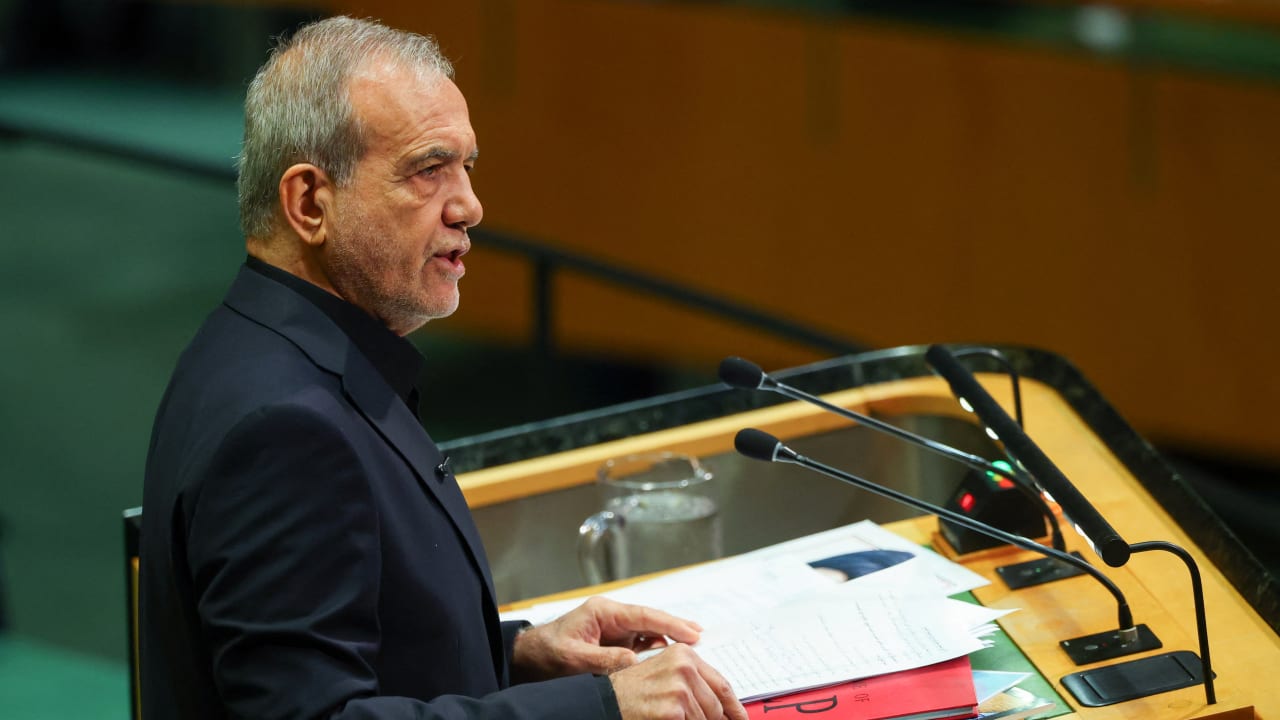
The Iranian leadership is increasingly skeptical of diplomatic discussions with the United States, highlighting the deteriorating relationship between the two nations. This sentiment was expressed by Iranian President Masoud Pezeshkian during an interview with Qatari state-funded network Al Jazeera.
Iran’s Defiance Against External Pressures
According to Pezeshkian, the Iranian people have displayed resilience against what he describes as assaults from both the U.S. and Israel. He emphasized that Iranians would maintain their stance and not succumb to foreign pressures. This assertion reflects Iran’s longstanding narrative of self-reliance amid international sanctions and military threats.
Pezeshkian further stated that the U.S. and Israel are attempting to thwart Iran’s capacity for self-dependence, asserting that both countries have entangled other regional nations in their perceived conflicts. He posited that these external powers misguidedly believe that Iran would collapse swiftly under pressure, indicating a significant miscalculation on their part.
Regional Security and Cooperation
The Iranian president underscored that regional stability should stem from cooperation among Middle Eastern nations rather than reliance on foreign intervention. He criticized the U.S. role as an uninvited “policeman,” particularly in the context of controlling critical passages like the Strait of Hormuz, an essential route for global oil shipments.
Given the ongoing military conditions, Pezeshkian mentioned that Iran could potentially serve as a mediator in the conflict involving Saudi Arabia and Yemen’s Iran-supported Houthi faction. This offer highlights Iran’s ambitions to expand its influence and engage in diplomatic roles traditionally dominated by Western powers.
Response from Saudi Arabia and Yemen
Despite Pezeshkian’s proposition to mediate, there has been no official comment from either Saudi Arabia or Yemen regarding Iran’s willingness to facilitate negotiations. Such silence may reflect ongoing suspicions and the complex dynamics that characterize their regional relations.
This situation indicates a multifaceted geopolitical game in the Middle East, where diplomacy is frequently overshadowed by historical grievances and strategic calculations. The outcome of these tensions could have far-reaching implications for regional stability and international relations in the broader context.
In summary, the rhetoric from Iranian officials like President Pezeshkian illustrates a commitment to resist U.S. and Israeli pressures while advocating for self-sufficiency and regional cooperation. However, the effectiveness of these claims and proposals remains uncertain amidst the intricate web of alliances and hostilities that define the Middle East today.