
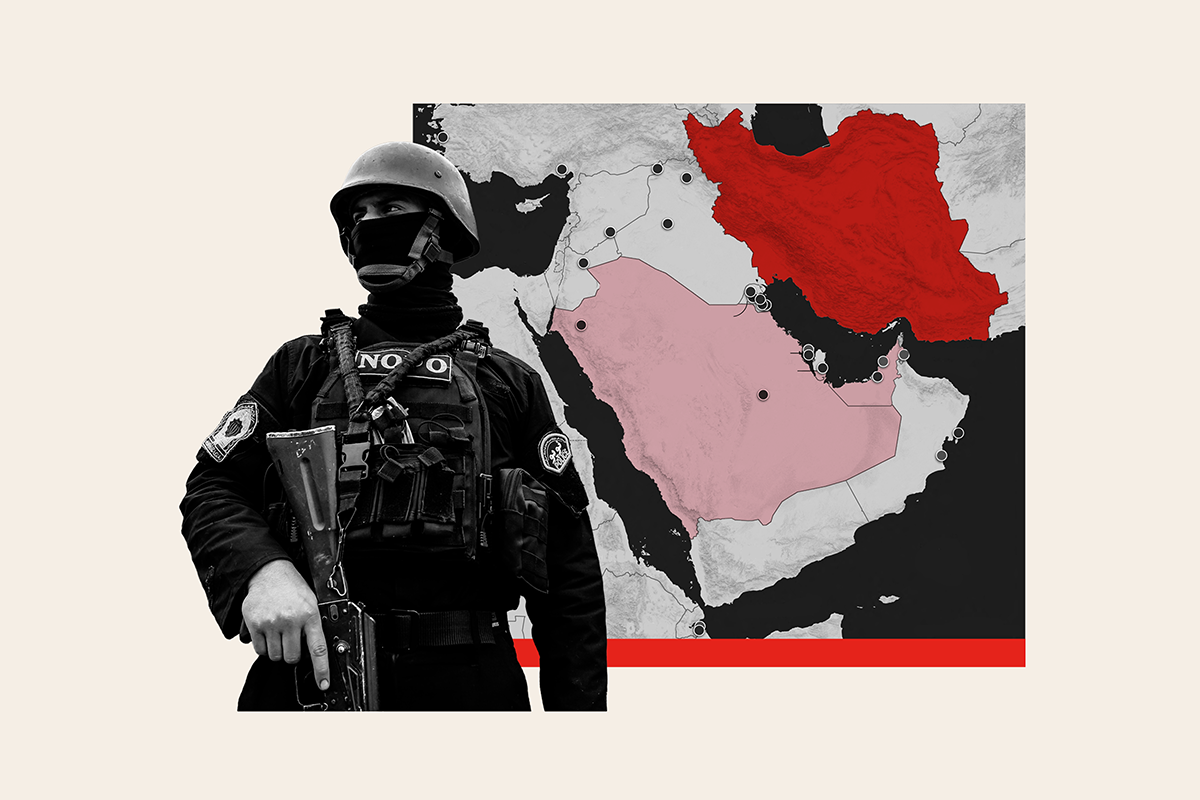
As Saudi Arabia and the United Arab Emirates (UAE) deepen their involvement in the U.S. and Israel’s military engagement against Iran, the ongoing conflict is reshaping alliances within the Gulf Cooperation Council (GCC) and altering regional dynamics. This reconsideration of partnerships poses both challenges and opportunities as neighboring nations reevaluate their geopolitical stances.
The Saudi Leadership Role
Saudi Arabia, unifying its territories under the House of Al Saud in 1932, has long held a pivotal role in the Arab and Islamic political spheres, bolstered by its control over Islam’s sacred sites in Mecca and Medina. The discovery of extensive oil reserves and a strategic alliance with the U.S. have only solidified the kingdom’s status as a key player in the region. In contrast, the UAE emerged as an independent entity only in 1971, yet it quickly modernized and established itself as a formidable economic power, ranking second in the GCC behind Saudi Arabia. Although the two countries maintain a collaborative relationship, experts suggest that Riyadh is likely to retain its centrality due to its larger demographic, military, and economic resources.
Nawaf Obaid, a senior fellow at King’s College, cites the growing tensions between Saudi Arabia and the UAE as a form of the “Thucydides Trap,” where a rising power threatens to displace an established one. He argues that while the UAE has built connections with Israel, it cannot fundamentally shift the balance of power in the Gulf, asserting that Saudi Arabia remains the bedrock of Arab influence and the GCC. The complexities of this dynamic raise questions surrounding the implications for both nations, especially as partnerships evolve in the face of external threats.
The Evolving Role of the UAE
The UAE’s burgeoning relationship with Israel predates recent tensions but has intensified due to the ongoing conflict. With Iran increasingly targeting UAE territories and assets, the Emirates have stepped up their strategic initiatives. Attacks on maritime trade and energy facilities have disrupted regional economies, while the UAE’s recent decision to exit OPEC+ signifies a shift in its energy strategy. Mohammed Baharoon of the Dubai Public Policy Research Center emphasizes that the UAE’s actions are driven by long-term objectives rather than an immediate response to crisis.
Despite such strategic pivots, Baharoon downplays the notion of a significant rift with Saudi Arabia, highlighting that both nations continue to call for de-escalation regarding tensions with Iran. He further points out that criticism within their partnership does not equate to animosity and may not severely undermine overall GCC cooperation.
Israel’s Strategic Interests
Israel views its partnership with the UAE as crucial amid the conflict, with Yoel Guzansky calling the UAE one of its most vital allies. The collaboration has strengthened military ties, with both nations reportedly conducting joint operations in response to Iranian assaults. However, the partnership comes with risks; public sentiment in the Arab world largely remains against Israeli actions, especially amid heightened violence in Gaza and Lebanon.
The regional implications of the UAE-Israel alliance have not gone unnoticed in Saudi Arabia, which still aims to engage more broadly with Arab nations by fostering relationships with countries like Egypt and Turkey. As alliances shift, the emergence of new coalitions such as the “Quartet” could redefine strategic discussions in the region. The ongoing convergence of interests showcases how emerging partnerships can both complicate existing dynamics and create opportunities for collective actions against Iran’s influence.
The challenge remains for all parties: balancing internal pressures while navigating the complexities of increasingly fluid geopolitical landscapes. As Saudi Arabia, the UAE, and Israel reassess their roles, they must tread cautiously to avoid miscalculations that could escalate tensions rather than resolve them.