
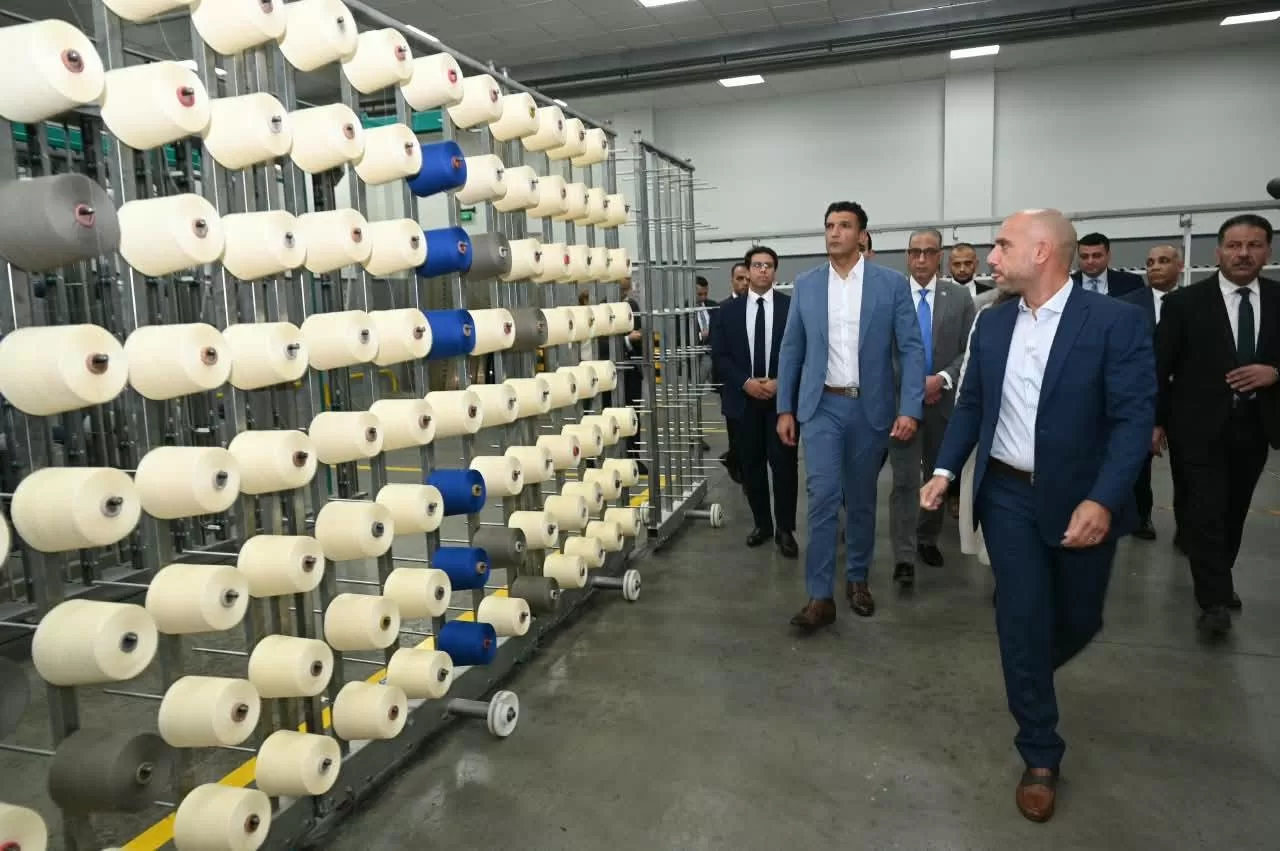
The textile and spinning industry is increasingly recognized as a vital component of Egypt’s industrial framework. Minister of Industry Khaled Hashem emphasized its significant potential to integrate into global supply chains, enhance domestic manufacturing, and elevate export activities during a recent visit to the industrial zone in 6th of October City.
Inspections of Key Facilities
On Saturday, Hashem toured two textile factories specializing in various processes, including knitting, dyeing, printing, and finishing. This visit aimed to evaluate the production processes and stages within these facilities. Hashem pointed out that the textile sector possesses several competitive advantages. These include its labor-intensive nature, comparatively low energy consumption, and availability of skilled labor. Such advantages can attract further investments that support both production and export initiatives.
At Naga Tex, for example, Hashem observed that the factory produces around 1.44 million meters of fabric annually, with 90% of its components sourced locally. A noteworthy aspect is that around 60% of the factory’s output is exported to countries like Switzerland, Turkey, Germany, Brazil, and Italy, yielding approximately $2 million in export revenue.
Expansion of Local Capacity
Hashem also inspected the Misr Al-Salam facility, which focuses on knitting, dyeing, printing, and finishing. With an annual capacity of 5,000 tonnes of dyed and printed fabric and 80% local components, Misr Al-Salam is also notable for its export practices, sending 20% of its output to Turkey and Morocco and generating about $3 million in export income. The Minister stressed the importance of increasing local components and integrating production chains to boost the competitiveness of Egyptian products and fulfill the country’s industrial and export goals.
Investing in New Production Lines
Earlier that day, Minister Hashem inaugurated a new production line at Unilever’s Mashreq personal care facility in the same industrial area. This addition aims to enhance the plant’s annual production capacity by 20%. The new line, being the 13th at this location, will focus solely on fulfilling export market demands. Hashem noted the significant role Unilever plays in Egypt’s industrial landscape, operating three factories and exporting products to over 30 countries.
The Mashreq factory covers an area of 22,000 square meters and manufactures a wide range of personal care, beauty, and home care products. Currently, about 65% of its production is exported, with around 80% of the materials used sourced locally. This year also marks the 20th anniversary of Unilever’s operations in Egypt, coinciding with the launch of the new production line.
Government Initiatives and Industry Growth
Hashem reaffirmed the government’s commitment to bolstering local manufacturing and export capabilities. He stated that efforts are underway to enhance industrial services and facilitate the growth of existing companies while also attracting new investment. The Ministry of Industry highlights Unilever as a key player, ranking first among exporters of personal care products from Egypt.
The focus on the textile and spinning sectors showcases Egypt’s strategic direction in enhancing industrial output and expanding its role in the competitive global market. With ongoing investments and a supportive government framework, the future seems promising for Egypt’s industrial landscape.