
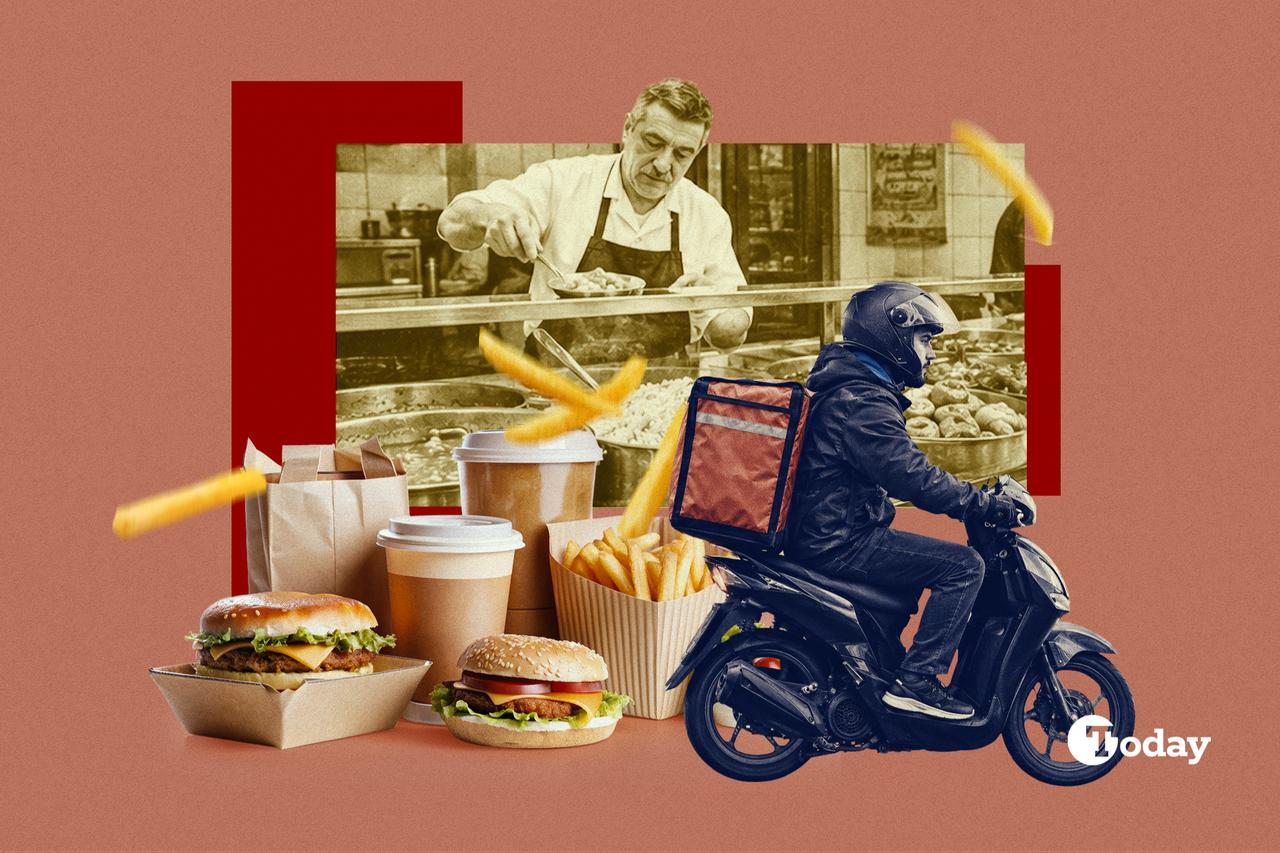
Istanbul’s culinary scene is undergoing a profound transformation, as traditional dining experiences face increasing competition from the fast food industry. Local eateries, known as esnaf lokantasi, where traders and workers gather for hearty stews and pilafs, are slowly giving way to the convenience of quick-service meals. This shift illustrates broader changes in Turkish society, particularly as fast food becomes the predominant choice for many consumers.
The Decline of Traditional Diners
As noon approaches, the enticing aroma of freshly prepared dishes wafts from behind glass counters in local diners. Regular patrons often don’t need to place an order, as the cooks know their preferences innately. However, just a few streets away, fast food delivery couriers wait patiently outside popular chains, reflecting a stark contrast in dining cultures. In 2025, hamburgers topped the list as Türkiye’s most ordered meal, with nearly 98 million delivery requests. This shift isn’t merely a change in palate; it resonates with deeper societal pressures, such as rising living costs and the growing preference for convenience.
The appeal of fast food may seem like a byproduct of American influence, yet it’s more accurately associated with socio-economic factors. Urbanization and shrinking households have made home cooking increasingly impractical for many. Sociologist Besim F. Dellaloglu notes the decline of esnaf lokantasi as a symbol of a bygone era, where locals strolled to work and dined nearby. The rise of fast food chains, such as McDonald’s—which made its debut in Istanbul in 1986—highlights a move towards standardization and convenience, marking a significant shift in how food is produced and consumed.
Changing Household Dynamics
The transformation of family structures in Türkiye is significant. In recent years, the average household size has decreased from four members in 2008 to approximately 3.11 in 2024. This shift has led to a rise in single-member households, which have increased from 14.9% to 20% between 2016 and 2024. As cooking becomes more time-consuming relative to the number of people, many individuals find little incentive to prepare meals themselves. This dynamic often leads to increased reliance on food delivery services, which promise the convenience of dining without the hassle of cooking.
Delivery platforms like Yemeksepeti have seen remarkable growth, ballooning from 900,000 active users in 2010 to over 13 million by 2025. This rapid expansion is indicative of a larger trend toward quick commerce, as individuals lean more heavily on services that prioritize speed and efficiency. Consequently, food that withstands transport—often the fast foods that can endure travel—gains greater popularity, further marginalizing traditional dining establishments.
The Impact of Inflation on Eating Habits
Economic factors also play a crucial role in shaping food choices in Türkiye. Amid persistent inflation—peaking at 31.51% in August 2026—consumers have become increasingly cost-conscious. The rising prices of basic commodities justify favoring predictability over culinary exploration. Fast food offers a clear advantage, with set prices for meals, contrasting sharply with the variable costs typically associated with dining out in independent restaurants.
As prices fluctuate, the middle tier of the food economy—representing casual dining—faces immense pressure. A recent report indicated that nearly 83,000 small businesses, including traditional eateries, closed in the first eight months of 2026 alone, reflecting a worrying trend. While fine dining establishments continue to thrive alongside the growing fast food market, the once-popular mid-range options are steadily disappearing.
The Future of Turkish Food Culture
The shift toward fast food is not exclusive to Türkiye; it mirrors a global pattern seen in many emerging markets where urbanization and dual-income households seek convenience. Despite the modernization of eating habits, a significant portion of Turkish culinary heritage remains intact through locally sourced products. Although burgers might dominate the delivery landscape now, traditional cultural aspects continue to linger, albeit under threat.
Ultimately, the evolution of Turkish food culture signifies both a loss and an adaptation. As the younger generation becomes accustomed to ordering meals via apps, the experience of sitting in a local diner may fade into memory. The convenience of delivery offers immediate satisfaction, but it also risks sacrificing the rich, communal traditions of dining that define the country’s gastronomic identity. As the fast-food market expands and more storefronts shutter, Türkiye’s food culture stands at a crossroads, poised between tradition and modernity.