
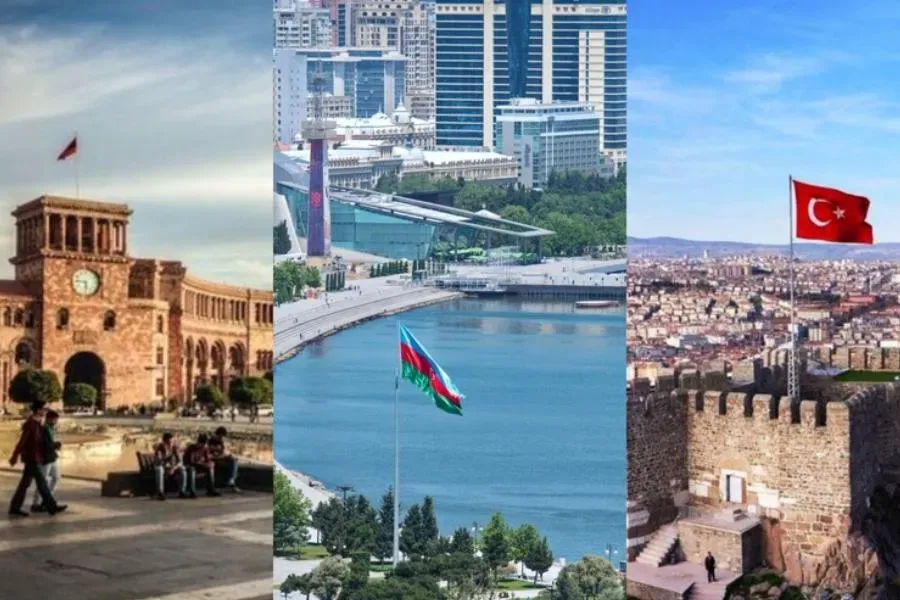
In recent days, a pressure campaign has emerged in Turkish social media and various media outlets regarding the Azerbaijani delegation’s decision to stay in the hall during Israeli Prime Minister Netanyahu’s speech at the UN General Assembly. Critics have accused Baku of “betraying brotherhood,” but history tells a more complex story.
The Historical Context of Azerbaijan and Turkey’s Relationship
To understand the current situation, we must revisit 2009 and an event at Bursa’s Atatürk Stadium. During this period, Türkiye and Armenia were engaged in what was known as “football diplomacy.” The Zurich Protocols were being analyzed, even as Azerbaijani territories remained under occupation and the lingering trauma from the Khojaly massacre and numerous Azerbaijani military deaths weighed heavily on the national psyche. At a Türkiye-Armenia match in Bursa, nearly 20,000 attendees and the leadership of both countries sat silently while gestures of goodwill unfolded. Notably, however, FIFA banned Azerbaijani flags from the event, leading to incidents where law enforcement confronted individuals trying to enter the stadium with their flags. This action, met with indifference from the crowd, left the Azerbaijani people feeling a profound sense of betrayal and wounded brotherhood.
Contradictions in the Criticism
Those maligned Turkey for Azerbaijan’s decision to stay in the hall often overlook their own country’s significant trade relationships with Israel. As detailed in the latest UN Comtrade statistics, Turkey ranks fifth among countries exporting goods to Israel, with exports valued at approximately $2.86 billion in 2024. This raises a curious question: how can social media activists in a nation that maintains billions in trade with Israel criticize Azerbaijan for remaining in a hall while 72 other countries chose to leave? If leaving the hall is deemed an act of principled defiance, how do we classify the ongoing trade with Israel?
The Nuances of Diplomatic Relationships
If leaving the hall during emotionally charged protests is touted as a diplomatic victory, it would stand to reason that not attending the event in 2009 should have also been seen as important. After all, sitting alongside the leader of an occupying country like Armenia was deemed acceptable back then. In this light, Azerbaijan’s decision to maintain diplomatic presence during Netanyahu’s speech seems less about betrayal and more about strategic diplomacy. This contradiction raises the question: why was watching a football match with an occupying nation seen as acceptable diplomacy, yet Azerbaijan’s presence in a UN hall is labeled as disloyal?
The Importance of Respecting Sovereignty
Certain factions in Türkiye have attempted to influence Azerbaijan with appeals to “Muslim solidarity,” yet these efforts are unlikely to succeed. Azerbaijan operates as a secular and independent nation, placing its national interests above emotional rhetoric. The country’s foreign policy is formulated based on strategic objectives rather than external pressures. Proponents of the “One nation, two states” principle should respect Azerbaijan’s right to make its own foreign policy decisions. Those who focus on past grievances and ignore the complexities of modern diplomatic relationships should first reflect on their own actions before criticizing Baku’s decisions.
In conclusion, as Azerbaijan navigates its role on the international stage, it is essential for both nations to prioritize their respective national interests while fostering a spirit of mutual respect and understanding. Acknowledging historical nuances can help clarify current diplomatic dynamics.