
The upcoming end of the US-led Global Coalition’s military mission in Iraq marks a significant pivot towards a new bilateral security relationship between Baghdad and Washington. As this transition unfolds, analysts emphasize that Iraq remains a highly volatile arena in a broader regional conflict characterized by multifaceted confrontations that extend beyond national borders.
The Complexity of Regional Dynamics
Recent insights from six experts indicate that the Middle East has entered an era defined by fluctuating violence that doesn’t adhere to a single front line. Rather than a singular decisive confrontation, the tension is now interlinked between Iraq, Syria, Lebanon, Yemen, and the Gulf. This interconnectedness means that a military action in one area could lead to escalations in another, often involving armed groups that operate outside the control of any government. Since the onset of hostilities between the United States and Iran this past February, shipping activities through critical maritime routes like the Strait of Hormuz and Bab el-Mandeb have faced significant disruptions, leading to heightened shipping risks.
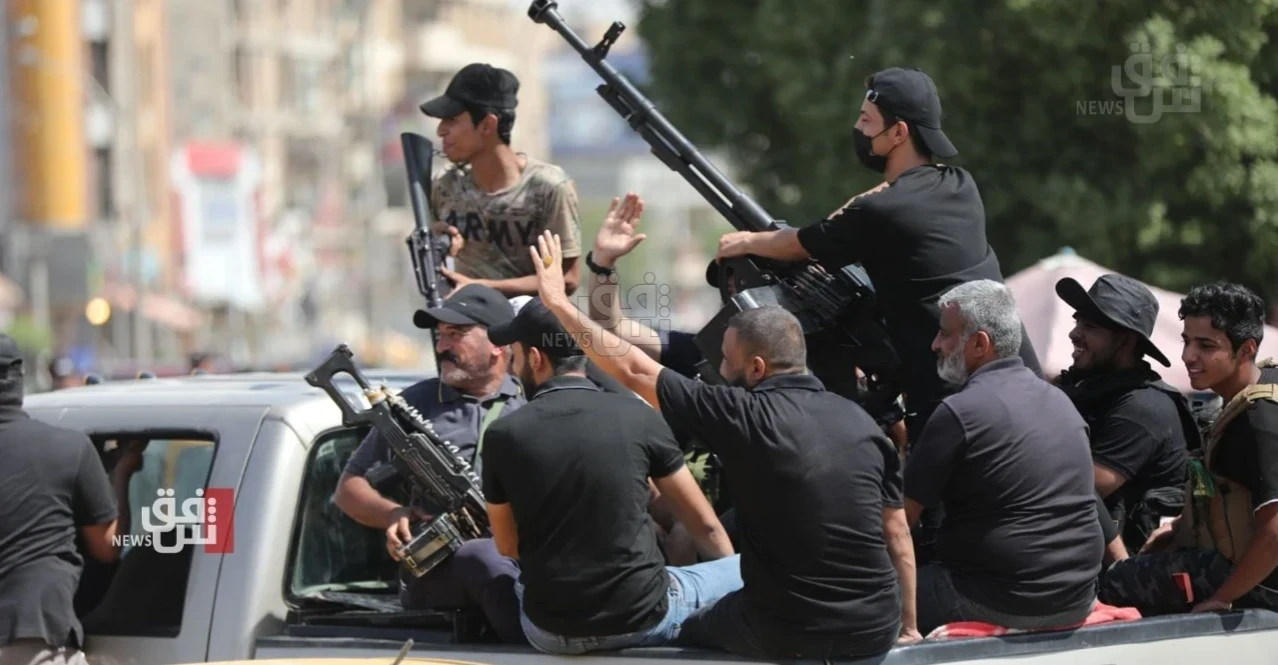
In Iraq, multiple factions operate within the Popular Mobilization Forces (PMF), a state-backed organization established in 2014 during the fight against ISIS. Many of these factions maintain strong ties to Tehran, and their political representatives are embedded in the Coordination Framework, which is pivotal to the country’s governance. With Prime Minister Ali Falih al-Zaidi now in charge, there’s an ongoing effort to keep Iraq neutral amidst escalating regional tensions and to manage the disarmament of these factions, many of which report directly to Iran rather than his government.
Understanding the Mistrust and Division
Firas Elias, an international relations expert, argues that approaching the region’s armed groups as a single entity is a misguided perspective now. The factions involved have divergent objectives and affiliations. Elias conceptualizes the situation as three overlapping circles: one representing Iran and its allies throughout the region, a second concerning Israel and its military aggressions, and a third focused on the United States as the region’s preeminent foreign military power. With participation from Turkey, the Gulf states, and Syria, this configuration intensifies the risks involved. He posits that any error in judgment could escalate tensions dramatically, especially considering Iraq’s geopolitical position and its armed factions that possess advanced weaponry.
For Elias, the urgency lies not only in keeping Iraq detached from the conflict but in ensuring that the Iraqi state can assert control over the use of military force. Should instability extend to energy assets or vital shipping routes, the ramifications could soon transform into a broader economic crisis with significant ripple effects on international markets.
The Influence of External Players and Local Factions
Adnan al-Kinani, an Iraqi security analyst, suggests that the ongoing conflict has evolved beyond its primary players—the United States, Israel, and Iran—spilling into areas controlled by their respective allies. The Houthis in Yemen, Iraqi government factions, and Hezbollah in Lebanon are likely to play supporting roles if hostilities with Iran intensify. He emphasizes how the Syrian conflict has cooled down, in contrast to escalating tensions involving Yemen, particularly as Saudi Arabia adopts a more proactive stance against the Houthis.
While Iranian relationships with these groups vary in intensity, Hezbollah has maintained a strong ideological and strategic partnership with Tehran. In contrast, the Houthis project a more distinct political identity, even as they collaborate closely with Iran. The multifaceted nature of these alliances complicates the overall dynamics, necessitating comprehensive strategies to avert further escalation.
The Road Ahead: Iraq’s Security and Stability
Political researcher Sami Salam highlights the influence of external nations such as Turkey and Saudi Arabia, suggesting that simplistic two-camp interpretations fail to capture the complexities at play. Recent agreements between the Iraqi and Turkish governments regarding military bases signify efforts to reassert the authority of the Iraqi state. Negotiations around disarming local factions and managing foreign military presence will be pivotal in shaping Iraq’s future.
Concerns linger about whether significant factions will align with al-Zaidi’s objective of neutrality. While some have begun integrating into official state structures, others staunchly hold onto their arms, insisting on retaining military capabilities due to perceived regional threats. As Iraq charts a course forward, the coming months will likely be crucial for assessing how these dynamics will unfold, especially as the broader geopolitical landscape shifts around them.
In summary, the pathway towards achieving stability in Iraq and the wider region is fraught with challenges that require careful navigation and collaboration among multiple stakeholders, both domestic and international.