
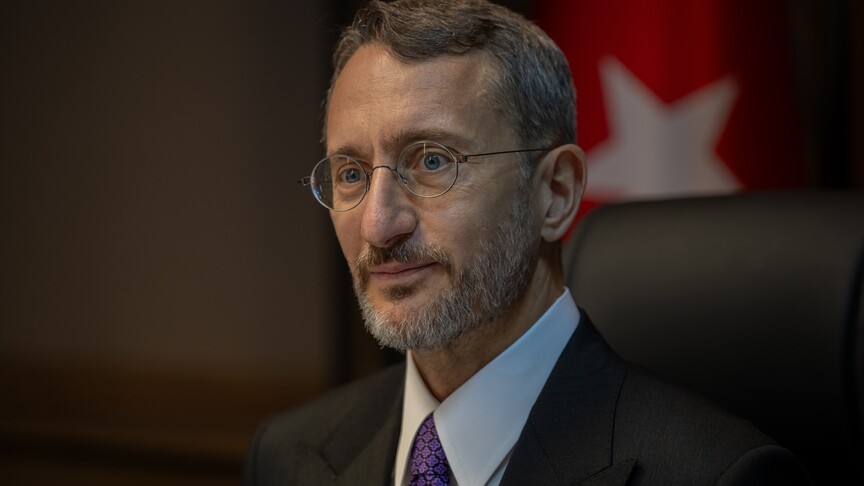
Turkey’s Ambassador to the Vatican, Fahrettin Altun, emphasized the importance of blending religion and diplomacy to foster a culture of peace. His remarks highlight how fostering dialogue, upholding human dignity, and promoting coexistence can effectively bridge divides among diverse backgrounds.
The Role of Dialogue in Fostering Peace
During a recent event hosted by the Carita Politica organization, Altun posed a compelling question: “Can humanity learn to coexist peacefully while embracing our differences?” This inquiry is particularly pressing in today’s climate marked by conflict, displacement, and a growing mistrust in international institutions. He articulated that societies are not only battling political and geopolitical crises but are also facing a significant anthropological and moral breakdown. In an age where consumerism increasingly defines individuals by their possessions and desires, Altun advocates for a return to core values centered around responsibility and sacrifice.
Religious traditions, he argued, offer a more profound understanding of what it means to be human, challenging the reductionist views prevalent in modern society. Drawing from the Quran, Altun stressed that human dignity is a universal right, transcending political identities, nationalities, and ethnicities. This perspective invites us to view our differences as opportunities for connection rather than conflict.
Understanding Differences as Opportunities
Altun employed the Quranic principle of “lita’arafu,” or “so that you may know one another,” emphasizing the importance of recognizing differences in identities. He remarked that when we encounter diversity, we face a choice: to see others as threats or to engage with them. Choosing the latter leads to dialogue, while the former gives rise to fear. He articulated a vision for diplomacy that goes beyond mere state relations, proposing a model that acknowledges the existence of the “other” without requiring people to surrender their beliefs.
The ambassador underscored the idea that maintaining one’s religious or cultural identity doesn’t preclude engaging with those from different backgrounds. Instead, he proposed a framework that values “unity without uniformity,” allowing for coexistence amidst diversity.
Justice as a Cornerstone of Sustainable Peace
Altun urged that international politics should not be solely focused on the calculation of power and interests. He contended that true and lasting peace must be grounded in justice, warning that a reductionist approach where power dynamics dictate decisions will eventually override ethical considerations. This perspective stresses that religious traditions have a crucial role in reminding policymakers of the humanitarian ramifications tied to their political choices, including those related to war and migration.
He also touched on the implications of technological advancements, especially artificial intelligence. While these innovations pose questions regarding human identity, Altun argued that markets and political power alone cannot provide satisfactory answers. Rather, these challenges call for engagement with philosophy and ethics to explore the deeper meanings of our existence.
In summary, Altun contended that peace is not merely the absence of conflict or agreements but begins when individuals recognize each other as fellow humans, overcoming barriers of faith, culture, and political differences. His remarks point to a need for renewed commitment to dialogue and understanding in a world increasingly defined by division.
Archbishop Paul Richard Gallagher, the Vatican’s Secretary for Relations with States, echoed these sentiments, reinforcing the notion that the right to freely practice one’s religion is foundational in promoting peace and diplomacy. He asserted the Vatican’s role as a longstanding institution in operational diplomacy, capable of addressing the crises afflicting today’s multilateral systems. This exchange of ideas underscores the critical intersection between religion and diplomatic efforts in striving for a more peaceful world.