
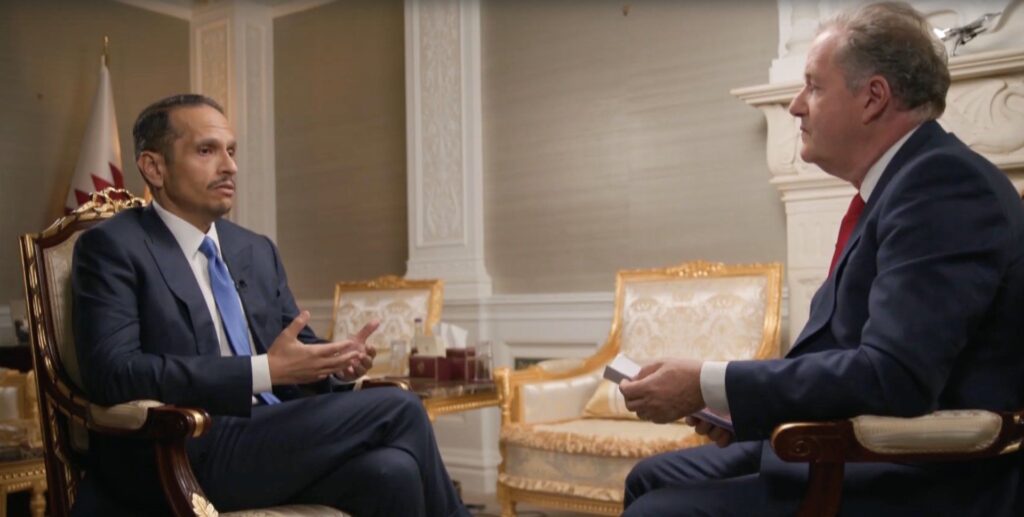
In a recent interview, Qatar’s Prime Minister made headlines by criticizing Israeli Prime Minister Benjamin Netanyahu. This exchange highlights the complexities of geopolitical relationships in the Middle East, especially in the backdrop of ongoing conflicts.
Qatar’s Response to Israeli Criticism
The Prime Minister of Qatar accused Netanyahu of using the country as a scapegoat to divert attention from Israel’s actions in Gaza. According to reports from Al Jazeera, Qatar’s leadership believes that such criticisms are an attempt by Netanyahu to manipulate global public perception. During the discussion with renowned British broadcaster Piers Morgan, aired on September 29, 2026, the Qatari official pointed out the need to focus on the broader implications of the ongoing conflict rather than enabling political narratives that overshadow serious allegations.
Highlighting War Crimes in Gaza
In the interview, Qatar’s Prime Minister firmly stated that the spotlight should be on the reported war crimes committed by Israeli forces in Gaza. He highlighted that the ongoing military actions have resulted in significant civilian casualties and destruction, which merits serious international scrutiny. Rather than deflecting attention towards Qatar’s stance on the conflict, the Prime Minister emphasized the critical need for accountability concerning Israel’s actions against Palestinians.
Media Influence and Public Perception
The discussion also underscores the role of media in shaping public perception regarding international conflicts. By drawing attention to Qatar’s criticisms, Netanyahu may be attempting to sway public opinion away from contentious issues facing Israel. The Prime Minister of Qatar articulated that such tactics are ineffective when faced with the ongoing humanitarian crisis in Gaza, suggesting that media narratives should focus on factual reporting rather than political maneuvering.
The Broader Implications for Middle Eastern Relations
The exchange between Qatar’s leadership and Netanyahu is indicative of the broader tensions within Middle Eastern relations. As countries grapple with their identities and alignments, the rhetoric used in such interviews can serve as a litmus test for international diplomacy. The comments from Qatar’s Prime Minister not only challenge Netanyahu’s narrative but also call for a more balanced discourse surrounding the Israeli-Palestinian conflict.
This ongoing dialogue will likely impact future negotiations and relations in the region, shaping how nations position themselves in light of humanitarian concerns and political realities. As the situation evolves, the responsibility lies with media and political leaders alike to foster a more informed conversation that prioritizes human rights and accountability.