
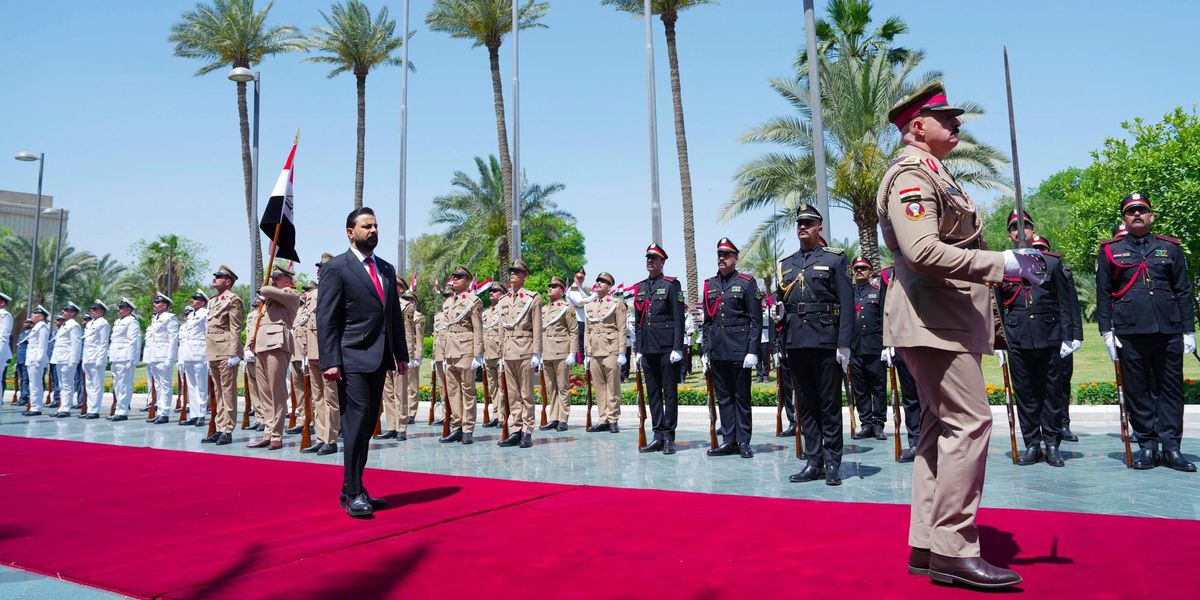
Iraqi billionaire Ali al-Zaidi has been appointed as Iraq’s new prime minister, marking a significant political development six months post-election. His selection appears to resonate with key stakeholders, including Washington, Tehran, and Iraq’s deeply fragmented political landscape. However, Zaidi faces formidable obstacles as he seeks to navigate the contradictory demands of three major powerbrokers regarding Iran-backed militias in Iraq.
Challenges of Managing Iranian-Backed Militias
One of the most pressing issues Zaidi must tackle involves the various militias that emerged during the fight against ISIS. Many Iraqis regard these groups as legitimate forces that played a crucial role in protecting the nation when the state was near collapse. However, over time, these militias have evolved beyond mere military organizations. They now possess extensive financial networks, control key logistics routes, and have solidified their presence within the Iraqi parliament and state institutions, blurring the lines between official governmental authority and unofficial militia power.
Tehran sees these militias as an essential component of its influence in the Arab world. Recent visits by Esmail Qaani, the commander of Iran’s Quds Force, to Baghdad underscore Iran’s ongoing efforts to safeguard these armed groups’ status. Qaani has stressed that any attempts to disarm the militia or restructure the Popular Mobilization Forces (PMF) would cross “red lines.” For Iran, the militias serve as both a deterrent against U.S. pressure and a means to project power throughout the region, thus complicating any efforts to modify the existing structure.
The U.S. Perspective on Militias
Contrasting sharply, Washington views these militias as Iranian proxies that threaten Iraqi sovereignty and U.S. interests. The American position is conditional support for Zaidi, who is seen as a pragmatic alternative to past leaders more closely aligned with Iran. U.S. support comes with clear demands: marginalize these militia forces and impose stricter controls on their financial operations. For the U.S., dismantling or subjugating these armed groups to state control is of utmost importance, representing a challenge to Iranian influence in Iraq.
The broader historical context adds another layer to this complex situation. Iraq was traditionally a frontline for Arab resistance against Iranian influence, particularly evident during the lengthy Iran-Iraq War. In the wake of the 2003 U.S. invasion, however, the dynamics flipped, transforming Iraq into a strategic buffer for Iran against regional adversaries. This change has made the militias even more critical for Tehran in terms of maintaining its foothold in the region.
Paths Forward for Ali al-Zaidi
The road ahead for Zaidi is fraught with challenges as he endeavors to meet the demands of these three conflicting entities. His political predecessor, Haider al-Abadi, advised against any direct confrontation with the militias, urging Zaidi instead to pursue dialogue and integrate these groups gradually through political channels. Some experts argue that immediate disarmament may be impractical, especially as many faction members rely on militia structures for their livelihoods. Thus, integrating these groups into state frameworks is seen as a more feasible solution.
Zaidi’s political acumen will be tested as he attempts to balance the expectations of both Tehran and Washington while maintaining stability within Iraq. Hezbollah-style militias have embedded themselves into the very fabric of Iraqi society, making any abrupt tactical shifts potentially destabilizing. The political class largely prefers to work within existing structures rather than risk violence or fragmentation through direct confrontations.
Navigating this complex political landscape presents a daunting challenge for Zaidi. While he may have garnered acceptance from all sides, the question remains whether he can meet the disparate demands of his political environment. His success will depend on his ability to forge compromises where each concession risks alienating one of the key players. As he embarks on this intricate balancing act, the stakes for Iraq’s governance and its future stability are higher than ever.