
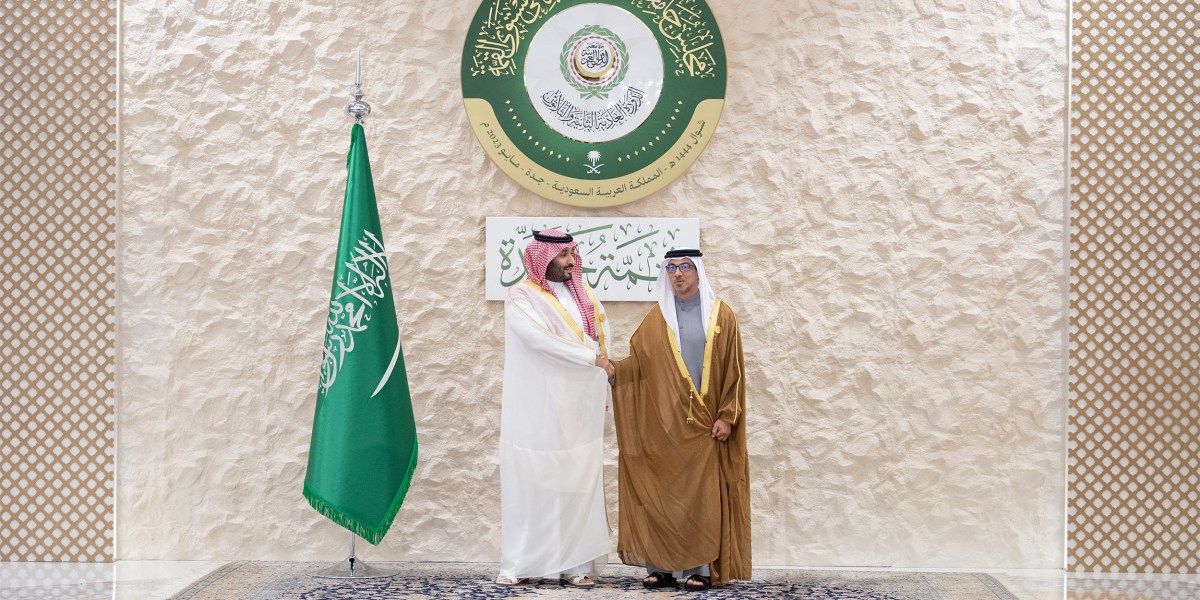
In a significant development, the United Arab Emirates’ Vice President Sheikh Mansour bin Zayed conducted a meeting with Saudi Crown Prince Mohammed bin Salman in Riyadh, marking a diplomatic turnaround after earlier tensions catalyzed by the conflict in Yemen. This encounter is seen as the first high-level discussion between the two nations since a breakdown in relations earlier in the year, underscoring the shifting dynamics in regional geopolitics.
Background of Tensions Over Yemen
The tensions between the UAE and Saudi Arabia escalated in January when Saudi forces launched an offensive against the UAE-supported Southern Transitional Council (STC) in Yemen, which aimed to establish an independent southern state. This conflict led the UAE to largely withdraw its troops and military support from the ongoing Yemen conflict. More recently, the situation shifted again as Iranian-aligned Houthis advanced toward the critical Bab al-Mandab Strait, overpowering UAE-aligned government forces, reshaping regional alignments and strategies.
Diplomatic Efforts to Address Yemen
The recent meeting between Sheikh Mansour and MbS suggests a thawing of relations, potentially paving the way for a collaborative approach to the Yemen issue. This diplomatic warming was further evidenced by discussions held in Abu Dhabi involving other key Arab leaders, including Israeli Prime Minister Benjamin Netanyahu and UAE President Sheikh Mohammed bin Zayed Al Nahyan. These talks addressed the UAE’s potential role in Yemen going forward, reflecting a unified front in the face of Iranian expansionism in the region.
Continued U.S. and Iranian Negotiations
Amid these regional developments, the United States and Iran remain engaged in indirect discussions aimed at reaching a resolution to the ongoing conflict. However, significant divides persist over the interests and strategies involved in these negotiations. Notably, Iran’s foreign minister recently proposed a plan regarding the conflict that bears similarities to an interim agreement reached in June, but with a more urgent timeline. The proposal includes terms potentially leading to the reopening of the Strait of Hormuz, contingent upon the U.S. lifting sanctions.
Geopolitical Implications
Iran’s financial hardships have only intensified with the recent plunge of the rial to record lows, providing additional leverage for U.S. negotiations that involve easing economic pressures. Nevertheless, significant roadblocks remain, including public assurances from U.S. officials denying reports about concessions regarding sanctions relief. As the Gulf states strive to carve out their positions amid a volatile landscape, they must navigate the twin challenges of Iranian aggression and stabilizing their oil-dependent economies.
As the political backdrop evolves, the outcomes of these high-level discussions and the momentum around U.S.-Iran relations will likely have lasting implications for the Gulf region. The commitment to collaborative dialogue reflects a broader understanding among regional players of the necessity for unity in the face of external and internal pressures, heralding a new chapter in Middle Eastern geopolitics.