
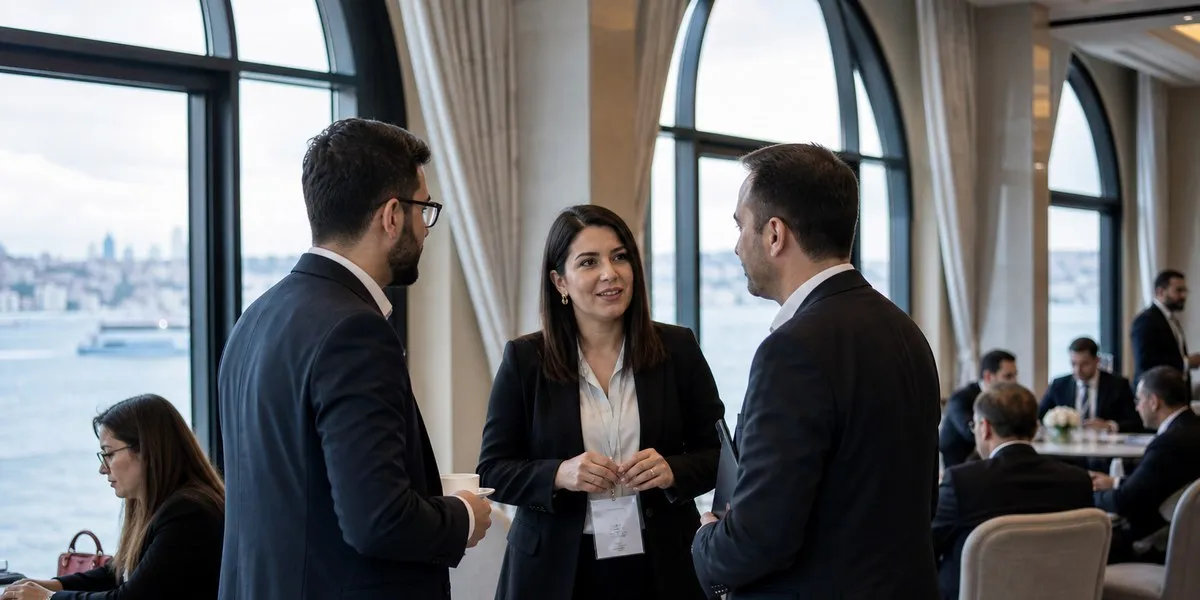
Hendrik Wüst, the Minister-President of North Rhine-Westphalia, recently announced plans to enhance economic collaboration with Turkey during a business forum held in Istanbul. The event, organized by Turkey’s Foreign Economic Relations Board (DEİK) and the German trade agency NRW.Global Business, highlighted the importance of strengthening ties between the two regions for mutual economic benefit.
Enhanced Visa Procedures for Turkish Entrepreneurs
Wüst emphasized that the North Rhine-Westphalia government has implemented an expedited visa processing system specifically designed for Turkish business people. This move aims to reduce the lengthy application times that often create challenges for in-person business engagements. By facilitating quicker travel for Turkish entrepreneurs, Wüst seeks to enhance bilateral business opportunities and drive economic growth in the region.
Furthermore, Wüst expressed his support for updating the nearly 30-year-old EU-Turkey customs union, stressing the necessity of adapting European industrial policy to reflect today’s global supply chain dynamics. He underlined Turkey’s significant role within the European production framework, highlighting its strategic importance in enhancing regional economic cooperation.
Turkey’s Role in Trade and Energy
According to Wüst, Turkey ranks as North Rhine-Westphalia’s third-largest trading partner, significantly contributing to foreign direct investment in the region. Approximately 1,300 Turkish-owned businesses operate in North Rhine-Westphalia, representing over a third of all such enterprises in Germany. This substantial presence underscores the robust economic ties between Turkey and the German state.
Wüst also pointed out Turkey’s expanding onshore wind energy market and its investments in electricity generation and transmission. He mentioned that maintaining competitive energy prices and ensuring energy security are paramount concerns for North Rhine-Westphalia’s industries, especially those that are energy-intensive. He believes that the memorandums of understanding signed during the forum could pave the way for new partnerships, fortifying both economic and geopolitical connections between Germany and Turkey.
Position of Germany’s Foreign Ministry on Economic Cooperation
Serap Güler, State Minister at Germany’s Federal Foreign Office, reaffirmed Berlin’s commitment to deepening economic cooperation with Turkey. She outlined that over 8,600 German companies are currently operating in Turkey, generating more than 100,000 direct jobs. Güler emphasized the importance of integrating Turkish industry into European supply chains as a way to bolster competitiveness in the face of existing geopolitical risks.
She highlighted that ongoing geopolitical tensions and potential disruptions to supply chains pose significant challenges to economic stability. Güler called for action to implement agreements made during the strategic discussions between German and Turkish foreign ministers in May. This includes the need to eliminate both tariff and non-tariff trade barriers. According to her, the modernization of the customs union is vital for unlocking the full economic potential of the EU and Turkey, a partnership that encompasses nearly 540 million people.
In summary, both Wüst and Güler’s statements reflect a robust commitment to fostering economic ties between Germany and Turkey. Their focus on enhancing visa procedures, modernizing trade agreements, and expanding energy cooperation highlights a mutual interest in pursuing sustainable economic development that can benefit both regions. As collaborations become more strategic, the potential for growth and innovation in trade and industry remains promising.