
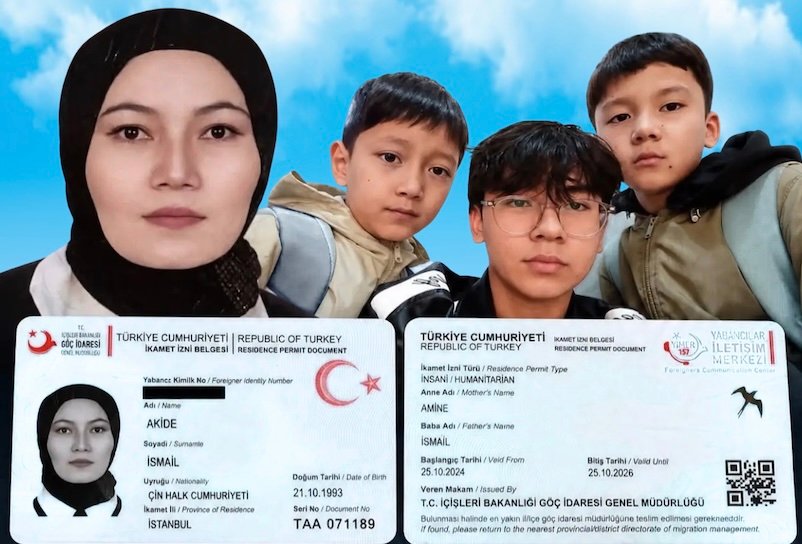
On Tuesday, Istanbul police took a significant action that has raised alarm within the Uyghur community. Akide İsmail, a 33-year-old Uyghur woman with a valid residence permit, was detained under questionable circumstances and moved to a removal center, sparking fears of deportation back to China. This incident highlights ongoing concerns about the treatment of Uyghurs and the risks they face in Turkey.
Details of the Detention
Police in plainclothes arrested İsmail at her home in Sefaköy, a district in Istanbul known for its diverse population. Family members reported that the authorities did not provide a reason for her detention. The specific removal center where she was taken remains unidentified, adding to the uncertainty surrounding her situation. İsmail is not just a resident; she works as a Quran teacher and is the main support for her two children and two younger brothers. Troublingly, one of her children suffers from a kidney condition, which raises additional concerns about her family’s wellbeing.
Concerns Over Deportation
There is considerable fog surrounding the legal justification for İsmail’s detention. It’s unclear whether Turkish officials have issued a formal deportation order or on what basis she is being held. This ambiguity has fueled anxiety within her family, who fear she may be sent back to China. In the Xinjiang region, Uyghurs are subjected to extensive human rights abuses, making the prospect of deportation particularly alarming.
Turkey’s Role as a Refuge
Historically, Turkey has served as a sanctuary for Uyghurs and other Turkic Muslims fleeing persecution in China. The connection between the two groups extends beyond mere geography; shared cultural and linguistic ties have created a sense of community among Uyghurs in Turkey. Many Uyghurs have managed to escape from Xinjiang, where they face mass detentions and abuse that human rights organizations and United Nations experts deem as crimes against humanity. This historical backdrop makes İsmail’s detention all the more troubling for advocates of human rights.
The Principle of Non-Refoulement
Human rights advocates warn that sending Uyghurs back to China constitutes a violation of the principle of non-refoulement. This principle protects individuals from being returned to places where they face a legitimate threat of persecution or serious human rights violations. The potential deportation of İsmail is not just a personal tragedy; it raises larger issues regarding Turkey’s obligations under international law.
An estimated 50,000 Uyghurs currently reside in Turkey, making this the largest Uyghur community outside of their homeland. However, fears have been stoked by a Turkey-China extradition treaty signed in 2017, which is still pending ratification. This treaty has led many to worry that it could be weaponized against Turkish Uyghurs in an attempt to appease China amid diplomatic and economic pressures.
In light of recent events, many are calling for urgent action to safeguard Uyghurs like İsmail from the looming threat of deportation. As concerns for her welfare grow, the incident serves as a stark reminder of the precarious situation faced by Uyghurs living outside their homeland.