
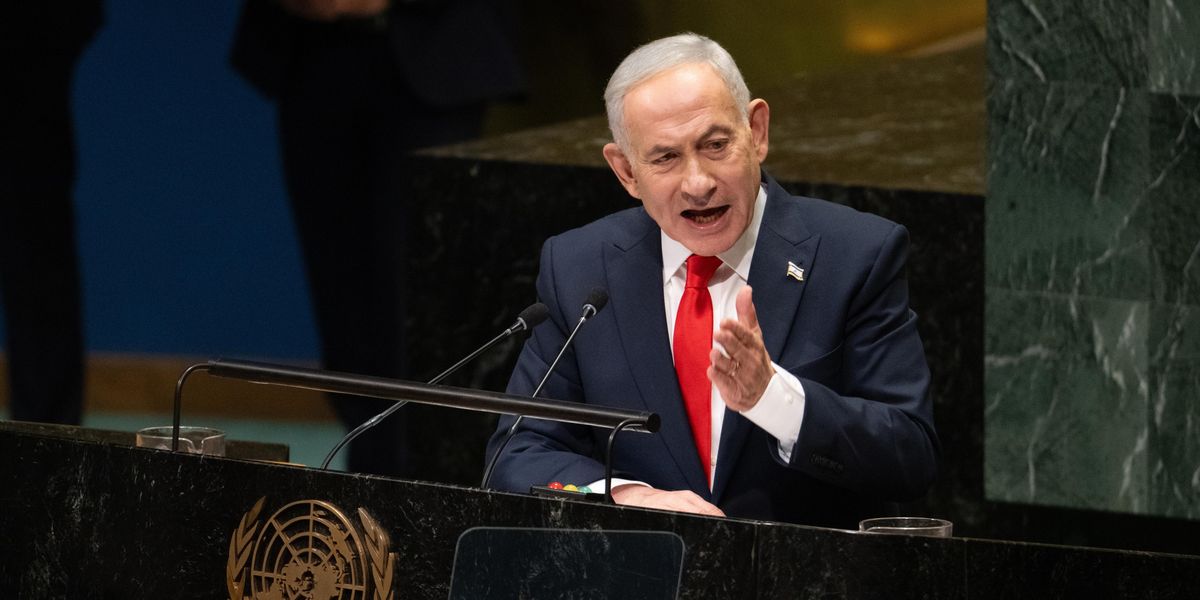
In a recent address at the United Nations, Israeli Prime Minister Benjamin Netanyahu criticized Turkish President Recep Tayyip Erdogan, labeling him a “tyrant.” This declaration underscores the growing friction between Turkey and Israel, particularly as Netanyahu accused Erdogan of ambitions to seize control of Syria while regularly calling for Israel’s demise.
Tensions Rising Between Israel and Turkey
The already strained relations escalated following Israeli airstrikes on the Abu al-Duhur Airbase in northwestern Syria, located approximately 43 miles from Turkey’s border. This attack not only caused damage to the runway but also heightened fears of a possible military escalation as Turkish radar tracked the Israeli aircraft. The Netanyahu administration has defended these strikes as preemptive measures designed to thwart any potential incursions by Turkish forces into Syria.
Israel’s persistent concern relates to Turkey becoming an influential player in Syria, especially in light of its partnership with the United States in supporting Syria’s post-Assad leadership. However, critics argue that such preemptive strikes may instead increase the potential for future conflict, rather than mitigate it.
An Unfolding Narrative of Imminent Threats
The Israeli government justified the airstrike by claiming they possessed intelligence suggesting that the airbase was set to become a Turkish military facility. However, both Ankara and Damascus have firmly denied this assertion. While U.S. intelligence was reported to have found no verifiable evidence of a Turkish military presence, a key question remains: was this anticipated deployment an immediate threat warranting military action?
Retired Turkish Air Force Major General Ateş Mehmet İrez noted that any legitimate reconnaissance mission to the base would not automatically imply readiness for troop deployment. He emphasized that the processes required to establish a military presence in Syria would take significantly longer than the swift airstrikes executed by Israel, indicating that the real-time pressure was more political than logistical.
Setting Dangerous Precedents
By striking before any actual military actions were mutually observed, Israel shifts the crisis threshold from tangible threats to projected intentions. This new posture complicates established rules of engagement and may set a precedent that lacks common standards between the two nations. Historically, Israeli operations near the Turkish border aren’t completely unprecedented, but the current situation marks an escalation in military readiness and interventions.
Turkey’s response to the recent airstrike has been notably restrained. Instead of retaliating, the Turkish military monitored the situation closely, adhering to a strategy of avoidance even as tensions mounted. This cautious approach reflects a nuanced understanding of the broader political landscape, including Netanyahu’s use of heightened tensions for electoral gain.
Prospects for Conflict and Diplomacy
While the rivalry between Turkey and Israel appears unyielding, the possibility of avoiding military conflict remains. The ongoing U.S. diplomatic efforts to stabilize relations among Turkey, Syria, and Israel should not be overlooked. Washington’s commitment to establishing a trilateral deconfliction mechanism is crucial. The emphasis now lies in creating a clear political framework that fosters effective communication and prevents future incidents from escalating into military confrontations.
In conclusion, the geopolitical dynamics in the region are poised on a precarious edge. Whether through direct military actions or political machinations, the intricate relationships between these nations will greatly shape Syria’s future, and vigilance will be essential in keeping peace and stability in the region.