
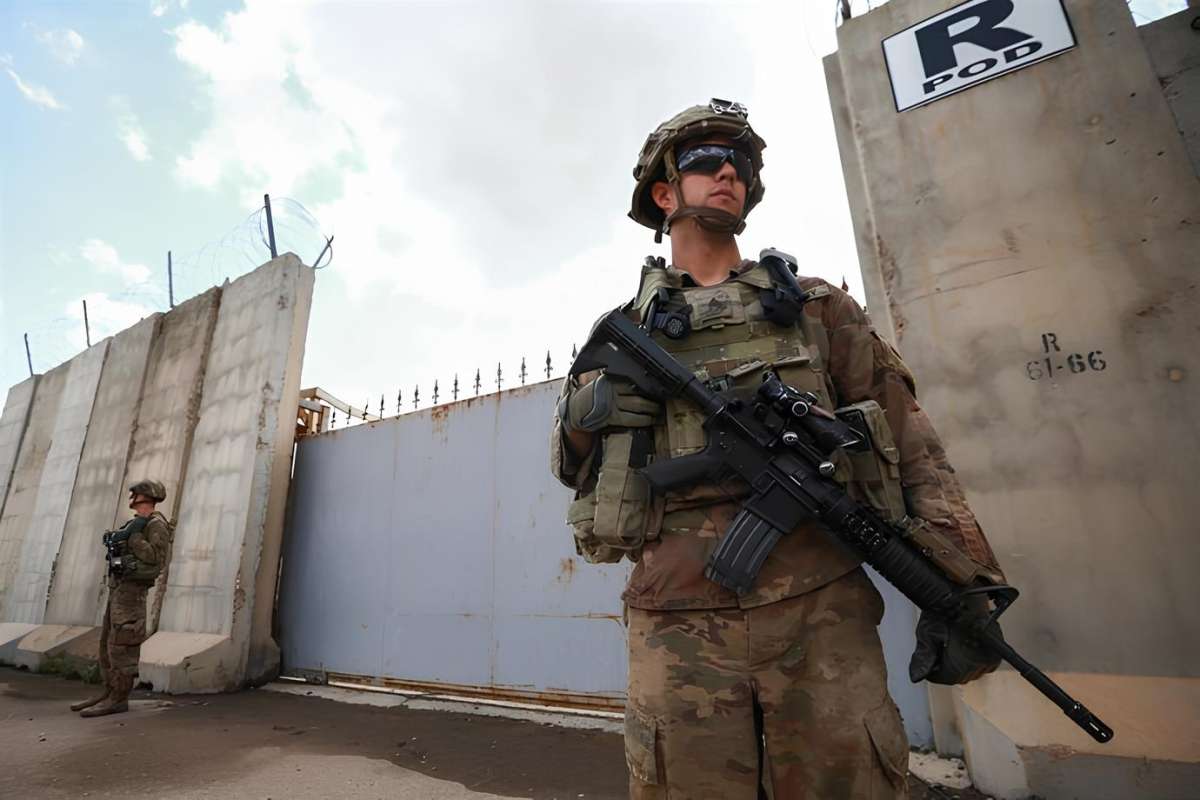
The United States has officially concluded its military withdrawal from Iraq, marking the end of a 23-year military engagement in the region. This withdrawal signifies the conclusion of two major conflicts: the initial invasion in 2003 aimed at toppling Saddam Hussein and the subsequent international efforts against the Islamic State beginning in 2014. However, a pressing question remains: can this withdrawal be deemed a sustainable military and strategic victory?
### Assessing the Military Outcomes Against ISIS
From a strictly military perspective, the fight against ISIS yielded significant results. The group lost all of the territory it previously held in Iraq, dismantling its conventional military structure. Additionally, Iraqi security forces have notably improved their operational capabilities since facing a catastrophic defeat during the 2014 jihadist offensive.
Despite this, the eradication of ISIS’s territorial hold does not equate to its complete disappearance. According to a recent United Nations report on the group, anti-terrorism efforts have undeniably curtailed its operations, leading to the lowest level of attacks recorded in 2025. Nevertheless, the report warns that ISIS remains a threat, adept at capitalizing on instability and disarray within Iraq.
### ISIS’s Transition to Clandestine Operations
The trajectory of the Islamic State has shifted significantly since 2014. At that time, it controlled substantial territories across Iraq and Syria, commanding thousands of fighters. Now, the group lacks any significant territory in Iraq and mainly relies on covert cells and sporadic strikes to execute its objectives. Data from ACLED indicates a dramatic decline in ISIS-related incidents—88 reported in 2025, down from 1,457 in 2021. Even the first half of 2026 saw only two attacks claimed by the organization, highlighting its diminished capacity.
CENTCOM confirmed that by late 2025, Iraqi Security Forces had developed the skills necessary to independently manage operations. This milestone was seen as a vital step toward fostering a bilateral security relationship between the U.S. and Iraq.
### The Challenges of Stability Post-Withdrawal
While the Pentagon envisions this withdrawal as a transition to an Iraqi-led security framework, the real test lies in what unfolds post-departure. Although ISIS has been weakened, it has not vanished entirely. The potential for its resurgence remains, and Iraqi forces may struggle in areas where the U.S. previously offered critical support, including intelligence and advanced technologies.
Moreover, Iraqi military capabilities are not all-encompassing. General Sirwan Barzani has acknowledged significant enhancements within Iraqi forces, but gaps persist in areas like intelligence and surveillance, making it challenging to monitor areas of potential ISIS activity effectively.
### Emergence of Pro-Iranian Militias as a New Threat
In addition to the ongoing threat from ISIS, Iraq faces the growing influence of militias aligned with Iran. These groups, some affiliated with the Popular Mobilization Forces, have gained both military and political strength over recent years. Although the Iraqi government aims for their disarmament or integration, many retain autonomy and weaponry, complicating the security landscape. Unlike ISIS, which presented a clear military target, dealing with these militias requires a nuanced approach, as they often exist within the Iraqi security framework while maintaining ties with Iran.
Moving forward, it will be the responsibility of the Iraqi government to confront both the remnants of ISIS and these militias, which pose a risk to national sovereignty.
### Can Iraq Maintain Its Gains?
The current state of the Iraqi security forces differs considerably from 2014, boasting a larger, better-trained, and more experienced personnel base. They have significantly enhanced their special operations, intelligence processes, and aerial capabilities. Furthermore, the social landscape in areas previously under ISIS control has lessened the group’s ability to operate effectively.
Yet, stability depends on more than just military strength. Iraq still grapples with substantial economic and structural challenges. The World Bank has indicated that oil revenues constitute the bulk of Iraq’s income, representing about 88% of public revenues and a staggering 91% of merchandise exports in 2025. Issues related to employment and public services—such as water and electricity—remain unresolved.
These factors, while not directly causing ISIS’s return, contribute to the broader environment that influences a state’s capacity to sustain military successes and mitigate emerging instabilities.
In summary, while the United States has formally wrapped up its military engagement in Iraq, the true measure of its strategic success will only become apparent over time. The crucial question remains: can Iraq uphold its victories against ISIS and navigate the challenges posed by internal and external threats without the continuous support of foreign forces?