
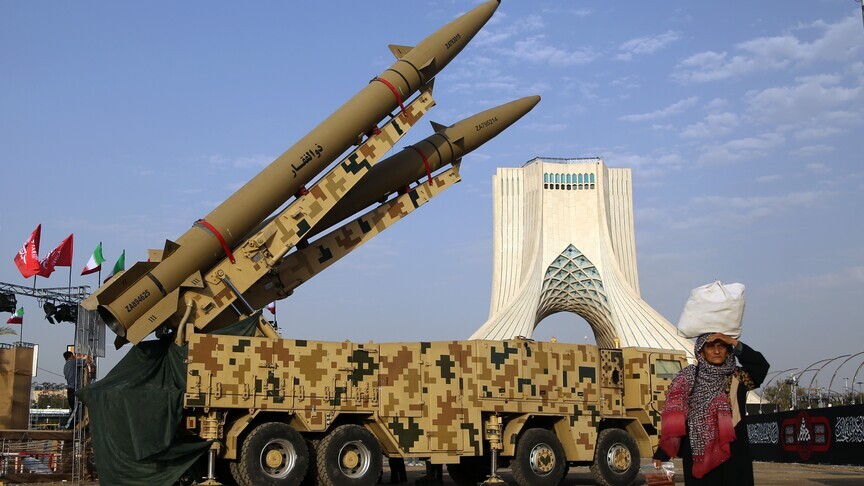
On October 1, 2026, the Islamic Revolutionary Guard Corps (IRGC) of Iran celebrated what they termed the “expulsion” of U.S. forces from Iraq, interpreting this event as the onset of a larger American withdrawal from the Middle East. This proclamation marks a significant moment in regional dynamics and influences geopolitical stability.
IRGC’s Statement on U.S. Withdrawal
The IRGC issued a statement claiming that the U.S. exit from Iraq symbolized a significant shift in the power balance within West Asia. They referred to this strategic development as the beginning of liberation from what they describe as the “Great Satan’s domination.” This sentiment underscores the narrative often echoed by certain factions in the region who view U.S. military involvement as invasive and a catalyst for broader unrest.
According to the IRGC, the departure of American forces was a direct consequence of what they characterized as the “will of the Iraqi people” combined with the “actions and resistance” of the Iraqi government. They hailed it as a “historic victory,” reinforcing their belief that local governance should dictate the security landscape rather than foreign military presence. The IRGC’s rhetoric positions this development as a ground swell of national and regional pride against perceived external control.
The End of Operation Inherent Resolve
On the same day, the U.S. Department of Defense announced the formal conclusion of Operation Inherent Resolve in Iraq, marking the end of a long-standing military mission that began in 2014. The operation was initiated in response to the rise of ISIS, which had captured vast territories in Iraq and Syria. During this period, the coalition provided vital support to Iraqi forces through airstrikes, intelligence sharing, and training initiatives. The transition of U.S. forces out of the region has sparked discussions regarding the future security arrangements between Iraq and its allies.
As the withdrawal was formalized, Pentagon spokesperson Sean Parnell emphasized that the coalition’s efforts effectively neutralized ISIS as a significant military threat in the region. This statement reflects progress made over the last decade where Iraqi forces regained full control of territories once occupied by the militant group, a significant milestone announced in December 2017.
Geopolitical Implications
The implications of the U.S. withdrawal are profound. In September 2024, Baghdad and Washington agreed on a timetable to conclude coalition military operations by the end of September 2026, moving toward a framework of bilateral security relations. This transition suggests a growing inclination for Iraq to assume greater responsibility for its internal security, while potentially reshaping its relationships with other regional and international actors.
Historically, the U.S. invasion of Iraq in 2003 aimed at toppling Saddam Hussein, leading to a complicated and prolonged military presence that officially ended in 2011, only to see a resurgence through the global coalition against ISIS a few years later. As the last vestiges of U.S. forces leave, the future of Iraq’s security strategy will be paramount not just for its stability but also for the entire Middle East, as countries reassess their geopolitical strategies in a landscape increasingly characterized by local governance and autonomous defense preparations.
In summary, as the U.S. concludes its military mission in Iraq, the IRGC’s celebration signifies a significant turn in regional politics and highlights the complex dynamics that influence both Iraq’s future and broader Middle Eastern stability.