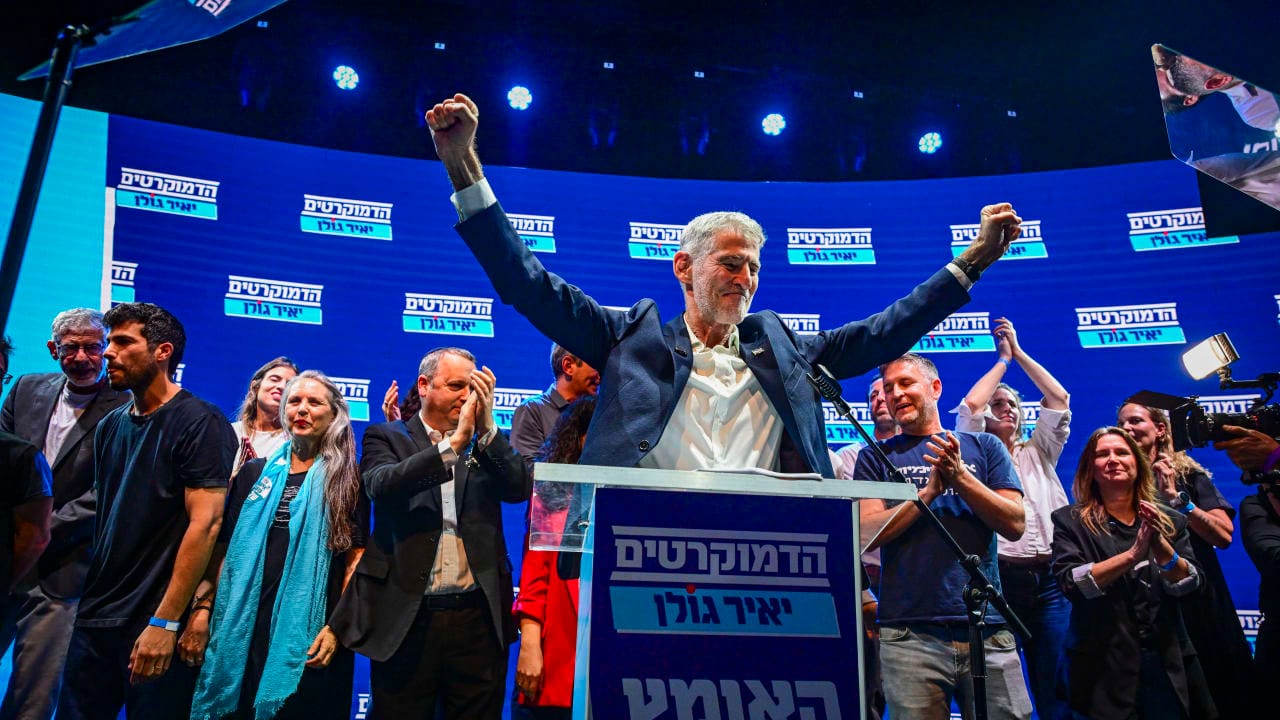
The emergence of the Democrats party in Israel is a significant political development as the country approaches elections for the 26th Knesset on October 27, 2026. Formed in 2024 through the merger of the historic Labor party and the far-left Meretz party, the Democrats aim to galvanize leftist support against Prime Minister Benjamin Netanyahu’s ruling coalition.
Leadership and Structure
The Democrats are led by Yair Golan, a former deputy chief of staff of the Israel Defense Forces (IDF) and a former Knesset member for Meretz. Golan’s leadership positions the party firmly on the left side of the political spectrum, joining three other principal parties in the opposition bloc that challenge Netanyahu’s government. The party is currently polling between 9 to 11 seats, bolstered by a diverse slate of candidates, including leaders with militant histories, women, youth, and representatives from the Arab and Druze communities.
Distinctively, the Democrats employ a gender-based ‘zipper system,’ a structural arrangement that alternates gender representation on their candidate list, enhancing inclusivity. This primary list is composed of varying backgrounds, including nearly 12 former IDF officers and 11 candidates from civil service roles to ensure a broad representation of interests.
Political Goals and Platform
Golan emphasizes the need for “fundamental change” within Israel’s political framework, particularly in areas of democracy and government accountability. His vision transcends mere political slogans, advocating for systemic reforms that address perceived failures in governance. A central tenet of their platform is a commitment to prevent politicians facing criminal charges from holding significant office, aiming for a government devoid of criminal defendants.
The party has gained momentum from recent anti-government protests and judicial reform movements, framing itself as an extension of these grassroots initiatives. Golan has pledged firm support for maintaining an independent judiciary as a check against government overreach and has vocally opposed efforts perceived as politicizing law enforcement.
Policy Positions and Future Democratic Representation
The Democrats also prioritize the separation of religion and state, advocating for businesses to operate independently of religious constraints, particularly on Shabbat. Golan’s stance on personal freedoms extends to the recognition of civil marriage outside of religious institutions, emphasizing individual autonomy in decisions traditionally dictated by religious authority.
Regarding national security and diplomatic efforts, Golan has criticized the Netanyahu administration’s militaristic strategies, advocating for more diplomatic solutions to ongoing conflicts. The party supports halting West Bank settlement expansion and fears the reality of increasing settler violence which jeopardizes both state security and Palestinian rights. Their platform firmly opposes annexation and calls for a focus on resolute two-state solutions for lasting peace.
The Road Ahead
As the elections draw near, a vote for the Democrats is positioned to enhance their negotiating power within coalition discussions among opposition parties. Their clear opposition to forming alliances with Netanyahu’s Likud or ultra-Orthodox factions propels them into a uniquely democratic position, even suggesting the inclusion of Arab parties within the framework of the next government.
Golan’s vision for the future highlights the significance of representation and choice in governance, asserting that a truly democratic process should include voices from all segments of society, including Arab constituents. As coalition talks loom, the Democrats are preparing to reclaim crucial ministerial portfolios to ensure their agenda on democracy, judicial reform, and social equality is realized. With varied backgrounds, bold commitments, and a focus on representation, the Democrats exemplify a potentially transformative force in Israeli politics.