
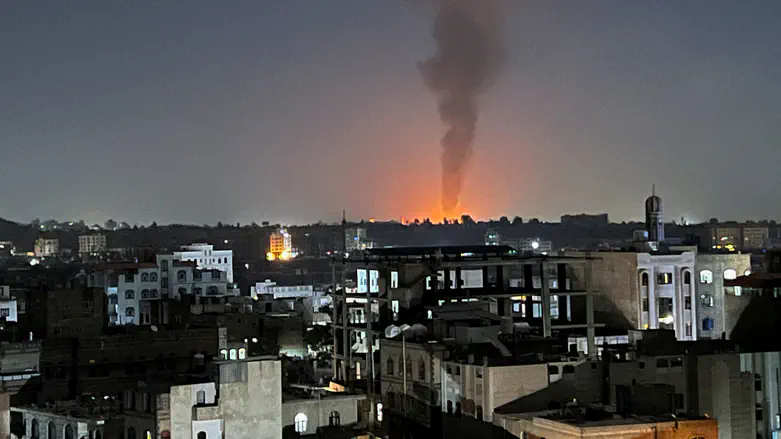
A wave of loud explosions resonated through Sanaa, Yemen’s capital, on Thursday night, amidst ongoing tensions involving the Iran-supported Houthi movement. The situation has escalated, reflecting the fragile atmosphere of conflict that continues to prevail in the region.
Claims of Aggression and Escalating Tensions
Reports from the rebel-friendly Saba news agency have pointed fingers at Saudi Arabia, labeling the recent explosions as part of an act of “Saudi aggression.” This claim follows the announcement from the Saudi-led coalition, which stated that they successfully intercepted and destroyed multiple drone strikes initiated by the Houthis. Specifically, four drones were neutralized, alongside two ballistic missiles aimed at the Saudi cities of Khamis Mushait and Jazan.
A Resurgence of Hostilities
After a brief period of relative peace, Yemen returned to armed conflict in July, with the Houthis resuming their struggle against the Saudi-backed government. The recent weeks have seen significant moves from the Houthi group, notably seizing control of Yemen’s entire Red Sea coastline. This includes crucial locations like the port city of Mokha and three strategically vital islands situated near the Bab al-Mandab Strait. These developments not only shift the military balance in the region but also amplify concerns over maritime security and commercial shipping routes.
Attacks on Southern Saudi Cities
In addition to their territorial gains, the Houthis have launched several attacks on southern Saudi cities, including Abha, Khamis Mushait, Jazan, and Najran. These assaults have resulted in numerous casualties, reported to include injuries to 73 civilians, among them women and children. Such violence further destabilizes the already tense relations between the Houthis and the Saudi coalition, highlighting the urgent need for conflict resolution and humanitarian aid in the war-torn region.
The Implications for Regional Stability
The ongoing conflict, marked by aerial assaults and territorial gains, has significant implications for regional stability. The escalation of hostilities raises concerns about the potential for broader conflict, possibly drawing in more external players. As the humanitarian situation deteriorates, international bodies are likely to call for renewed diplomatic efforts to resolve the crisis. The dynamics of this conflict serve as a reminder of the complex geopolitical interests at play in the Middle East.
In conclusion, the recent events in Yemen underline the precarious nature of peace in the region. As fighting reignites, the implications extend far beyond the immediate conflict, affecting millions caught in the crossfire and challenging the international community to take action.