
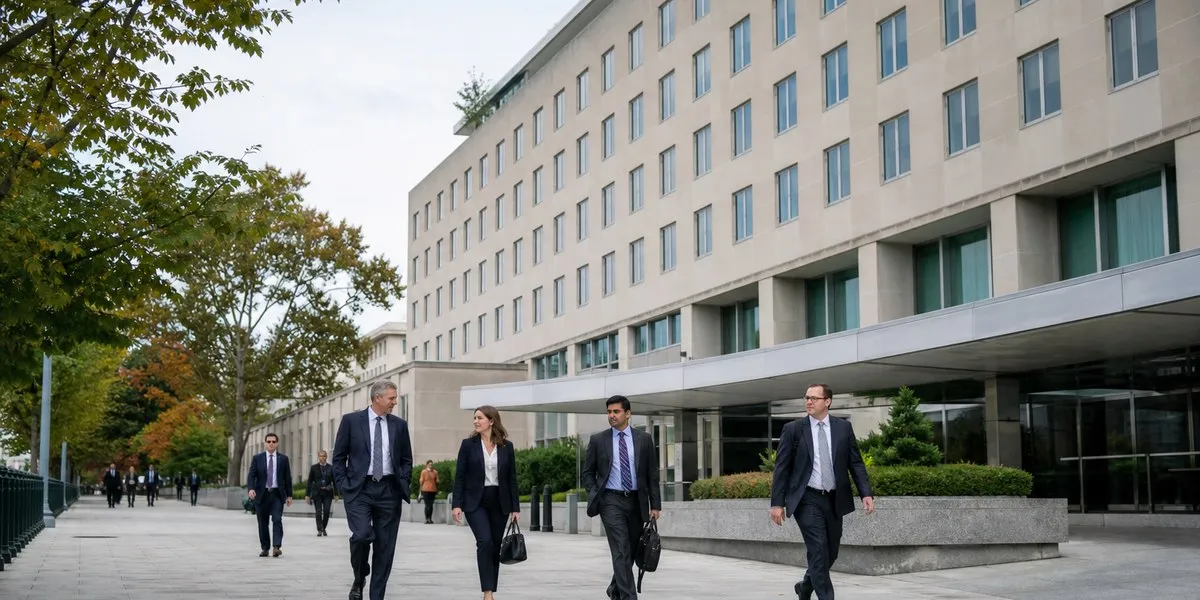
In a recent decision, the U.S. State Department has opted to waive the human rights certification requirement for $320 million in military assistance to Egypt for the fiscal year 2025. This significant move, authorized by Secretary of State Marco Rubio, highlights the ongoing complexities in U.S.-Egypt relations, particularly concerning security interests and human rights.
Emphasis on National Security
A letter dated September 21 addressed to congressional committees indicated Secretary Rubio’s exemption of Egypt from the mandatory certification related to the Foreign Military Financing program. According to the accompanying memorandum, this financial support is deemed vital for various initiatives such as counterterrorism, border security, and nonproliferation, which align with U.S. national security priorities. The U.S. government emphasizes that these funds are crucial for maintaining stability in a region fraught with tension.
In addition, a memorandum signed by Rubio on September 4 acknowledged Egypt’s strategic role in Operation Epic Fury—an ongoing military campaign against Iran, launched jointly by the United States and Israel in late February. While the specifics of Egypt’s involvement remain undisclosed, this recognition underscores the complex interplay of military partnerships in geopolitical conflicts.
The Historical Context of Aid
The U.S. has a long-standing relationship with Egypt, rooted in the peace treaty signed with Israel in 1979. Since the late 1980s, the U.S. has provided around $1.3 billion in military aid to Egypt annually. While some of this financial support is conditioned upon the government’s commitment to human rights and democracy, the U.S. has the latitude to waive these conditions in the interest of national security.
Under the previous administration of President Joe Biden, portions of military aid were frequently withheld due to concerns over Egypt’s human rights record. In a notable shift, the Biden administration allocated the full $1.3 billion to Egypt in 2024, disregarding the established human rights conditions. Advocacy groups have long criticized Egyptian President Abdel Fattah al-Sisi’s administration for alleged human rights abuses, including torture and enforced disappearances, although Egyptian authorities assert they are actively working to ameliorate these conditions.
The Implications of Assistance
The waiver of human rights conditions on military aid raises important questions regarding the balance between strategic interests and ethical obligations. As the U.S. continues to navigate complex geopolitical landscapes, prioritizing counterterrorism and regional stability may sometimes overshadow the promotion of democratic values and human rights.
This latest decision also invites scrutiny from human rights organizations and advocacy groups that argue for a consistent approach to human rights across U.S. foreign policy. These organizations are likely to respond strongly to perceived contradictions in U.S. actions, especially regarding partner nations where human rights violations are reported.
In summary, the recent waiver of the human rights certification for Egypt’s military aid not only highlights U.S. security interests but also raises critical discussions about the long-term implications for both U.S. foreign policy and the situation within Egypt. As these dynamics unfold, they will undoubtedly influence public discourse on the role of the U.S. in promoting democracy and human rights globally, a challenge that continues to define America’s international relations.