
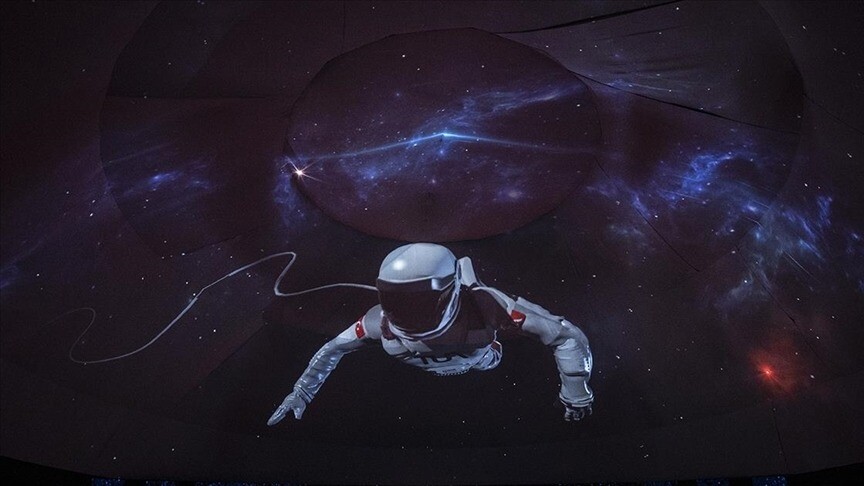
On a remarkable evening in 1633, Istanbul celebrated the arrival of Kaya Sultan, the daughter of Sultan Murad IV. It was on this festive night that an innovator named Lagari Hasan Celebi reportedly took to the Bosphorus, launching a seven-branched rocket filled with gunpowder. After the rocket’s fuel expired, he opened wings he crafted himself and gracefully descended into the waters by Sinan Pasha’s mansion, returning to land through swimming. This intriguing event was chronicled by the 17th-century traveller Evliya Celebi in his travelogue, Seyahatname. Fast forward nearly 400 years, and the visionary dubbed the “rocket man” now lends his name to a satellite and space museum operated by Turksat, Turkey’s official satellite entity.
Milestones in Turkey’s Space Journey
Turkey’s pursuit of space phenomena began to solidify through significant advancements in the 1990s with the launch of its first communications satellite, Turksat 1B, in August 1994, followed by Turksat 1C in 1996. Over time, the nation’s ambitions morphed from simply operating foreign satellites to designing and manufacturing its own. The launch of RASAT in 2011 marked a turning point, as it was Turkey’s first domestically created Earth-observation satellite. This trend continued with GOKTURK-2 in 2012, which was an important high-resolution Earth-observation satellite. Most recently, in 2023, IMECE, another high-resolution satellite developed by TUBITAK UZAY, was successfully launched aboard a SpaceX Falcon 9 from California, signaling a leap in Turkey’s technological capabilities.
Establishment of the Turkish Space Agency
The creation of the Turkish Space Agency (TUA) in December 2018 revolutionized the nation’s space aspirations. Established under a presidential initiative, TUA’s mandate involved crafting and executing a National Space Program, along with prioritizing scientific and aerospace technology goals. A roadmap unveiled in 2021 detailed a comprehensive 10-year vision that included strategic objectives like lunar exploration, fostering a competitive satellite brand, and establishing an independent access to space.
One of the landmark achievements realized earlier than anticipated occurred in 2024, when Alper Gezeravci became the first Turkish national to travel to the International Space Station. His journey allowed him to execute 13 scientific experiments, showcasing their academic prowess on a global platform. This momentum continued with another significant mission by Tuva Cihangir Atasever, who completed a suborbital research flight.
Setting Course for the Moon
Among the most ambitious goals is Turkey’s lunar mission. In September, Industry and Technology Minister Mehmet Fatih Kacir announced the successful completion of production and assembly for Turkey’s first lunar spacecraft. Developed under TUBITAK UZAY’s Lunar Research Program, this 3.5-ton craft is anticipated to undergo rigorous testing before its expected launch at Kennedy Space Center in early 2027. Impressively, over 80% of its components were designed and manufactured domestically. Following a two-month voyage to the Moon, the spacecraft aims to settle into a circular orbit and operate for a minimum of three months, utilizing a hybrid propulsion system developed entirely within Turkey.
Aspirations for a Launch Site
Turkey’s future endeavors include building a domestic launch site in Somalia. Announced by President Recep Tayyip Erdogan, this initiative aims to leverage Somalia’s equatorial location, which facilitates year-round launches. With feasibility studies completed and construction in progress, the site is poised to serve national interests as well as commercial launch services.
Welcoming the World to Antalya
Turkey’s ambitious space program is supported by a substantial budget increase, with 8.729 billion liras allocated for 2026, surpassing previous years. Simultaneously, Turkey’s international presence is growing through diplomatic efforts, such as signing the Artemis Accords with NASA. From October 5 to 9, Antalya will host the 77th International Astronautical Congress, marking a historic gathering of over 10,000 individuals, including space agency leaders and industry professionals. This event underscores the theme, “The World Needs More Space,” showcasing Turkey’s evolving position in the global space community.