
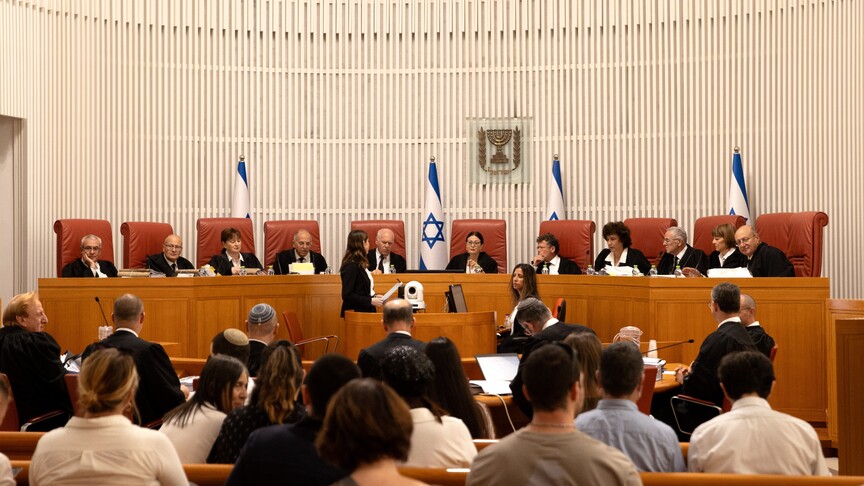
Israel’s Supreme Court has recently made a significant ruling that allows two Arab political lists to compete in the upcoming Knesset elections scheduled for October 27. This decision comes as a response to appeals made by the Joint List and the United Arab List, which were initially barred by the Central Elections Committee. The court’s judgment not only reinstates these parties but also highlights the ongoing complexities of Israel’s political landscape.
The Supreme Court’s Decision
On Friday, the Supreme Court reviewed appeals from the Joint List, led by Yusuf Jabareen, and the United Arab List, spearheaded by Mansour Abbas, alongside an appeal from Joint List lawmaker Ofer Cassif. In a notable ruling, the court determined that Cassif is eligible to run in the elections. Importantly, the judges unanimously agreed to permit both Arab lists to participate. This verdict signifies a crucial step towards ensuring representation for Israel’s Arab population within the Knesset.
Impact on Arab Political Representation
The ruling by Israel’s highest court is a pivotal development for Arab political representation, particularly given that Arab citizens make up roughly 20% of Israel’s population of approximately 10 million. Contemporary opinion polls suggest that Arab parties are projected to secure between 12 to 14 seats in the 120-member Knesset. This creates a significant opportunity for Arab voices to be heard in the legislative process, bringing important issues to the forefront of national discussions. The decision indicates a potential shift in political dynamics, especially amid rising tensions and ongoing debates regarding minority representation in Israeli politics.
Challenges Faced by Arab Candidates
Despite the Supreme Court’s ruling, challenges remain for some Arab candidates. On the same day as the court’s decision, Sami Abu Shehadeh, a candidate from the Joint List and leader of the National Democratic Assembly party, announced his withdrawal from the race. This decision came after the court indicated that a majority of judges leaned towards disqualifying his candidacy. Such incidents reflect the complexities Arab candidates face, even as legal avenues are pursued to uphold their political activities.
The Road Ahead for Israeli Elections
The Supreme Court’s ruling clears a pathway for both Arab electoral lists to contest the upcoming elections, countering efforts from right-wing factions, including Prime Minister Benjamin Netanyahu’s Likud party and Itamar Ben-Gvir’s Jewish Power party, who had pushed for their disqualification. As the election date approaches, the political atmosphere in Israel appears charged. The outcomes could have lasting implications not just for Arab representation, but for the nation’s overall governance framework.
In conclusion, the Supreme Court’s recent ruling marks an essential moment for Arab political participation in Israel. As both the Joint List and the United Arab List prepare for the elections, they carry the hopes of a large segment of the population eager for representation and advocacy within the Knesset. This situation serves as a reminder of the continual evolution of democracy and representation in Israel’s diverse society.