
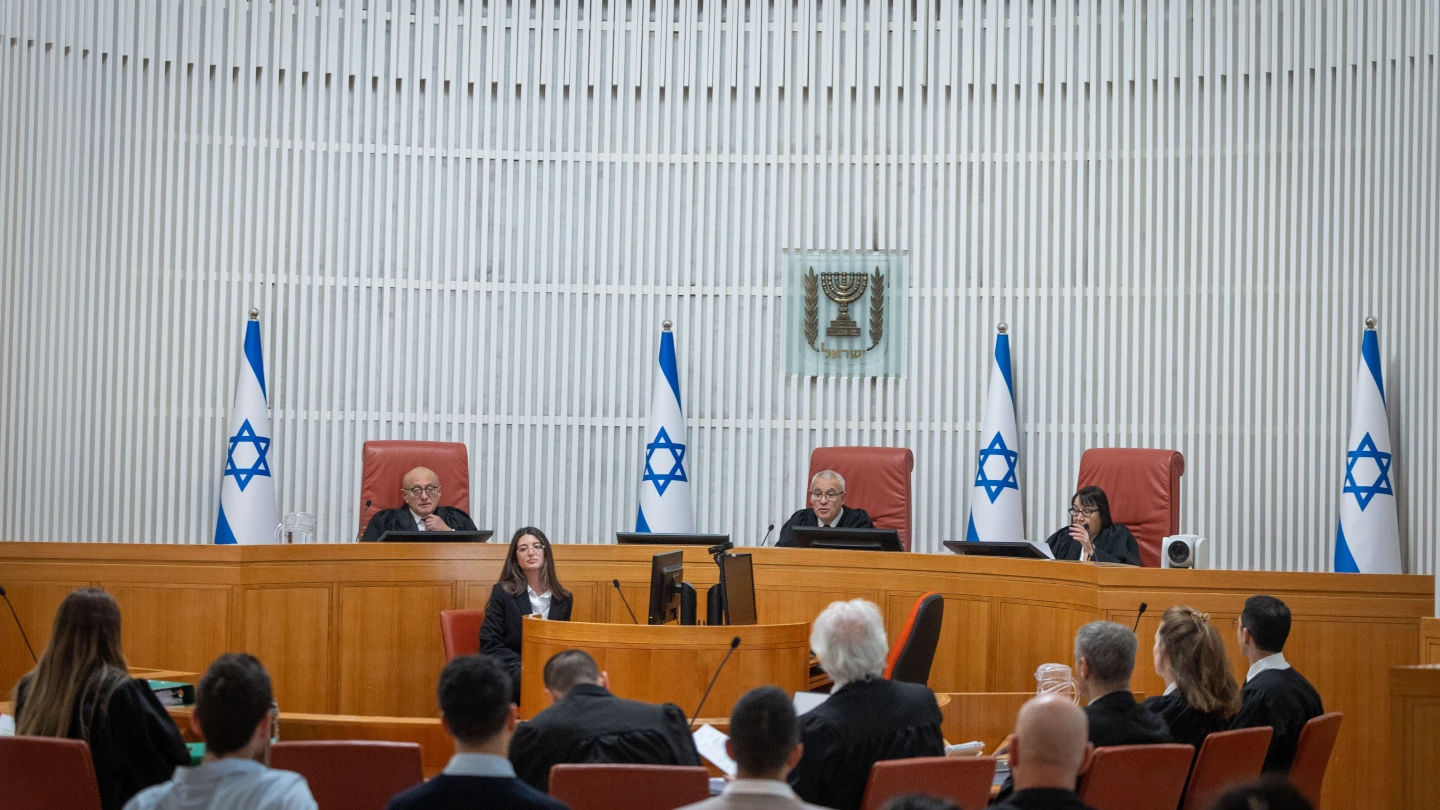
Israel’s High Court of Justice recently dismissed a petition from an umbrella group of international non-governmental organizations (NGOs) aimed at providing aid in Gaza and Judea and Samaria. This ruling is significant amid ongoing discussions about security protocols and humanitarian aid in the region.
Background of the Petition
The petition was lodged by the Association of International Development Agencies (AIDA), contesting a framework that was introduced by Israel in 2024. This framework came to light following alarming reports indicating that groups like Hamas and Palestinian Islamic Jihad had misused international aid organizations for their own purposes. The court emphasized that it is imperative for the state to enforce strict screening processes to ensure the safety and security of its residents.
Judicial Rationale and Implications
The judges highlighted that the requirement for NGOs to furnish employee lists for security checks is both necessary and reasonable, aligning with Israel’s fundamental responsibility to protect its security. According to the ruling, this procedure is a vital step to prevent potential risks to state security and it should not be supplanted by self-assessments provided by the organizations themselves. The justices made it clear that these measures are not just bureaucratic; they are essential to maintaining security and allowing humanitarian efforts to proceed without jeopardizing safety.
Consequences for Non-Compliance
In a decisive move, the court mandated that the NGOs have 30 days to adhere to the government’s request. Organizations that fail to comply will be barred from operating in Gaza, Judea, and Samaria. This stipulation is more than a legal requirement; it underscores Israel’s commitment to security and its determination to ensure that aid is not being manipulated by hostile entities. The NGOs raised concerns that sharing staff details could lead to retaliation against their personnel and set a concerning precedent for future humanitarian efforts.
Government Statistics and Recent Cases
Recent government data sheds light on the situation regarding NGO registration applications as of March 2026. Out of 129 applications submitted to an inter-ministerial vetting team, only 30 have been approved, while 19 were denied and 47 are still under consideration. It’s worth noting that 34 organizations have yet to initiate the registration process, which raises questions about their operational transparency and compliance.
A notable incident related to this issue occurred earlier in 2026 when Israel’s Diaspora Affairs Ministry put an end to the activities of Médecins Sans Frontières (Doctors Without Borders) for failing to submit the necessary lists of local employees. This case gained traction following Israel’s identification of a Palestinian Islamic Jihad operative among the staff, highlighting the potential risks tied to the lack of screening.
In response to the ruling, Israeli Minister for Diaspora Affairs and Combating Antisemitism, Amichai Chikli, expressed strong support. He remarked that this judicial decision sends an unmistakable message: Israel will not tolerate terrorist actions disguised as humanitarian work.
This recent court ruling marks a pivotal moment in the balance between ensuring security and facilitating humanitarian aid, raising significant questions about the responsibilities of international NGOs in conflict zones.