
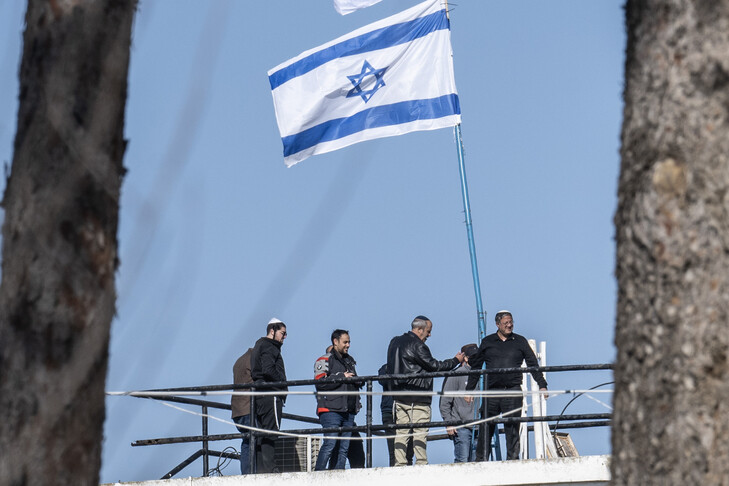
Israeli National Security Minister Itamar Ben-Gvir recently made a provocative statement asserting that all three administrative divisions of the occupied West Bank are part of Israel. This claim directly challenges the agreements set forth in the Oslo Accords between Israel and the Palestine Liberation Organization (PLO), raising tensions in an already fraught political landscape.
Understanding the Oslo Accords
The Oslo II Accord, signed in 1995, established a framework for governing the West Bank by dividing it into three distinct areas: A, B, and C. Area A is completely under Palestinian jurisdiction, while Area B operates with Palestinian civilian control and Israeli security oversight. Area C, which comprises approximately 60% of the West Bank, falls under full Israeli governance. Ben-Gvir’s recent comments disregard these established divisions, asserting that “the entire land is ours,” thus claiming unqualified Israeli sovereignty over all areas.
Threats to Palestinian Authority
In addition to territorial assertions, Ben-Gvir has signaled aggressive intentions toward dismantling the Palestinian Authority. In a recent interview, he suggested that if he were to assume the role of defense minister, he would advocate for the displacement of Palestinians from both the West Bank and Gaza Strip. He controversially claimed that around 60% of Palestinians desired to leave, a statement that contradicts numerous studies indicating otherwise. Ben-Gvir stated his commitment to overseeing this process, promising weekly consultations involving various stakeholders.
Militarization and Law Enforcement
On the subject of increasing military presence, Ben-Gvir suggested that enhancing soldiers’ engagement rules would reduce the need for additional manpower. He proposed that reducing restrictions on soldiers could ease operational limitations and lead to more aggressive enforcement. “The more you allow soldiers to shoot and use force, the less manpower you need,” he asserted, indicating a troubling shift in policy that could escalate violence.
Political Context and Implications
Ben-Gvir’s rhetoric comes at a crucial time as Israel approaches its elections on October 27. Polls reveal dwindling support for the current governing coalition, thus intensifying competition among Israeli political parties. His statements also coincide with an uptick in visits to sensitive religious sites, such as Al-Aqsa Mosque and the Western Wall, where he has performed Talmudic rituals. These actions are likely aimed at solidifying his right-wing base while simultaneously inflaming tensions with Palestinians.
In conclusion, Ben-Gvir’s declarations not only question the existing political agreements but also signal a potential shift towards a more militaristic approach to governance in Israel and the occupied territories. As election campaigns intensify, the implications of these statements will resonate throughout the region, further complicating an already delicate situation. Understanding the ramifications of his proposed policies is essential for grasping the future trajectory of Israeli-Palestinian relations.