
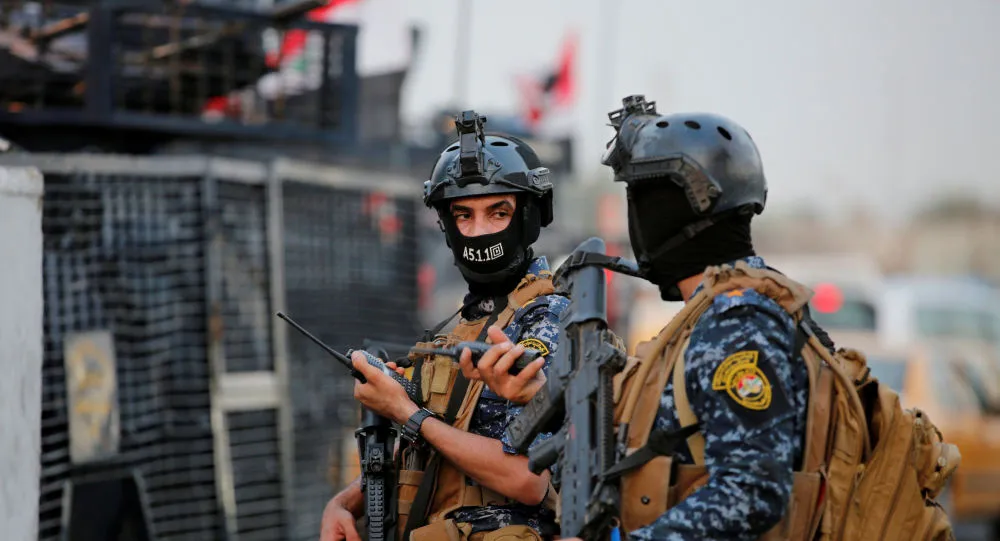
In the early morning of June 28, Iraqi security forces launched an extensive anti-corruption initiative named Dawn Crackdown. This operation targeted politicians, officials, and various business individuals across Baghdad and other provinces. Three months on, the aftermath of this campaign illustrates that the focus has shifted from mass arrests to significant courtroom proceedings.
The Dawn Crackdown Unfolds: Initial Arrests and Progress
Initially, this anti-corruption campaign saw a flurry of arrests, with the Federal Integrity Commission reporting at least 67 detentions soon after the operation began. By mid-August, records showed that the number of people detained had risen to over 210. While the government has not consistently updated these figures, the early phase was marked by high-profile arrests that captured public interest. However, by September, the emphasis of the campaign shifted. While arrests continued and new corruption networks emerged, the spotlight began to focus more on court judgments, asset recovery, and detailed financial investigations within specific institutions.
This shift coincided with various national developments, notably the conclusion of the US-led Global Coalition’s military mission in Iraq on September 30. Despite this transition, there was no indication that corruption issues were being sidelined. As security and sovereignty matter dominated political discussions, a critical question arose: can an anti-corruption effort maintain its momentum when the public’s attention shifts elsewhere?
Detailed Investigations at the Institutional Level
By September, enforcement actions indicated a move toward investigating individual institutions rather than relying solely on mass arrests. On September 2, the Integrity Commission reported the dismantling of an 11-member network involved in fraudulent loan activities at the Real Estate Bank in Babil, which had led to a misappropriation of public funds exceeding 543 million dinars. This was followed by further arrests linked to land allocation fraud in Dhi Qar province and other regions, demonstrating a concentrated effort to tackle corruption systematically.
The month culminated in various arrests within hospitals and government entities, indicating that investigations have broadened their scope. Instead of only announcing arrest figures, the focus on specific cases has reflected a more robust approach to combating corruption at every level of governance.
The Significance of Courtroom Outcomes
The courtroom dynamics have undergone a transformation, marking a notable shift in how the anti-corruption campaign is being perceived. Judicial decisions have begun to play a crucial role in validating the legitimacy of these actions. On September 12, for example, one individual was released due to insufficient evidence, underscoring the importance of evidence in judicial proceedings. Meanwhile, other individuals, including several lawmakers, faced severe penalties for illicit enrichment, as seen with the sentences of both Bahaa al-Din Noor and Alia Nassif, who received seven-year terms for their financial misconduct.
Such court rulings are now paramount in determining the success of the Dawn Crackdown. The spotlight has shifted from merely making arrests to assessing the outcomes of these legal proceedings, including financial reparations and changes in institutional practices.
What Lies Ahead for Iraq’s Anti-Corruption Initiative?
As the Dawn Crackdown enters its fourth month, the landscape remains charged with political challenges. The departure of the US-led Coalition has brought security and sovereignty issues to the forefront, which could overshadow the anti-corruption narrative. Nevertheless, the potential for this campaign to transform into a sustained institutional effort lies in tracking tangible outcomes. Success will be evident in judicial verdicts, recovered assets, and institutional reforms that prevent corruption from taking root again.
To summarize, the transition from mass arrests to focused investigations and courtroom proceedings marks a critical juncture for Iraq’s anti-corruption efforts. Sustained progress will depend not on the number of arrests reported but on how effectively these cases are resolved in court, and the measures taken to secure lasting integrity within Iraqi institutions.