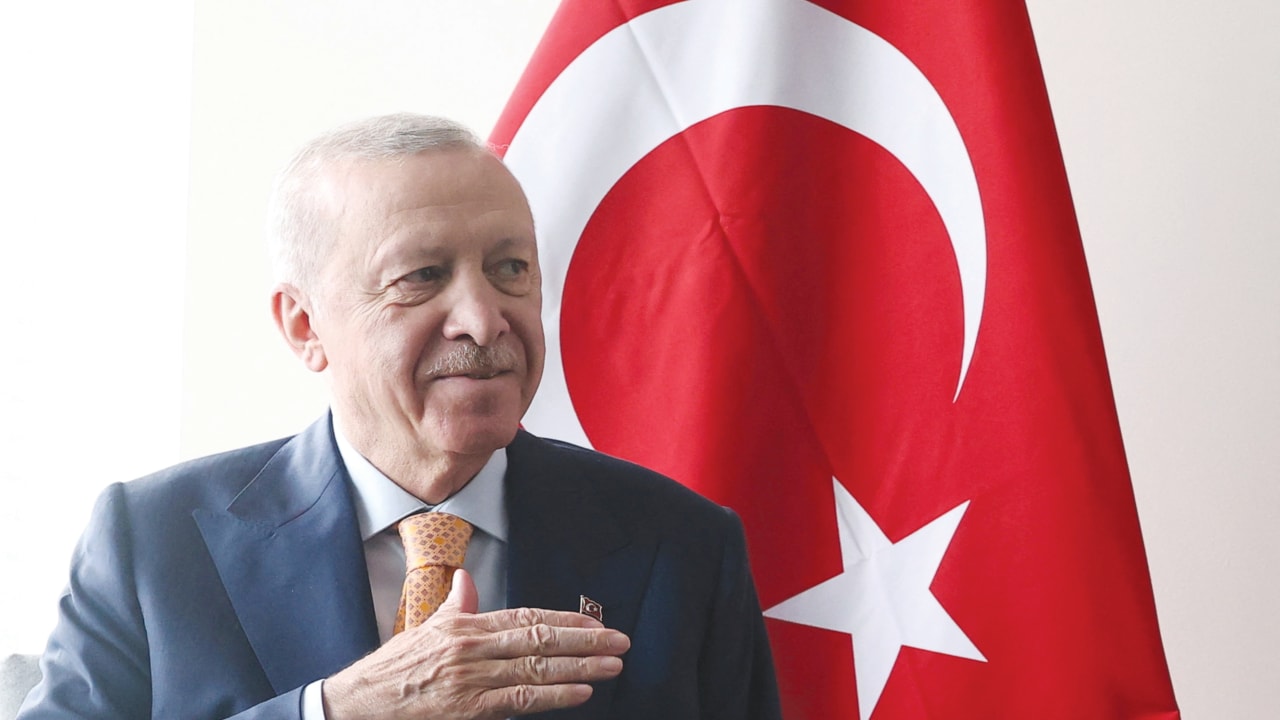
Prime Minister Benjamin Netanyahu has instructed Israel’s Justice Ministry’s International Law Department to develop a legal case against Turkish President Recep Tayyip Erdogan at the International Criminal Court (ICC). Reports indicate that the case will emphasize Turkey’s treatment of its Kurdish minority and its ongoing support for Hamas, an organization that Israel categorically views as a terrorist group.
### Understanding the Legal Context
It’s important to note that the anticipated case may not yield significant outcomes. Neither Israel nor Turkey has ratified the Rome Statute, which governs the ICC, thus neither country recognizes the ICC’s jurisdiction. This Israeli initiative appears to be a strategic response to Turkey’s recent attempts to issue an Interpol red notice aimed at Netanyahu’s arrest.
While the legal maneuver may not have immediate repercussions, it holds weight for several reasons. Notably, this approach is the first time Israel has utilized Turkey’s treatment of the Kurdish population as leverage against Ankara. In the past, Israeli officials have made statements regarding this sensitive issue, yet this is the first concrete action indicating a shift from rhetoric to practical measures.
### Israel’s Shift in Strategy
Israel’s recent initiative represents an escalation in what has come to be known as “lawfare.” Rather than merely operating defensively, it suggests that Israel aims to actively challenge adversarial positions on the international stage. This legal action has been met with enthusiasm among politically engaged Kurds in Turkey, indicating potential support from this community which may have experienced oppression under Erdogan’s government.
The broader context reveals an intensifying clash between Israeli and Turkish interests across various geopolitical arenas. Both nations are increasingly at odds over critical issues in Syria, the eastern Mediterranean, Jerusalem, and the West Bank. This evolving relationship is characterized by distinct ambitions that often undermine one another.
### Tensions Across the Region
In Syria, for instance, Turkey has been instrumental in the rise of a Sunni Islamist government, raising alarms in Israel about Turkey’s growing influence in the region. Israel fears that Turkish support for rebuilding Syrian air defenses could severely impact its operational freedom against threats from Iran. This concern was evident during a recent airstrike by Israel on a Syrian military base, underscoring Jerusalem’s commitment to establishing and maintaining its strategic red lines.
The eastern Mediterranean presents another battleground for Israeli and Turkish interests. The 2019 maritime agreement Turkey signed with Libya, which claims an exclusive economic zone cutting across Israel and Greece’s energy exploration ambitions, has further complicated matters. Turkey’s defense ministry has been vocal about monitoring military movements in the region, displaying its readiness to engage in any actions relating to its declared continental shelf.
### Continuous Friction and Repercussions
In addition, the Israeli occupation of certain areas in the West Bank remains a point of concern, compounded by Turkey’s support for Hamas, which operates an active office in Istanbul. Israeli intelligence has highlighted Turkish funding directed toward entities linked to Hamas, suggesting that Ankara’s involvement is not merely a distant political consideration but a direct threat to Israel’s security.
As both nations pursue their strategies in the Red Sea and Horn of Africa, the dynamics remain fraught. Israel’s recognition of Somaliland and plans to establish a military base in the area underscore its efforts to counterbalance Turkish influence, particularly as Ankara maintains its military presence in Somalia.
As geopolitical tensions persist with no resolution in sight, the rivalry between Israel and Turkey continues to unfold. The actions taken now will likely shape the future landscape of these relationships, signifying an era where regional ambitions collide dramatically, and the strategies employed will have lasting implications.