
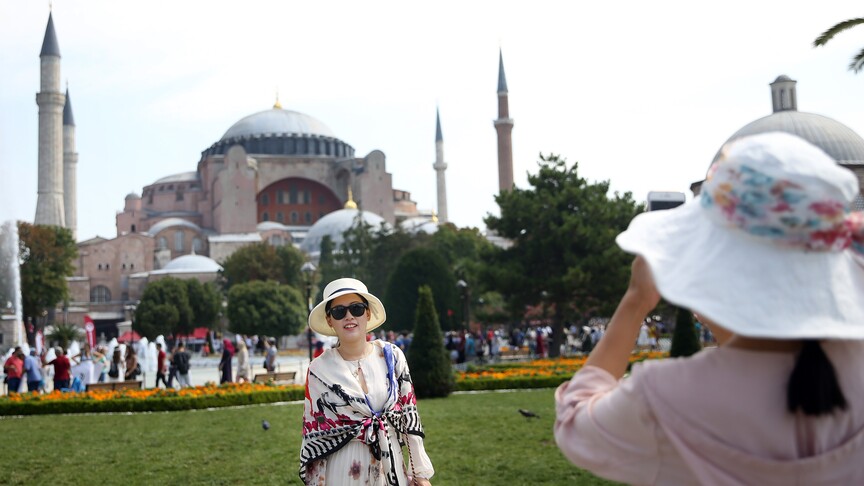
Malaysia is eyeing the Turkish approach to transit tourism as a way to enhance its own airport stopovers. With a growing interest in Muslim-friendly travel, Malaysia aims to learn from Türkiye’s experiences in effectively managing tourism alongside historical preservation.
Learning from Türkiye’s Heritage Management
Mohammad Faisal bin Abu Suaib Khan, the director-general of Malaysia’s Islamic Tourism Center, emphasizes the importance of Türkiye’s experience in combining tourism with the conservation of historical sites. He asserts that Türkiye excels in monetizing its heritage while ensuring that these sites are well-maintained and serve as popular tourist attractions. “The way you manage and fund historical monuments while ensuring their conservation is crucial,” Faisal explained. By adopting these practices, Malaysia could enhance its heritage tourism offerings, drawing in more visitors.
Countries like Türkiye and Malaysia are actively looking to expand their robust tourism sectors while catering to the rising demand within the Muslim travel market. In recent reports, Türkiye generated over $65 billion in tourism revenue in 2025, reflecting a growth of 6.8% from the previous year. In a similar vein, Malaysia welcomed over 42 million international tourists in 2025, marking a significant increase and highlighting the country’s efforts to promote itself as a prime travel destination through initiatives such as the Visit Malaysia 2026 campaign.
Innovative Transit Tourism Strategies
Faisal shared a personal anecdote about his experience in Istanbul, where Turkish Airlines offered him and a colleague a city tour during a layover. This included a guided boat cruise along the Bosphorus Strait, showcasing historical landmarks and providing insights into their significance. The trip not only enriched their travel experience but also served as a teaser that made them eager to return. “I would like to see a similar model in Malaysia for tourists transiting through Kuala Lumpur International Airport, allowing them the chance to explore the city,” Faisal remarked.
The implementation of such a model could transform long layovers into memorable experiences, making Kuala Lumpur a more appealing destination for international travelers. By using innovative strategies similar to Türkiye’s, Malaysia can potentially enhance its tourism profile and encourage repeat visits.
Strengthening Bilateral Cooperation
Faisal highlighted that collaboration between Malaysia and Türkiye should be reciprocal. While Malaysia aims to learn from Turkish practices, it also has its own successful framework for Muslim-friendly tourism. The Islamic Tourism Center in Malaysia has developed specific standards and a recognition system for businesses catering to Muslim travelers. “We can share our knowledge, and this cooperation can be mutually beneficial,” he stated.
With established Muslim-friendly certification, Malaysia has over 500 businesses recognized for their commitment to serving Muslim travelers, including hotels and restaurants. This level of assurance will complement Türkiye’s existing offerings, further enriching the travel experience for Muslim tourists. Türkiye’s rich cultural history and commitment to halal services make it well-suited to embrace Malaysia’s recognition program.
Expanding Muslim-Friendly Tourism
The Malaysian center aims for a significant increase in Muslim visitors, targeting 15.2 million by 2030. This ambition is further supported by initiatives that facilitate cooperation with various markets, including South Korea and Brazil. Faisal noted that establishing Muslim-friendly standards in non-Muslim countries could be invaluable for Muslim tourists seeking familiar services. “Working with halal certification bodies, we aim to enhance the offerings for Muslim travelers, ensuring they can easily find suitable accommodations and dining options,” he explained.
Faisal advocated for the idea that Türkiye and Malaysia could harmoniously coexist in the Muslim tourism marketplace. “By fostering joint initiatives, we can attract travelers who wish to explore both destinations, ultimately benefiting both nations,” he concluded. This collaborative approach not only enhances tourism offerings but also fosters a sense of community within the global Muslim travel market.