
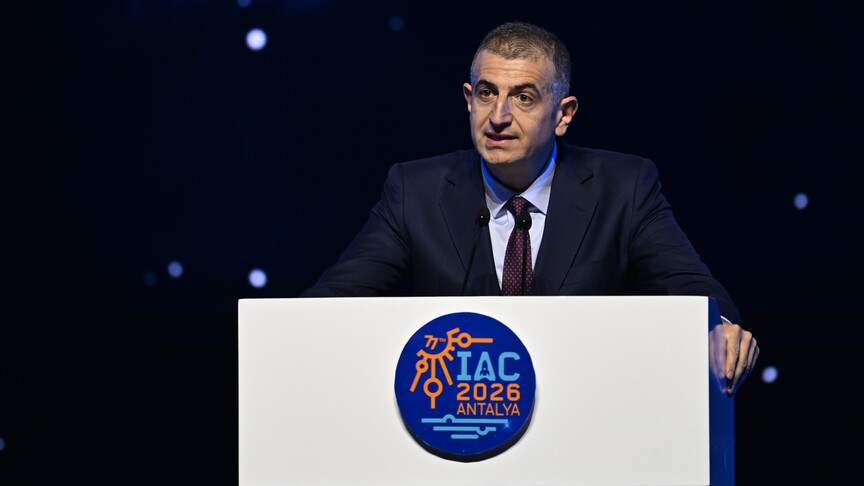
Türkiye is making significant strides in creating its own space infrastructure by developing a domestic positioning satellite constellation that will include over 100 satellites. This initiative aims to bolster the nation’s sovereignty in space, as highlighted by a sector representative.
Türkiye’s Shift from Importer to Global Producer
Haluk Bayraktar, the chair of the SAHA Istanbul defense cluster, noted that since 2002, Türkiye has evolved from being a technology importer to a notable global player in the aerospace sector. The rate of domestic manufacturing has surged impressively, jumping from 20% to 80% over the past two decades. This transformation showcases Türkiye’s commitment to enhancing its capabilities in high-tech industries, particularly in defense and aerospace.
During his remarks at the 77th International Astronautical Congress (IAC 2026) held in Antalya, Bayraktar pointed out that Türkiye’s annual defense and aerospace exports now stand at an impressive $11 billion, a massive growth from just $250 million two decades ago. “In just one week, we achieve the exports that once took a full year to reach back in 2002,” he emphasized, highlighting the accelerated pace of development and innovation within the sector.
Advancements in Unmanned Aerial Vehicles
Bayraktar elaborated on how what began as a modest venture by a few young engineers has transformed into a robust industry capable of designing and manufacturing essential components for unmanned aerial vehicles (UAVs). Türkiye now leads the market in this area, capturing 65% of the global UAV export market and supplying technology to over 40 different countries. The agile development philosophy that has driven this growth continues to benefit the Turkish industrial ecosystem, enabling the nation to expand its capabilities into outer space.
He further emphasized the importance of building a comprehensive space infrastructure, including communications satellites and a constellation of positioning satellites to create an independent navigation system. Türkiye has already achieved remarkable feats, including developing sounding rockets that reach altitudes of over 100 kilometers and homegrown hybrid orbital transfer vehicles.
A Vision for the Future of Space Accessibility
The theme of this year’s IAC, “The World Needs More Space,” resonates deeply with current global aspirations. Bayraktar interprets this theme in two crucial ways: first, emphasizing the need for increased access to orbit for more nations at lower costs; and second, advocating for the inclusion of small businesses and young engineers in the burgeoning space supply chain. Many nations that previously felt distant from the space sector are now being invited to participate.
To support this inclusive vision, Türkiye is investing in the education and development of young talent. Initiatives like TEKNOFEST, a premier defense and aviation event, have already shown promise. The event recently attracted 1.6 million student applications for its engineering and rocketry competitions, illustrating the burgeoning interest among young people in science and technology.
As Türkiye continues its ambitious plans in space, it’s clear that the country is not only fostering local talent but also establishing a significant foothold in the global aerospace industry. By securing a robust and independent space infrastructure, Türkiye aims to play a pivotal role in the future of aerospace technology while ensuring that the opportunities in this sector are accessible to a broader range of participants.