
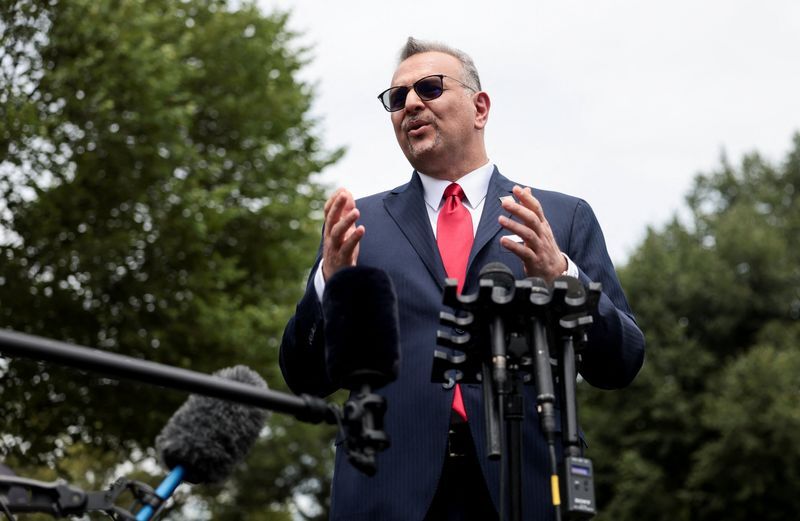
In recent developments, a U.S. envoy has engaged with the Sudanese army chief amid ongoing humanitarian crises resulting from a violent conflict in Sudan. This meeting aims to facilitate a political resolution to the ongoing turmoil that has left millions in dire need.
U.S. Commitment to Peace in Sudan
Massad Boulos, a senior U.S. advisor for Arab and African affairs, emphasized the unwavering commitment of the United States, in collaboration with Egyptian partners and other regional allies, to foster a political solution to the crisis in Sudan. His meeting with General Abdel Fattah al-Burhan, the commander of the Sudanese Armed Forces, marks a notable effort in diplomatic engagement, especially considering the recent U.S. decision to revoke al-Burhan’s visa in light of his planned attendance at a United Nations meeting.
The Crisis Escalates
The conflict between the Sudanese Armed Forces and the Rapid Support Forces (RSF), a paramilitary group, began in April 2023 and has led to significant violence. The clash arose from disagreements over the integration of their forces as part of a transition to a civilian government—a matter that has sparked fears of growing instability in the region. The U.S. State Department has indicated that neither of these factions represents a legitimate or constitutional government in Sudan.
Over 14 million people have been displaced due to the conflict, which has also resulted in ethnic violence. Washington has taken a strong stance, condemning actions by both the RSF and the Sudanese military. Allegations of genocide and war crimes have surfaced, with both sides denying any wrongdoing.
Urgency for Dialogue
Boulos reiterated the United States’ readiness to support initiatives aimed at creating a comprehensive dialogue among Sudanese political groups. The goal is to establish a preliminary roadmap for the nation’s future—one that notably requires unity among diverse factions to achieve peace. With the specter of ongoing violence and humanitarian needs, the urgency for such discussions is palpable.
The international community remains watchful, as any further escalation could aggravate the already critical humanitarian situation. The involvement of the U.S. and Egypt in diplomatic discussions underscores the importance of a coordinated approach to stabilize Sudan, as stakeholders aim to avoid further deterioration of conditions for millions affected by the conflict.
In summary, as diplomatic efforts continue, the urgency for a peaceful resolution in Sudan is critical. The humanitarian implications are profound, and with international attention focused on the conflict, the prospects for a political resolution could directly impact the lives of millions in one of the world’s most pressing crises.