
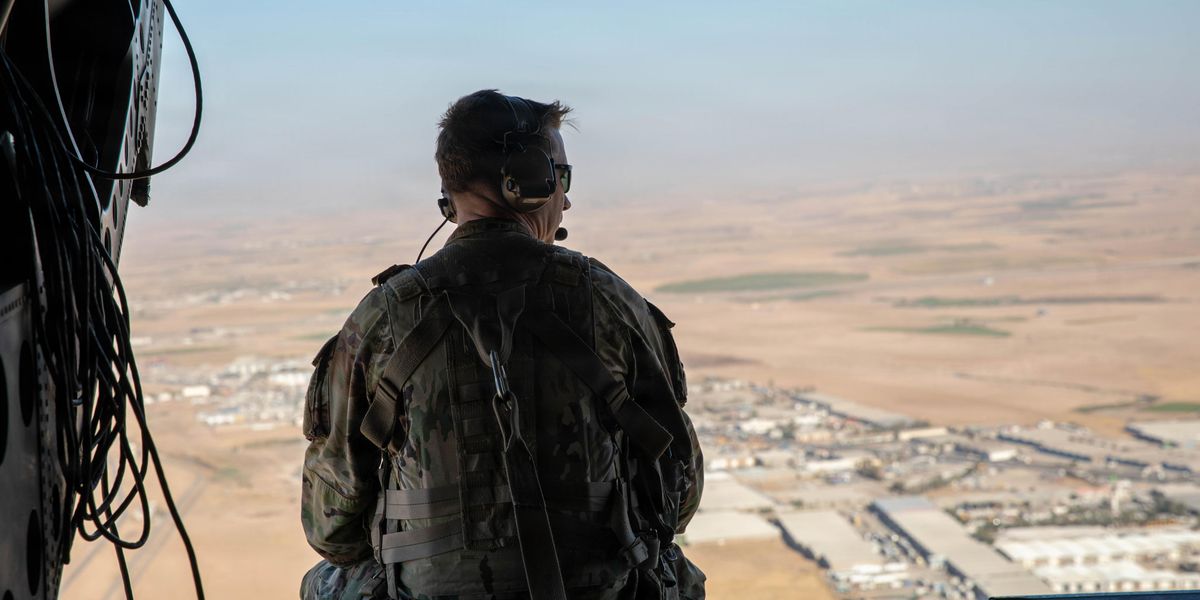
On September 30, the United States completed its troop withdrawal from Iraq, marking a significant moment that Iraq now celebrates as “Sovereignty Day.” This day represents not just a transition of military presence but symbolizes the restoration of full sovereignty to the Iraqi people.
Context of the Withdrawal
The U.S. withdrawal comprised a small number of soldiers, primarily those who had returned in 2014 at the request of the Iraqi government to assist in combating the rise of ISIS. This situation starkly contrasts with the vast military deployments seen in post-World War II Germany and Japan. Troops involved in Operation Inherent Resolve did not constitute an occupation force; rather, their role had evolved into a politically contentious issue, which provided cover for various anti-government militias to maintain their independence and weaponry.
Amid some calls within Washington for maintaining a limited military presence in Iraq, the more sensible route appears to be a shift toward diplomatic and developmental efforts. This pivot reflects the U.S. approach following its first withdrawal in 2011 and aligns with the Strategic Framework Agreement established in 2008 by President George W. Bush and Prime Minister Nouri Al-Maliki. This pact aimed to underline a partnership based on developmental support rather than military involvement.
Evaluating Iraqi Security Forces
Critics of the withdrawal often argue that Iraqi security forces lack the capability to manage their borders and maintain internal stability. However, high-ranking officials, including the national security adviser, refute this assertion. A comprehensive assessment conducted by Iraqi and U.S. military leaders concluded that Iraqi forces are sufficiently prepared to handle both internal and external threats. Today, the Iraqi military stands as one of the largest conventional armed services in the Middle East, demonstrating its organizational prowess and readiness.
While the military’s readiness is commendable, it remains uncertain whether this will translate into the political determination required to face adversaries effectively. Historical divisions rooted in politics and sectarian conflicts have long plagued the Iraqi military. Nonetheless, the presence of a minimal U.S. military force is unlikely to resolve these enduring issues, nor would it effectively influence the internal dynamics of governance.
Implications of Continued U.S. Presence
Maintaining a continued U.S. footprint in Iraq could contribute to ongoing instability. Iranian-affiliated militia groups often characterize attacks on American troops as acts of resistance against foreign occupation. The Iraqi government, led by Prime Minister Ali al-Zaidi, has prioritized disarming militias that do not answer to the central authority; however, a U.S. military presence may complicate this critical policy agenda.
Furthermore, with ongoing tensions between the United States and Iran, any American troops stationed in Iraq would likely be at heightened risk of retaliatory attacks. Thus, a strategic objective for the U.S. should be to keep Iraq free from entanglement in this broader conflict. Instead, support for the Iraqi military can continue without permanent bases. Security assistance, intelligence sharing, and specialized training can be effectively managed from a distance, ensuring a stable partnership without a significant military footprint.
Congress and the public appear to lack any considerable appetite for resuming a “forever war” in Iraq, further emphasizing that the focus should dwindle away from maintaining a residual military force. The U.S. military’s initial entry in 2014 was rooted in a specific mission against ISIS, a mission that has since concluded. Moving forward, U.S.-Iraq relations should concentrate on diplomacy and development, as highlighted within the 2008 Strategic Framework Agreement. The ongoing objectives related to economic, political, and cultural cooperation should be placed at the forefront, steering away from military involvement in a region that necessitates diplomatic solutions.