
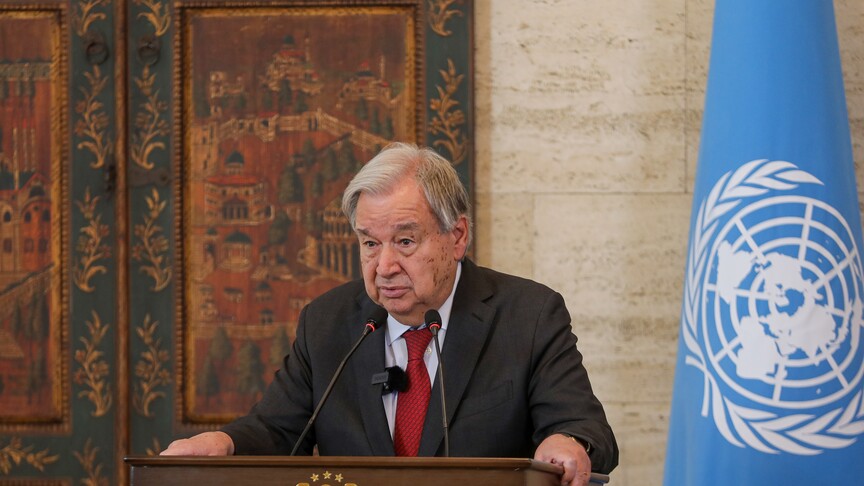
UN Secretary-General Antonio Guterres recently called on wealthy nations to take action by providing the necessary financial resources and technological support to help vulnerable countries enhance their climate resilience ahead of the upcoming COP31 in Türkiye.
Call for Climate Action from Developed Nations
During a joint press conference with Pakistani Foreign Minister Ishaq Dar in Islamabad, Guterres highlighted the critical role that developed countries must play in tackling climate change. “Leadership from vulnerable developing countries cannot substitute for responsibility from developed countries,” he stated, emphasizing that developed nations must be accountable for their part in the climate crisis. His visit to Pakistan, scheduled from October 6 to October 8, serves to underline this pressing issue.
The Urgency of Emission Reductions
Guterres pointed out that the G20 countries account for a staggering 80% of global emissions, making it imperative for them to act decisively. He advocates for a “drastic reduction in those emissions this decade,” insisting that the principle of “common but differentiated responsibilities” should guide global efforts. “All countries must do their part,” he reiterated, calling for developed nations to honor their commitments, particularly those made at COP29 in Baku. This includes delivering both financial assistance and technological advancements essential for developing nations to build resilience and undergo a just transition to sustainable practices.
Financial Commitments for Climate Action
At the Baku climate summit, developed countries pledged to mobilize at least $300 billion annually by 2035, specifically to support climate action in developing nations. This commitment is not just a promise but a necessary step to combat the adverse impacts of climate change that disproportionately affect vulnerable populations. Guterres’ emphasis on these pledges illustrates the urgency and the expectation that developed nations uphold their financial responsibilities.
Pakistan: A Case Study in Climate Vulnerability
Reflecting on his previous visit to Pakistan in 2022, following catastrophic floods, Guterres noted that the nation finds itself on the frontline of climate-related challenges. “Pakistan contributes only a minuscule portion of global emissions but faces severe consequences from climate chaos,” he remarked. This observation underscores the global inequity at play, as countries contributing the least to emissions often suffer the most from climate change effects.
The UN’s COP31 climate conference, taking place from November 9 to November 20 in Antalya, Türkiye, will be an essential platform for dialogues aimed at confronting these issues. It is crucial that all stakeholders engage earnestly to ensure that commitments translate into tangible action.
In summary, the interconnectedness of global responsibilities in addressing climate change cannot be overstated. Wealthy nations must step up, fulfill their promises, and provide the resources necessary for developing countries to protect their populations and ecosystems. Only through solidarity and shared accountability can there be meaningful progress in the fight against climate change.