
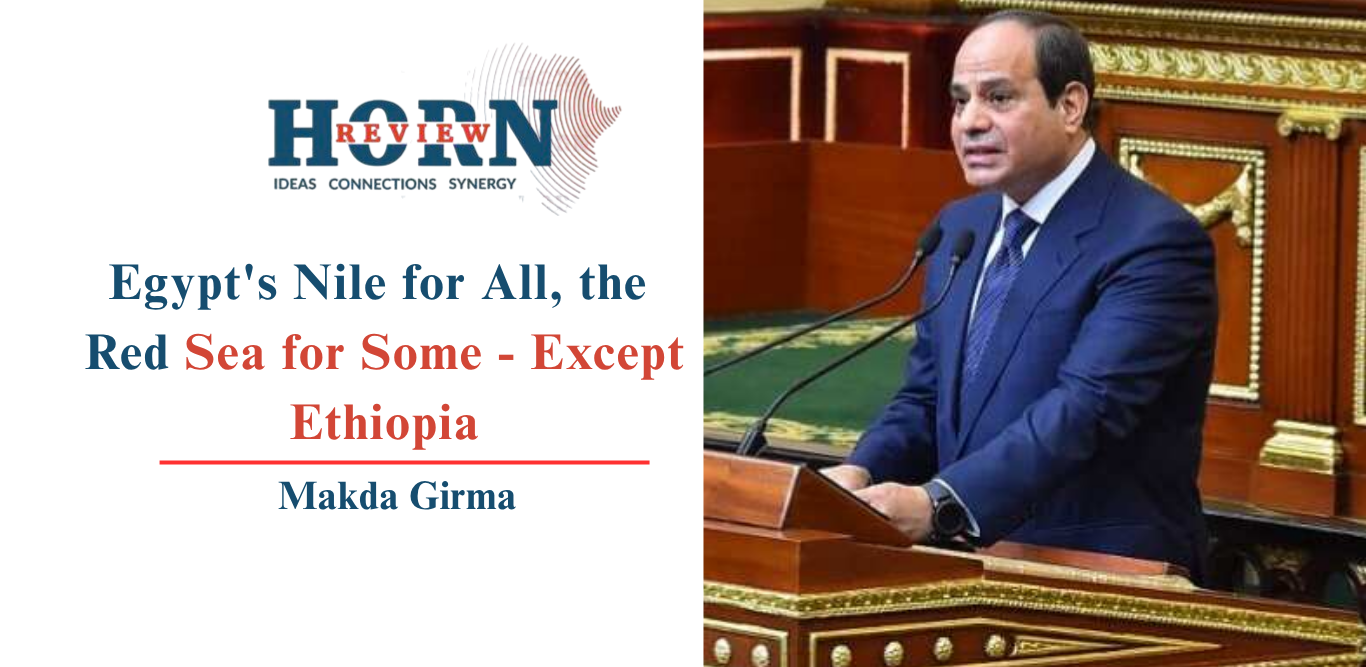
The recent developments at El Alamein emphasize a striking contradiction in Egypt’s approach to regional governance. On October 4, 2026, Egypt, Eritrea, Somalia, and Sudan issued a declaration that illustrates two divergent interpretations of geography and responsibility. While they claimed that governance on the Red Sea was exclusively the domain of coastal nations, they simultaneously invoked international laws regarding the Nile, emphasizing cooperation and mutual benefit while rejecting actions that might affect downstream nations.
### Diverging Geographical Perspectives
This juxtaposition reveals a fundamental issue in Egypt’s regional stance. In situations where Egypt feels geographically vulnerable, it advocates for a network of interdependence among states. The focus shifts to the repercussions of actions that cross borders, thereby necessitating a more collaborative approach. Conversely, when Ethiopia, which is landlocked, faces its own geographical vulnerabilities, the narrative alters. Coastal access becomes the defining criterion for involvement in regional matters, minimizing Ethiopia’s diplomatic leverage based on its internal needs and proximity.
### Egypt’s Nile Doctrine and Dependence
Egypt’s doctrine regarding the Nile asserts that total territorial sovereignty cannot effectively manage shared resources. Cairo views the issue of water security as critical to its survival, contending that resources should not be subject to unilateral decisions. Egyptian foreign policy in September 2026 emphasized cooperation and integrated approaches to transboundary resources. This established a narrative where shared water management focuses on mutual benefits rather than rivalry. However, this narrative is complicated by Ethiopia’s demand for fair representation in the decision-making process, arguing that it cannot be marginalized in discussions about a shared river.
### The Red Sea Contradiction
When discussions shift east toward the Red Sea, Egypt’s rhetoric transforms from one of cooperation to exclusion. In October 2025, Egypt’s foreign minister asserted that Ethiopia had “no right” to partake in Red Sea governance due to its landlocked status. This stance sharply contrasts with Ethiopia’s position on the Nile, where it has not prohibited Egypt from participating in discussions related to the river’s governance. The core issue arises when Egypt relies on coastal geography to dismiss Ethiopia’s role in maritime matters while simultaneously requesting a more expansive view of geography when it comes to its own vulnerabilities.
### Ethiopia’s Economic Stakes
Ethiopia’s emphasis on its maritime interests stems not just from historical grievances but from a practical economic necessity. Over 95% of the nation’s import and export trade moves through the Addis Ababa-Djibouti corridor, making maritime access pivotal for its economic resilience. This reliance on a single trade route poses significant national security concerns for Ethiopia. It highlights the inconsistency in Egypt’s arguments; while demanding recognition for its dependence on the Nile, Cairo dismisses Ethiopia’s rightful claim to maritime access based on its geographic realities.
### Legal Frameworks and Regional Dynamics
Despite the important legal distinctions between river and maritime rights, Ethiopia maintains that landlocked nations possess legitimate maritime interests. The Law of the Sea Convention affords landlocked countries the right to access the sea, thereby suggesting that governance can remain respectful of all parties’ interests. Ethiopia has sought access to the sea through negotiation instead of exclusion, further complicating Egypt’s rigid stance on Red Sea governance.
### Bridging the Gap
The Ethiopia-Somalia-Ankara Declaration reaffirmed Somali sovereignty while recognizing Ethiopia’s need for maritime access, illustrating that various agreements can facilitate Ethiopia’s integration into the regional framework without infringing on other nations’ sovereignty. Egypt, too, is advocating for equitable arrangements in the Nile Basin, and it must consider a similar approach concerning the Red Sea.
### Conclusion: A Call for Consistency
Ultimately, the disparities in Egypt’s positions highlight a deep-rooted contradiction. While Egypt has not sought to entirely exclude Ethiopia from the Nile’s governance, it does appear to defend a Red Sea structure that marginalizes Ethiopia’s maritime interests. As these intricate geopolitical dynamics evolve, Egypt faces the challenge of reconciling its narratives around river and sea governance to foster an equitable regional environment that respects the legitimate interests of all states involved.