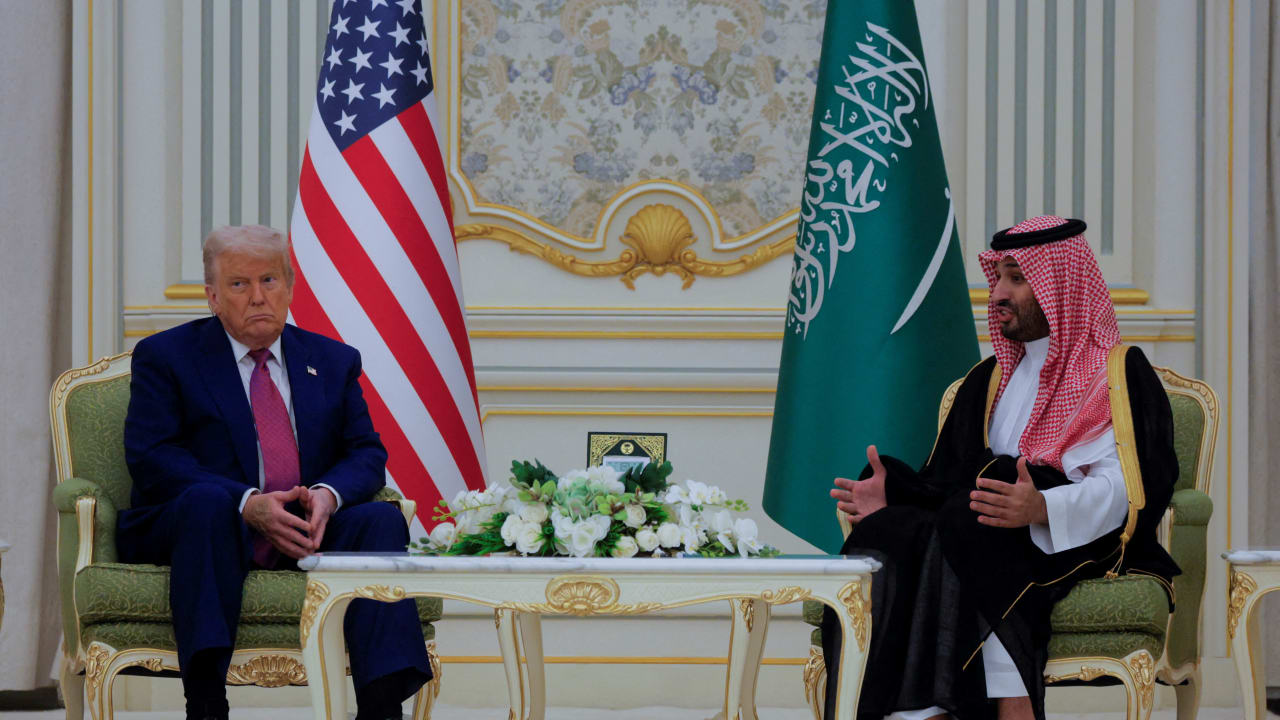
A potential agreement between the United States and Saudi Arabia regarding nuclear power development may not include the stringent safeguards that some Democratic lawmakers have been advocating for, as indicated in a State Department letter to a senator. The agreement, highlighted by discussions last year under former President Donald Trump’s administration, was originally aimed at fostering U.S. industry and enhancing diplomatic relations with the Kingdom.
### Concerns Over Nuclear Proliferation
The prospect of Saudi Arabia pursuing nuclear capabilities raises alarm among nonproliferation advocates. Crown Prince Mohammed bin Salman has openly stated that the nation would consider developing nuclear weapons if its regional adversary, Iran, did the same. This statement underlines the urgency for rigorous regulatory frameworks in any nuclear agreements.
### Call for ‘Gold Standard’ Protections
In March, a group of twelve Democratic lawmakers reached out to Secretary of State Marco Rubio, urging for the incorporation of a protocol that grants the United Nations International Atomic Energy Agency the authority to oversee the nuclear energy activities of signatory countries. This includes the ability to conduct unannounced inspections of undisclosed sites, a measure generally regarded as a crucial safeguard.
However, a letter dated May 18 from the State Department to Democratic Senator Edward Markey revealed that the proposed pact would only necessitate a “bilateral safeguards agreement,” a less stringent alternative than what was preferred. The absence of a more robust “gold standard”—a benchmark that prohibits uranium enrichment and nuclear waste reprocessing—has been a significant point of contention for lawmakers advocating for tighter controls.
### Future Implications and National Security
Senator Markey has openly critiqued the agreement, stating that the Trump administration is compromising national security. He stated, “Trump is providing nuclear technology to a nation seeking weapons without imposing the necessary safeguards.” Should this pact be finalized and sent to Congress, lawmakers will have a 90-day period to oppose it, or else it will go into effect, enabling U.S. technological exchanges with Saudi Arabia.
Henry Sokolski, director of the Nonproliferation Policy Education Center, emphasized the importance of stringent standards for nuclear fuel production, warning that a country capable of creating nuclear fuel must be a steadfast ally. The stakes are indeed high, with experts urging a reevaluation of oversight mechanisms before any agreements are operationalized.
In conclusion, while the potential for a U.S.-Saudi nuclear partnership presents financial and diplomatic advantages, the lack of stringent nonproliferation measures remains a contentious issue worthy of further scrutiny. The outcome of this agreement could have ramifications not only for regional security dynamics but also for global nonproliferation efforts.