
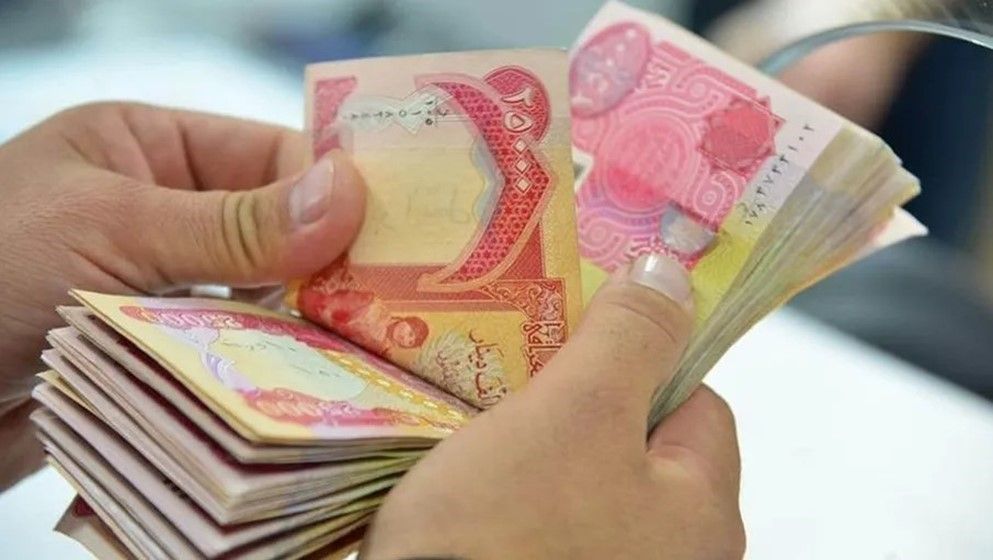
The recent devaluation of the Iraqi dinar against the U.S. dollar by nearly 15% has raised concerns about the country’s economic stability. The Central Bank of Iraq has decided to raise the official exchange rate for the dollar, reflecting financial pressures exacerbated by the ongoing conflict in Iran and interruptions in oil exports.
Details of the Devaluation
As reported by the Iraqi News Agency, the official exchange rate for dollars sold to the public has been adjusted from 1,320 to 1,520 dinars per dollar. This substantial change comes merely four months after the Iraqi government and the central bank affirmed that they had no intentions of altering the exchange rate, despite fluctuations observed in the parallel market. Prior to the devaluation announcement, the dollar was trading between 1,420 and 1,490 dinars in informal exchanges, yet it has now surged to an unofficial range of 1,610 to 1,690 dinars.
Impact of the Iran War
The financial pressures on Iraq’s economy intensified with the eruption of the Iran conflict and the closure of the Strait of Hormuz. As a country that largely relies on oil revenues to fund its government expenses, disruptions in oil exports have significantly diminished dollar inflows, placing a strain on national finances. Despite earlier assurances from government officials that they would not resort to printing money or further devaluation to address liquidity shortages, the reality on the ground has shifted.
The recent decision to devalue the dinar came shortly after Nizar Nasser Hussein’s appointment as the central bank governor, marking a critical juncture for Iraq’s economic policies. This shift also aligns with growing international scrutiny regarding Iraq’s measures to combat money laundering and the financing of terrorism—a situation that adds another layer of complexity to the country’s financial landscape.
Financial Burdens Ahead
Iraq faces the daunting task of securing at least 10 trillion dinars each month to meet its obligations related to salaries and public spending. Oil revenues, which constitute approximately 90% of the national budget, have been under pressure due to declining export levels. Consequently, the government is exploring various financing options to meet its economic needs. In a conversation with Asharq Bloomberg, Mazhar Mohammed Saleh, an adviser to the Council of Ministers on financial matters, indicated that Iraq is consulting with the International Monetary Fund regarding potential assistance if financial challenges persist amidst ongoing conflict.
The implications of the war have led analysts at Bloomberg Economics to estimate that Iraq may require around $75 billion to maintain its pegged exchange rate against the dollar, particularly as it draws from foreign reserves, which were roughly $100 billion before the onset of war.
In light of these challenges, the Iraqi government has initiated efforts to lessen its dependence on oil market fluctuations. Prime Minister Ali Faleh Al-Zeidi has established a committee aimed at reducing the budget’s reliance on oil to 45% over the next decade, up from the current dependence of approximately 90%. This strategy seeks to enhance non-oil revenue streams through improved customs duties, border-crossing fees, and more efficient tax collection.
In summary, the recent devaluation of the dinar represents a significant shift in Iraq’s fiscal landscape. The country finds itself at a critical crossroads as it navigates a landscape fraught with financial pressures, necessitating a reevaluation of its economic dependence on oil revenue while seeking to stabilize its currency amid external challenges.