
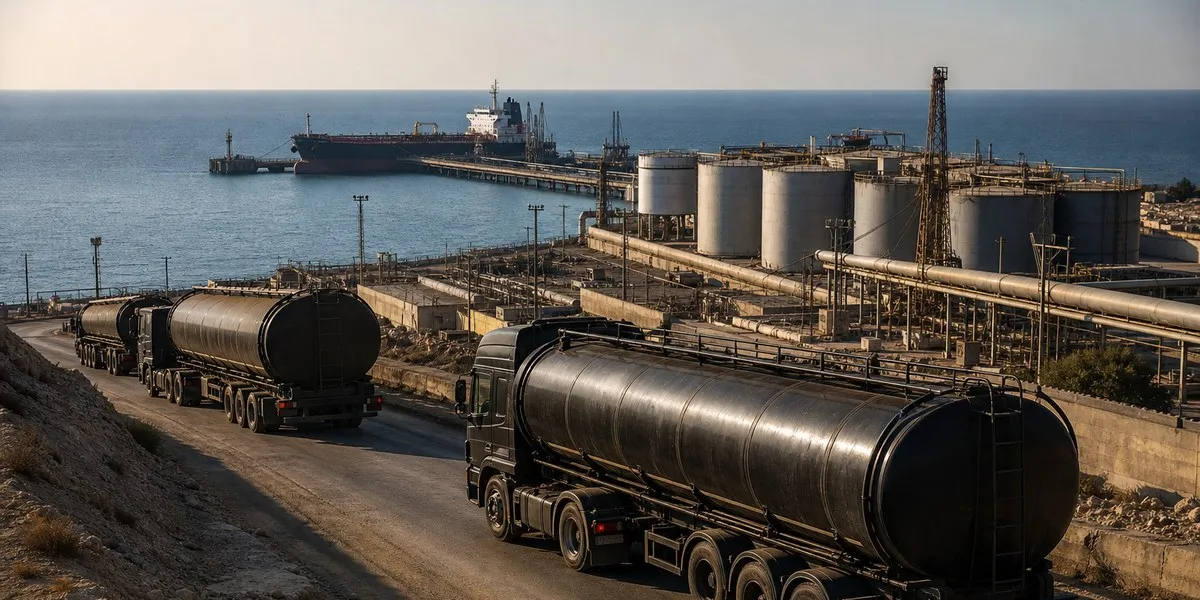
Iraq is set to initiate crude oil exports via truck through Syria to the Mediterranean Sea, aiming to create an alternative route that avoids the strategic Strait of Hormuz. Reports indicate that the first shipments might reach the Syrian port of Baniyas by mid-October, highlighting a significant shift in Iraq’s oil export strategy.
Crude Oil Route via Baniyas
According to Yousef Qiblawi, the director general of the Syrian Petroleum Company, Iraq has approached Syria for assistance in exporting not only its crude oil but also its existing fuel oil supplies. An agreement between both nations is reportedly close to finalization. The Syrian Petroleum Company plans to set up oil storage facilities at Baniyas, preparing the site for the loading of oil onto vessels for subsequent export. This new route is expected to enhance the current overland corridor that allows Iraqi fuel oil to reach Syria’s Mediterranean coast.
Transport Capabilities and Infrastructure
Qiblawi mentioned that around 1,000 trucks transport fuel oil daily, with each truck capable of carrying approximately 220 barrels. For crude oil transportation, a similar or even larger fleet is anticipated. This indicates that 1,000 trucks could potentially move 220,000 barrels of crude oil each day, significantly boosting the efficiency of Iraq’s export operations. Ahmed Qubbaji, the deputy director general for transport and storage, also stated that between 1,000 to 1,200 trucks traverse Syrian territory daily. As part of this initiative, Syria has started supplying imported gasoline from Baniyas to Iraq under a three-month agreement, with plans to ramp up operations to about 200 trucks per day.
Reviving the Haditha–Baniyas Pipeline
Moreover, Iraq and Syria are collaborating to revive the Haditha–Baniyas pipeline, which has historical connections to the Kirkuk–Baniyas route. Reports from SANA in July revealed agreements among Syria, Iraq, and an international consortium regarding this project. The pipeline is designed to have a capacity of 2 million barrels per day, aiming to reinforce the oil export infrastructure further, although it currently does not serve as an operational route.
Through these strategic developments, Iraq is not only diversifying its export routes but also reinforcing its oil supply chain. With the implementation of these new agreements and infrastructural improvements, the Iraqi oil sector appears poised for enhanced export capabilities, especially given the geopolitical significance of the Mediterranean route. This transition could help Iraq become less reliant on traditional shipping lanes while fostering stronger ties with its neighbor, Syria.