
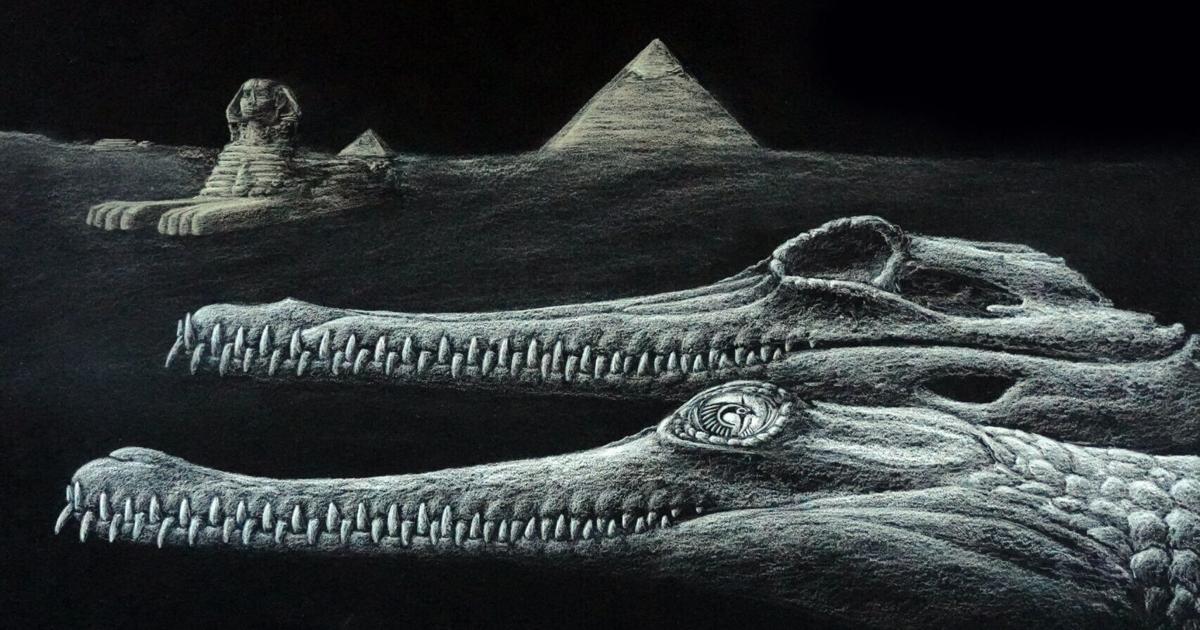
Scientists recently unearthed an intriguing species known as Herugavialis cairensis, found within the very stones that were utilized in constructing the Great Sphinx of Giza. This remarkable discovery intertwines paleontology and archaeology, shedding light on a period long gone while captivating our historical imagination.
The Importance of Fossil Discoveries
Fossil discoveries like Herugavialis cairensis provide invaluable insights into the Earth’s ancient ecosystems. These specimens enable researchers to reconstruct past climates, environmental conditions, and the biodiversity that once flourished in these areas. Such findings can reshape our understanding of evolution and species adaptation over millennia. By studying these fossils, scientists can uncover the evolutionary lineage of birds and their precursors, offering critical evidence about the transitional forms that shaped today’s avian life.
Connection to Ancient Civilizations
The fact that Herugavialis cairensis was found in the same limestone that helped build the Great Sphinx adds a rich layer of significance to this discovery. The Sphinx, an iconic symbol of ancient Egyptian civilization, stands as a testament to human ingenuity and artistry. By connecting this fossil to such a pivotal monument, researchers not only highlight the intertwined nature of natural and human history but also increase public interest in the field of paleontology. These discoveries serve as reminders that the past is multifaceted, encompassing both the diverse life forms that roamed the Earth and the civilizations that rose to prominence.
Implications for Future Research
The discovery of Herugavialis cairensis paves the way for further exploration in both paleontological and archaeological contexts. As scientists analyze the fossil’s morphology and study its ecological role, they can hypothesize about the environment it inhabited and how it adapted. Such research will not only deepen our appreciation of avian history but also potentially lead to the discovery of more fossils that can broaden our understanding of ancient life. The limestone quarry areas around Giza, with their rich geological history, may prove to be treasure troves for paleontologists.
Preservation of Ancient Marbles
While the excavation of Herugavialis cairensis is a notable achievement, it also raises questions about the preservation of remaining archaeological sites. As more discoveries emerge, ensuring that these sites are protected becomes crucial. The balance between exploration and conservation is a delicate one, yet it is one that must be addressed. Future findings can only add to our knowledge if the environments in which they are located remain intact, allowing for continued research and engagement with our planet’s history.
In summary, the discovery of Herugavialis cairensis represents a significant moment in both paleontology and archaeology. By intertwining the past of our planet with the awe-inspiring achievements of ancient civilizations, we are reminded of the intricacies of history and the need for ongoing research and preservation efforts. This fossil stands not just as a relic of a bygone era but as a bridge between our understanding of life on Earth and the storied achievements of human culture.