
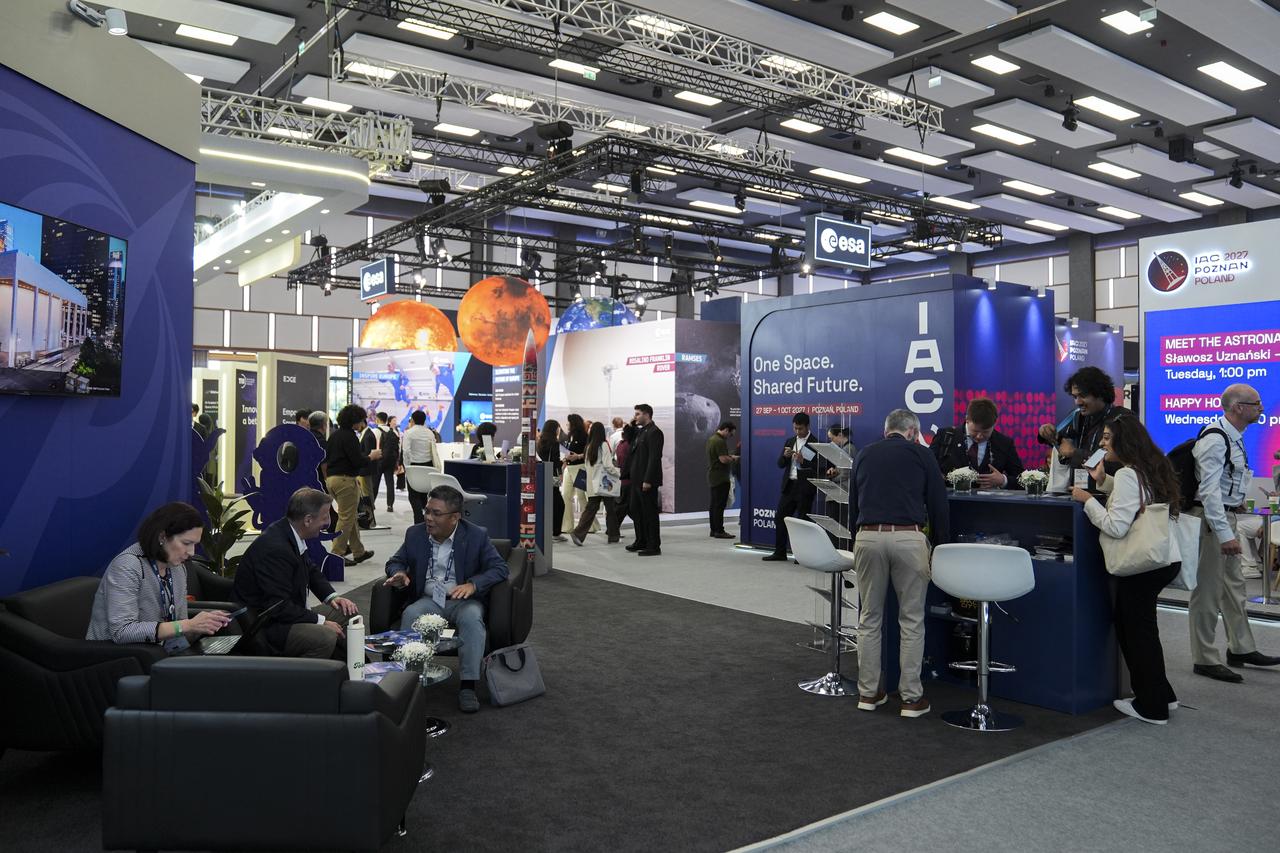
European Space Agency (ESA) Director General Josef Aschbacher has emphasized the importance of closely monitoring the deployment of weapons in space. Speaking to the Anadolu Agency at the 77th International Astronautical Congress held in Antalya, Türkiye, he indicated that while ESA does not engage in deploying weapons, the evolving landscape regarding space security necessitates vigilance. He also expressed the ESA’s willingness to negotiate a new cooperation agreement with Türkiye.
Concerns Over Space Weapons
During his address, Aschbacher reiterated that Europe, specifically through ESA, is not currently engaging in the militarization of space. However, he acknowledged the recent developments concerning space weaponry as alarming. “It is crucial that we monitor these developments closely,” he stated. He further addressed growing concerns stemming from the U.S.’s admission to possessing weapons in space, which he classified as a troubling trend. Aschbacher noted the stark difference between having weapons and their actual use, asserting that using such weapons could devastate entire orbits, impacting satellites and posing significant risks.
Aschbacher emphasized that while nations must defend their satellites, the potential for conflict in space raises serious concerns. He expressed skepticism about the possibility of a space war, as the collateral damage could also affect an aggressor’s assets. “This situation speaks more to power dynamics in space than actual intentions to engage in conflict,” he concluded reassuringly.
Significant Increase in ESA Funding
In an effort to bolster its position amid intensifying competition among leading space nations, ESA has increased its funding by 32%, now amounting to €22.3 billion over the next three years. Aschbacher described this surge in funding as a clear commitment from member states to enhance their collective capabilities in space exploration. This substantial financial backing is set to support significant projects, including those related to Earth observation, navigation, communications, astronaut activities, and the development of rockets and space stations.
Despite operating on a smaller budget compared to the U.S., Europe is progressing rapidly in the global space race, spearheading influential programs like Copernicus for Earth observation and the Galileo satellite navigation system. The ESA head assured stakeholders that there is a concerted effort to close existing gaps, particularly in launch vehicles and space-based broadband capabilities.
Future of European Space Access
Aschbacher also touched upon Europe’s future access to low Earth orbit following the anticipated conclusion of the International Space Station (ISS) operations in 2030. He confirmed discussions with member states to formulate strategies ensuring European access not only for satellites but also for astronauts. Aiming to present options during an upcoming ministerial meeting in Rome, he expressed optimism for a definitive plan by the year’s end.
The implementation of artificial intelligence in ESA’s missions is already in progress and is expected to expand swiftly. This integration can drive efficiencies and breakthroughs in various space operations, positioning Europe favorably for future challenges and opportunities in space.
Open Dialogue with Türkiye
Aschbacher concluded by recognizing the importance of international collaborations in the space sector. He reflected on a previously established partnership with Türkiye, which has since lapsed, indicating readiness to negotiate a new agreement. He remarked on Türkiye’s rapid advancements and strategic importance in the realm of space. “ESA welcomes partnerships with nations, and Türkiye is a key player in this environment,” he affirmed, reflecting the agency’s readiness to collaborate and support Türkiye’s ambitious space objectives, which are vital for the nation’s development and daily life.
This ongoing dialogue exemplifies a build-up of cooperative efforts that could further the goals of both ESA and Türkiye in the evolving, competitive landscape of space exploration.