
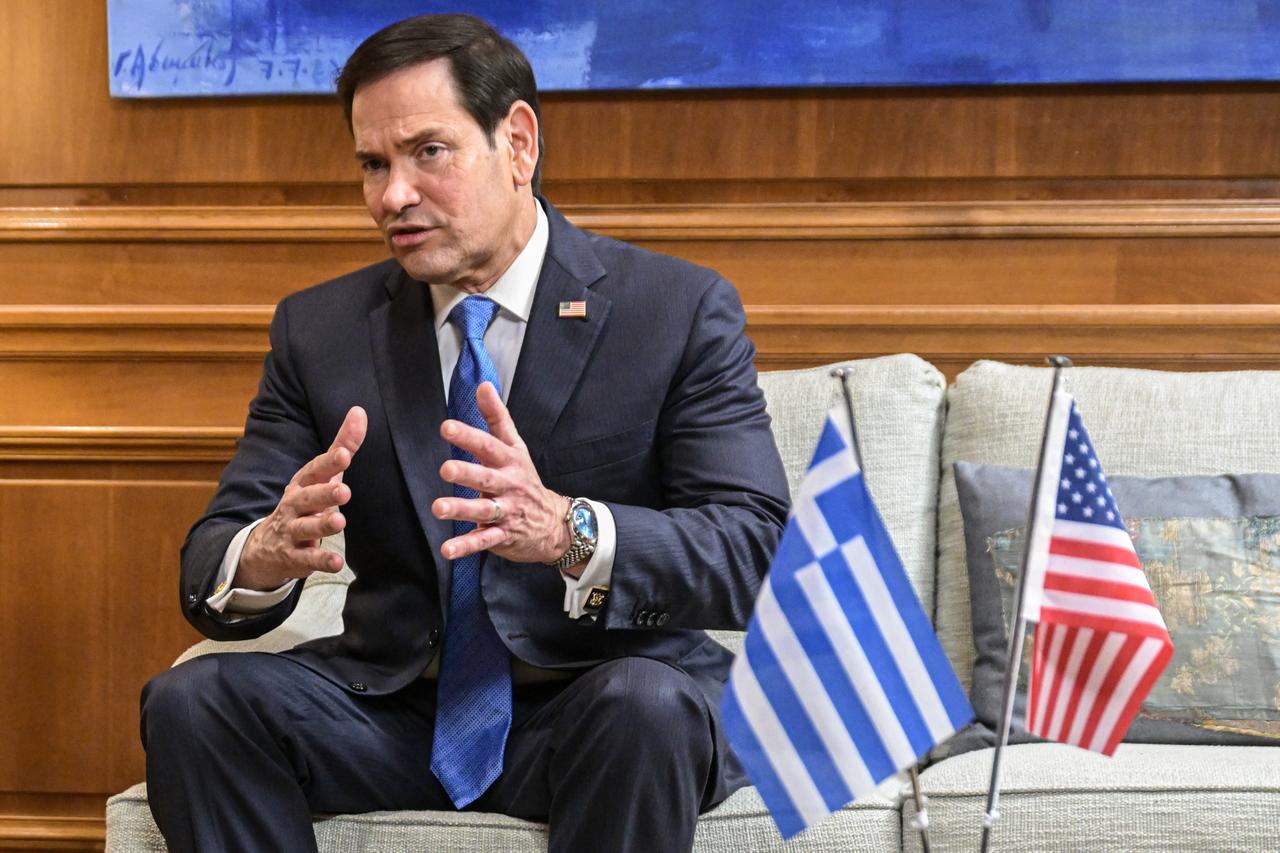
U.S. Secretary of State Marco Rubio has emphasized that a conflict between Greece and Türkiye would be “unthinkable,” asserting that such a situation is something Washington cannot permit. This statement came during an interview with the Greek newspaper Kathimerini, where Rubio discussed the ongoing tensions between the two countries. His comments come amid disputes involving the Great Sea Interconnector power cable and Türkiye’s aspirations to return to the F-35 fighter jet program.
Averting Greece-Türkiye Conflict: U.S. Position
Rubio expressed concern that a military clash would not benefit anyone, stressing that it is vital for all parties—Greece, Türkiye, and the United States—to work towards maintaining peace. He stated, “It would not be good for anyone. I view it as unthinkable and something we could never allow.” When prompted about the possibility of U.S. mediation, particularly in light of past personal ties between President Donald Trump and President Recep Tayyip Erdoğan, Rubio assured that the U.S. maintains ongoing communication with Türkiye. He remarked, “Our relationship with Türkiye is one we have invested in, and that investment should assist in these discussions.”
Rubio’s assurances come at a time when relations remain strained over critical infrastructure projects, like the energy link between Greece and Cyprus, which has become an area of contention. He indicated that diplomatic efforts will be focused on communicating the importance of resolving such issues collaboratively.
Clarifying F-35 Complications
Delving into the complexities surrounding Türkiye’s access to F-35 fighter jets, Rubio noted that while President Trump wishes for the deliveries to proceed—especially since Türkiye has already made significant payments—significant legal barriers, including sanctions legislation, hamper progress. “A law passed by Congress outlines strict conditions,” Rubio explained, emphasizing that the situation revolves primarily around Türkiye’s acquisition of the S-400 air defense system from Russia, which contravenes NATO standards and has led to sanctions under the Countering America’s Adversaries Through Sanctions Act (CAATSA).
Despite these challenges, Rubio expressed optimism that a solution could be found, highlighting that discussions are ongoing and potential avenues for resolution are being explored. Since Türkiye’s removal from the F-35 program in 2019, the nation has been advocating for either reinstatement in the program or reimbursement for its investments, estimated at $1.45 billion.
Diplomatic Moves on Energy Infrastructure
In addressing the tensions related to the power cable between Greece and Greek Cyprus, Rubio stated that Washington is prepared to engage in discreet diplomacy aimed at alleviating obstacles. He highlighted the sensitive nature of the situation, alluding to the involvement of additional countries and the need for careful negotiations outside the public eye. Türkiye has consistently urged that any infrastructure projects in its continental shelf should be coordinated with Ankara in advance.
In a separate but related development, Rubio revealed that the U.S. and Greece recently entered into a significant arms agreement worth $4 billion, enhancing defense cooperation in the region. During the sixth U.S.-Greece Strategic Dialogue, both nations committed to bolstering their military ties, which further underscores the importance of collaboration in light of regional security concerns.
The U.S. aims to facilitate amicable agreements that can lead to lasting peace in the Eastern Mediterranean, focusing on diplomatic channels to resolve conflicts while enhancing bilateral military cooperation with both Greece and Türkiye.