
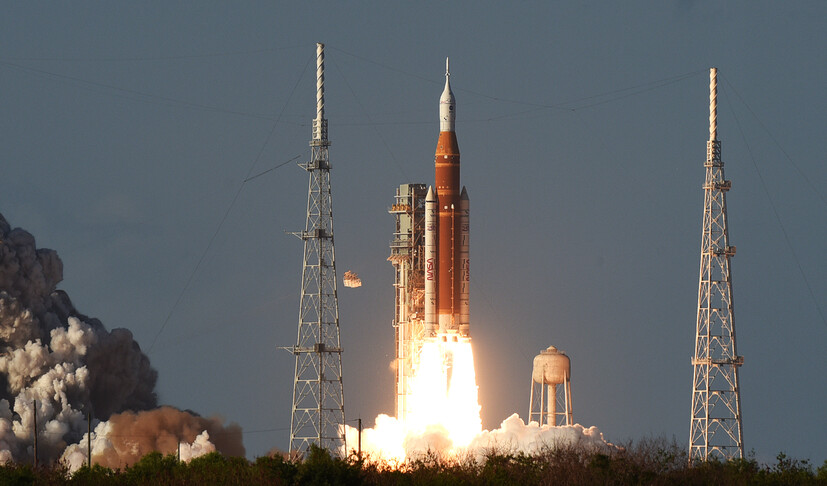
Türkiye is set to launch its inaugural mission beyond Earth’s orbit, embarking on an ambitious journey to the Moon. This venture aims not only to explore the lunar surface but also to test cutting-edge satellite technologies in the depths of space. Designed to gather scientific data and validate autonomous navigation techniques, this mission promises to enhance Türkiye’s capabilities in space exploration.
Mission Overview and Objectives
Scheduled for liftoff in the second quarter of 2027, the spacecraft is expected to take approximately two months to reach a circular polar orbit approximately 100 kilometers (62 miles) above the Moon. Once in position, it will function there for a minimum of three months, with the possibility of extending its operations up to 1.5 years if successful. Burak Yaglioglu, the mission’s project manager from Türkiye’s Scientific and Technological Research Council (TUBITAK UZAY), emphasized that the mission aims to capture high-resolution images and collect significant scientific data about the Moon.
This lunar mission represents the first step in Türkiye’s Lunar Research Program, which is one of ten strategic initiatives within the National Space Program. The broader goal is to elevate the country’s space capabilities beyond Earth orbit and establish the necessary technology and expertise for more advanced lunar endeavors in the future.
Advancements in Space Technology
Although Türkiye has experience operating Earth-orbiting satellites like the IMECE Earth-observation satellite and the TURKSAT 6A communications satellite, maneuvering around the Moon presents a different set of challenges. Weighing approximately 3.5 tons, the spacecraft has over 80% domestic content. Its production, assembly, and integration were finalized in September, and it has now entered a phase of system-level environmental testing ahead of its launch.
The spacecraft is based on the TstarD-100 platform, specially developed for deep-space missions. Of its 65 critical components, 56 were produced using local resources, showcasing Türkiye’s engineering prowess. The spacecraft’s technology is not only homegrown but integrates systems derived from previous missions, thereby ensuring a robust foundation for successful operations in lunar orbit.
Autonomous Navigation System
One of the mission’s key innovative features is its autonomous navigation system. Unlike vehicles on Earth, a spacecraft orbiting the Moon cannot rely on GPS for navigation. Instead, Türkiye is developing a sophisticated image-based navigation system that will utilize recognizable lunar features, such as craters, to ascertain the spacecraft’s position and orientation. “This technology will allow our spacecraft to carry out autonomous operations in lunar orbit,” Yaglioglu explained.
Additionally, the spacecraft will be equipped with four scientific payloads. Two of these instruments were developed within Türkiye, while the other two were created in collaboration with Swedish and Chinese researchers. This international partnership aims to study various phenomena, including the effects of solar wind on the Moon’s surface, its local magnetic environment, and the processes that lead to water formation.
Future Missions and Their Significance
The current mission aims for a controlled descent rather than a soft landing on the Moon. Once it completes its planned scientific tasks in orbit, the spacecraft will be directed toward the lunar surface using a hybrid propulsion system developed in collaboration with Turkish company DeltaV. While the initial mission focuses on lunar orbital operations, the subsequent mission is designed to attempt a controlled soft landing and deploy a rover for surface exploration.
This mission is not merely about reaching the lunar surface; it serves as a crucial test of Türkiye’s technological capabilities. Launched as part of the National Space Program introduced in 2021, the lunar project marks a step toward operating spacecraft in environments far beyond Earth. Yaglioglu noted that the operational experience gained from this mission will provide valuable insights for future projects, creating a foundation for Türkiye’s next generation of deep-space missions.
As testing continues and preparations are completed, the spacecraft is set to be transported to the Kennedy Space Center for launch aboard a SpaceX vehicle. This ambitious venture is a significant milestone for Türkiye as it strives to become the ninth nation to conduct a lunar mission, turning its focus from merely reaching the Moon to building a sustainable framework for future explorations in deep space.