
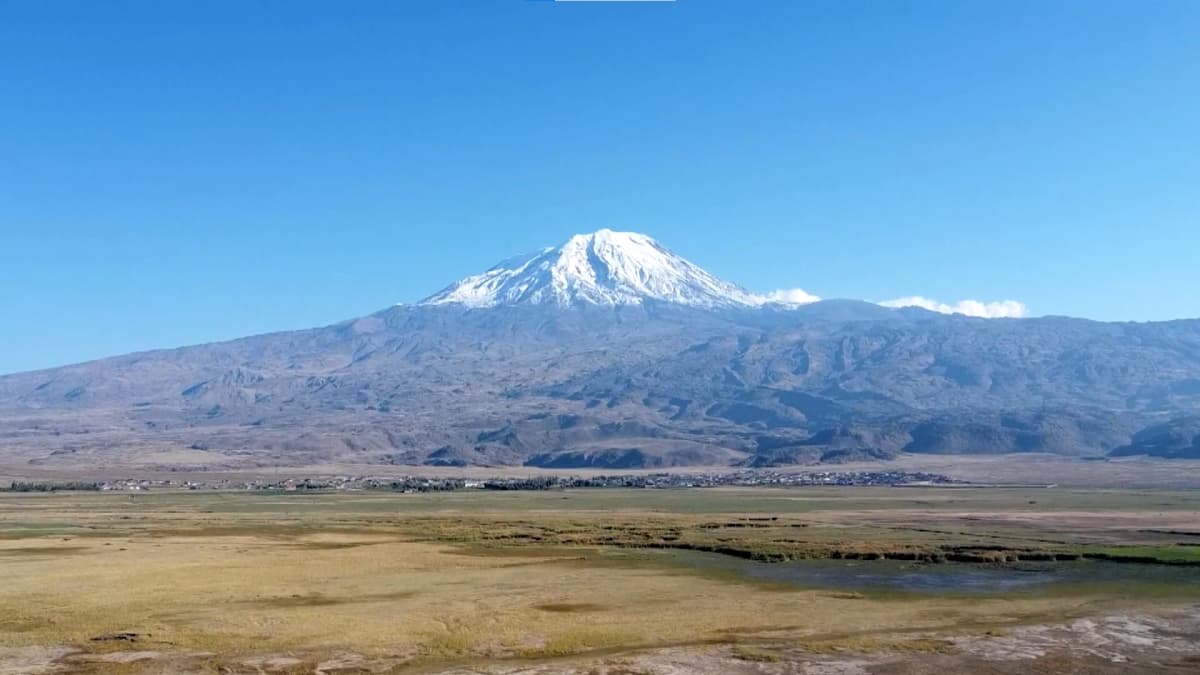
An international group of 20 researchers is conducting extensive investigations in the Agri province of Turkey, focusing on the potential discovery of Noah’s Ark. This project, which commenced on June 28 and lasted over three months, involved collecting soil samples and leveraging advanced technologies for analysis. The results of these tests, critical in supporting or debunking the Ark’s existence, are anticipated in the spring.
Research Team and Methodology
The research team comprises experts from various countries, including Turkey, the United States, Australia, Slovakia, and Brazil. Andrew Jones, the founder of the Noah’s Ark Scans organization, stated that this diverse team worked collaboratively, utilizing an array of scientific methods. Their efforts involved ground-penetrating radar and 3D mapping technologies to pinpoint unique geological formations. The researchers drilled 16 core holes, collecting over 360 soil samples, some reaching depths of 20 meters to gather comprehensive data from the site believed to harbor mythical artifacts.
Local researcher Nuri Sarihan, who participated in the project, emphasized the importance of the radar surveys conducted before sending samples for laboratory analysis. The area is renowned for the Durupinar formation, a boat-shaped geological structure that has captivated both scientists and tourists for decades due to its alleged implications concerning the biblical story of Noah’s Ark.
The Durupinar Formation
The Durupinar formation, which stretches 157 meters, has drawn scrutiny since its discovery through aerial photographs in 1959. Located near Mount Ararat at an elevation of approximately 6,300 feet, this site has spurred considerable interest. Researchers are particularly intrigued by claims that the formation could represent remnants of Noah’s Ark. Despite its alluring characteristics, scientific evidence connecting the formation to the Ark remains inconclusive.
This geological structure’s ship-like appearance has fostered theories about its origin. Tourists, like Ismail Konur from Germany, argue that its shape suggests that a vessel may have once been stranded in that location, further fueling speculation about its historical significance.
Future Expectations and Implications
As the research team awaits laboratory results on their collected samples, the anticipation surrounding the potential discovery continues to grow. The use of advanced technologies such as electrical resistivity tomography and LiDAR enhances the prospect of uncovering more evidence. This collaborative international effort may pave the way for further research in the region.
Whether or not the findings will lead to definitive proof of Noah’s Ark, this extensive investigation continues to attract global attention. The curiosity surrounding the Durupinar formation and its possible connection to one of history’s most enduring legends keeps the hope alive for those enchanted by the story. As researchers analyze the data, the world watches closely, eager to see what discoveries lay hidden beneath the surface in Agri, Turkey.