
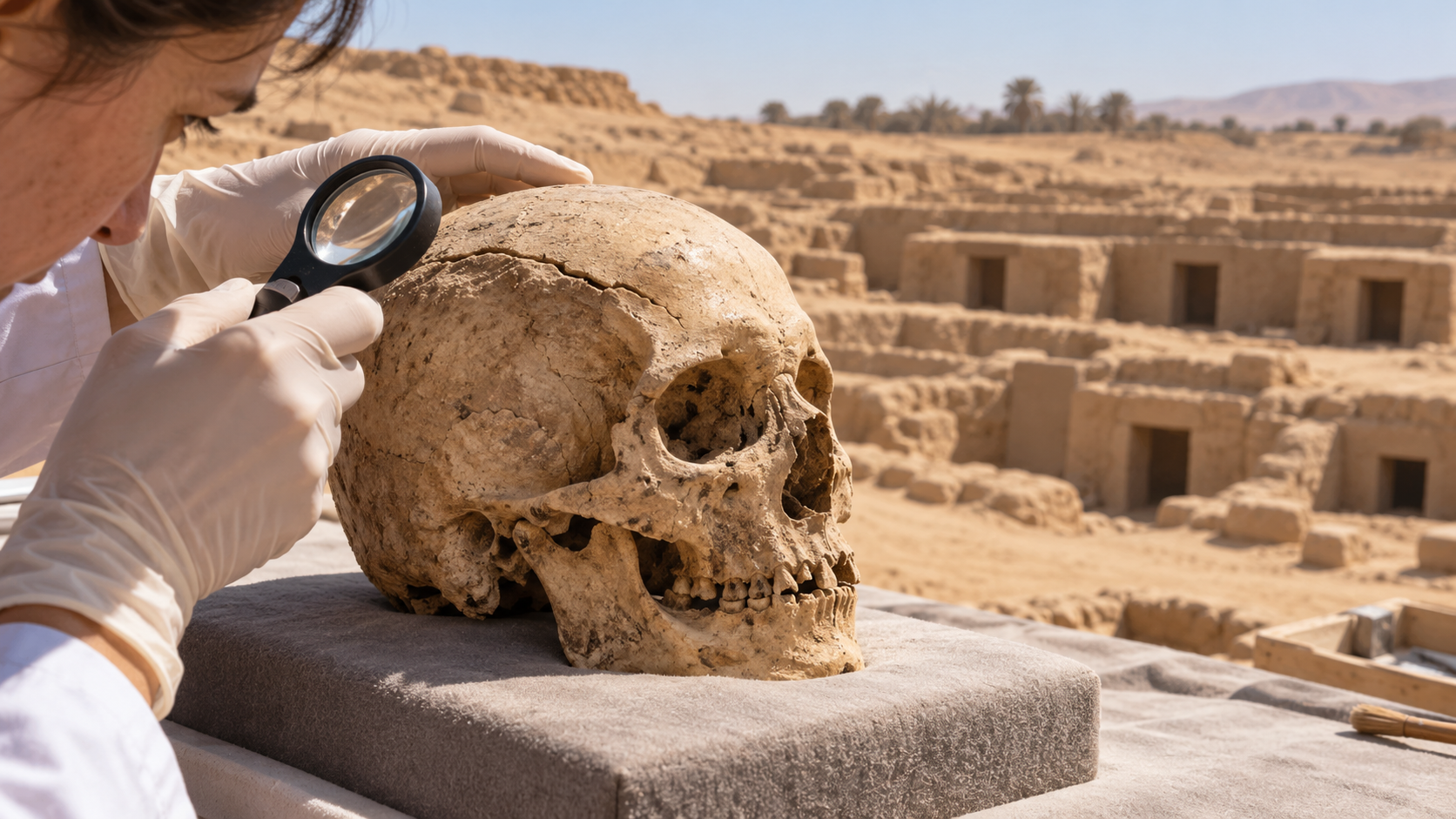
Recent archaeological findings from Abydos, Egypt, shed new light on early Egyptian royal practices, particularly regarding the treatment of retainers. This investigation analyzes the remains of 46 skulls from the site, revealing potential insights into both royal sacrifice and societal norms surrounding death and the afterlife.
Assessing the Evidence of Sacrifice
Among the 46 skulls examined, 18 exhibited injuries consistent with potentially fatal trauma that likely occurred around the time of death, indicating that a significant percentage, approximately 39%, of these individuals experienced violence. This discovery strengthens theories suggesting that retainers—those who served the elite—were sacrificed to accompany rulers in death, challenging long-held notions that these remains lacked signs of trauma. While the analysis presents compelling evidence of violence, it cannot definitively conclude the circumstances surrounding each individual’s death, nor can it ascertain if any volunteered for these roles.
Anthropologist Roselyn Campbell highlights that this reassessment of the skulls not only shifts our understanding of early Egyptian burial practices but also brings attention to individuals often overlooked in historical narratives. Her work integrates skeletal evidence with historical records and photographs to offer a comprehensive view of these bygone eras. As she notes, understanding the relationship between these individuals and the rulers they served is essential for grasping the broader context of their lives and deaths.
The Context of Abydos and Its Burials
The subsidiary burials in question date back to Egypt’s First Dynasty, around 3078–2900 BCE, when early rulers constructed elaborate tombs and associated ritual spaces. These graves often numbered in the hundreds, reflecting the importance of the funerary cult surrounding royalty. Archaeologist Flinders Petrie first excavated many of these sites in the 1920s, documenting a variety of grave goods alongside skeletal remains—though many of the graves had already been disturbed prior to excavation.
Grave goods from these funerals included pottery, copper tools, and other artifacts, which provided insights into the social standing of those buried. The bodies were primarily of lower- or middle-ranking officials and artisans, rather than elite members of the court. Campbell also challenges previous assumptions regarding the presence of women in these graves, suggesting that their mere existence does not automatically indicate they held titles of royal significance.
Modern Analysis and New Discoveries
Petrie’s work preserved many skulls, ultimately leading Campbell to examine 46 crania from grave sites near the funerary enclosures of Djer, Djet, and Merneith. The presence of linear fractures and sharp-force trauma suggests various forms of violence, potentially indicating that multiple methods of execution or death contributed to the conditions observed. Forensic analysis indicates that the injuries found may have occurred typically at or near the time of death, reinforcing theories of violence against these individuals.
The implications of such findings invite further investigation into the nature and motivations behind these sacrifices. Did they serve as a demonstration of royal authority, or were they part of a complex belief system surrounding death? However, without a more comprehensive collection of remains or additional evidence, the complete picture remains elusive.
In summation, these updated archaeological findings at Abydos underscore the significance of reevaluating ancient remains through modern forensic techniques. They not only provide insights into the early practices surrounding royal burials in Egypt but also prompt lasting questions about the social dynamics of the era and the rituals that guided them. As studies like these evolve, the conversations surrounding ancient societies become richer, offering new perspectives on their beliefs and customs as we explore burial practices and the continuum of life and death.