
The recent withdrawal of U.S. forces from Erbil Air Base in Iraqi Kurdistan on September 30, 2026, signifies more than a military transition; it signals a shift in regional security dynamics. As American troops departed, questions arose about the implications for regional stability, especially in the face of ongoing threats from Iranian-backed militias and the internal struggles of Iraq.
Shifting Security Paradigms
The departure of U.S. forces from Iraqi Kurdistan could reshape the region’s security landscape. For over a decade, American troops not only provided essential military support but also served as a deterrent against aggression from Iran and its allied factions within Iraq. The Kurdish population, around 6.5 million strong, largely benefited from this military backing, receiving protection against drone and missile attacks. However, with U.S. forces no longer in place, there exists a paradox; while the region may become a less prominent target for hostility directed at the United States, it simultaneously loses critical mechanisms for managing numerous security threats.
A crucial aspect to consider is whether the threats posed by militant groups will diminish or recede faster than the protective capabilities that were entrenched while U.S. troops were present. An intricate examination reveals a complex interplay of local, regional, and international factors that influence the security of Iraqi Kurdistan.
Persistent Risks Amidst New Governance
Iraqi Kurdistan, a semi-autonomous region bordering Iran, Turkey, and Syria, has a tumultuous history marked by decades of oppression. Following the Gulf War in 1991, U.S. intervention facilitated Kurdish self-rule, solidifying a security partnership that became particularly vital during the campaign against the Islamic State.
Nevertheless, Kurdish authorities face an ongoing struggle for security without the robust military support they once enjoyed. The region has hosted Iranian Kurdish opposition groups, provoking hostility from Tehran. With the central Iraqi government’s limited ability to control Shiite militias, these groups have frequently targeted Kurdish political, economic, and military sites, escalating tensions further.
The failed independence referendum in 2017 only complicated matters, as Kurdish forces lost previously contested territories and shifted control closer to Iranian-aligned militia groups. These developments, coupled with ongoing airstrikes targeting Kurdish infrastructure, undermine the reliability of the security situation in the region.
Air Defense and Internal Unity
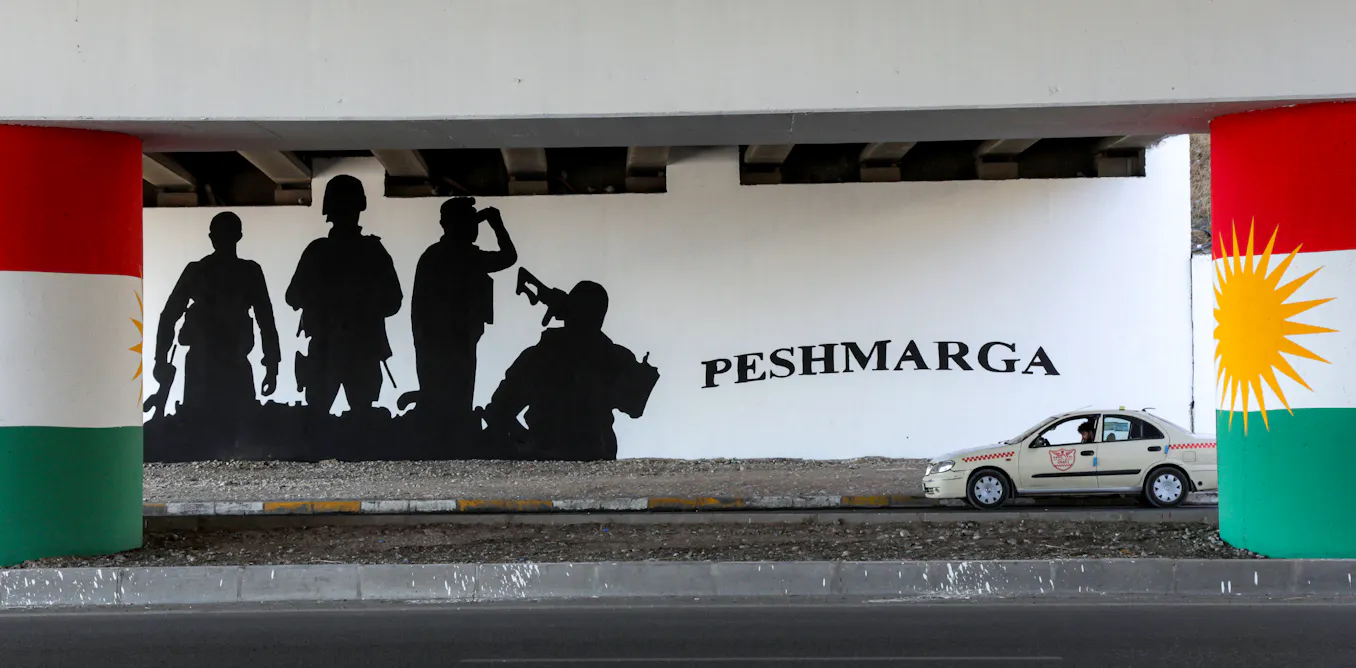
In this fraught atmosphere, the recent unification of the Peshmerga forces into a single command structure is noteworthy. A longstanding U.S. demand, this milestone aims to enhance the region’s security capacity. Yet, the Peshmerga’s expertise in ground warfare does not equate to the aerial defense capabilities needed in the current security climate.
Prime Minister Masrour Barzani has voiced the need for advanced military capabilities and air defense systems to safeguard Kurdistan’s airspace. While the responsibility for air security currently falls under Baghdad’s jurisdiction, the federal government has been slow to develop its defense infrastructure, leaving the Kurdistan region vulnerable.
Implications for Iraqi Sovereignty and U.S.-Kurdish Relations
The official conclusion of the U.S.-led coalition mission is framed as a victory for Iraqi sovereignty, but true sovereignty requires effective governance and control over armed groups. With militias operating outside the government’s authority, the central government’s capacity to maintain security across Iraq remains highly questionable.
The U.S. withdrawal alters the foundation of U.S.-Kurdish relations, which previously centered around military collaboration. However, the establishment of a new U.S. consulate in Erbil underscores a shift towards diplomatic and economic engagement. This diversification in partnerships may help mitigate the volatility that often arises with military-driven alliances, promoting a more stable relationship moving forward.
Ultimately, the transition from U.S. military reliance to a more multifaceted partnership will determine the future of the Kurdistan region and its capacity to address ongoing security threats. The coming months will be pivotal as the region evaluates whether it can assert its sovereignty while managing the implications of diminished U.S. presence.